
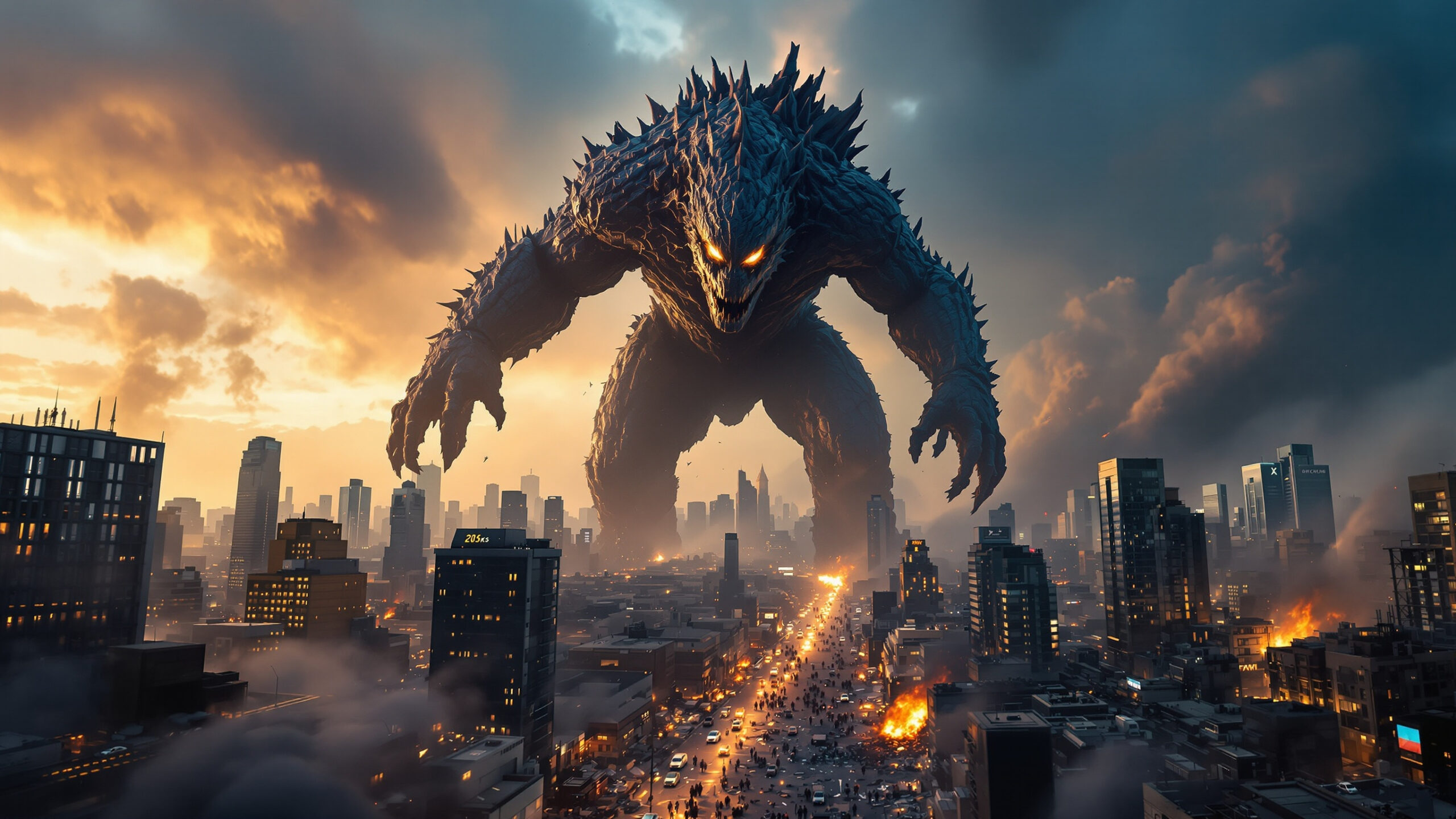
Few images in storytelling are as powerful as a towering giant monster looming over a city skyline. Skyscrapers crumble, streets fracture, and humanity suddenly feels small and fragile. Giant monsters represent destruction on a scale that strips away control and order, turning symbols of progress into rubble. Whether born from ancient legend or modern cinema, these colossal beings embody fears of nature’s power, human arrogance, and forces that cannot be negotiated with or stopped by conventional means.
A: They externalize large-scale fears—war, nature, collapse—into a single visible threat.
A: Not always—some are guardians or misunderstood forces of balance.
A: Cities visually communicate scale, stakes, and human cost instantly.
A: Clear scale reference, strong sound design, and grounded human reactions.
A: Many draw from ancient giants, dragons, and gods found across cultures.
A: To preserve mystery—and because survival doesn’t always mean victory.
A: Often yes—arrogance, imbalance, or technological overreach.
A: Because escape feels impossible—size removes all sense of control.
A: Yes—especially when their destruction is a reaction, not intent.
A: Because every era fears something big enough to end the world.
Ancient Legends of City-Destroying Giants
Long before movies, legends warned of massive beings capable of wiping out entire settlements. In many mythologies, giants were seen as primal forces tied to chaos and punishment. Ancient stories describe towering beings sent by gods to humble humanity or restore balance through devastation. Cities were not just targets, but symbols of human pride. When giants destroyed them, the message was clear: no wall, empire, or civilization is immune to collapse when greater forces awaken.
Godzilla and the Birth of Modern Monster Destruction
No giant monster is more closely associated with urban destruction than Godzilla. Emerging from the sea to level Tokyo, Godzilla redefined cinematic scale. His destruction was not random spectacle, but a reflection of nuclear fear and post-war trauma. Buildings crumbled under his weight, trains derailed, and entire districts burned. Godzilla’s power came not only from size, but from inevitability. Once he appeared, cities were already lost.
King Kong and Tragedy in the Skyscrapers
While Godzilla represents unstoppable force, King Kong embodies tragic destruction. Kong’s rampage through New York City is fueled by fear, captivity, and survival rather than malice. Skyscrapers become both battleground and prison, culminating in his iconic stand atop the Empire State Building. His destruction feels personal, turning the city into a stage for human cruelty and consequence. Kong destroys not because he hates humanity, but because humanity brought him there.
Kaiju Armies and Urban Warfare
Japanese kaiju cinema expanded beyond single monsters into full-scale urban warfare. Giant creatures clashed in cities, turning streets into battlegrounds and buildings into weapons. Monsters like Mothra, Gamera, and Rodan smashed through infrastructure, often causing more damage than the threats they fought. These films portrayed cities as fragile constructs caught between forces far beyond human control, reinforcing the idea that civilization survives only at the mercy of giants.
Western Cinema and Escalating Scale
Hollywood embraced giant monsters with increasing ambition. Films like Cloverfield presented city destruction from a ground-level perspective, making chaos feel immediate and personal. The monster itself remained partially unseen, while collapsing bridges and toppling buildings conveyed its enormity. This approach shifted focus from spectacle alone to human vulnerability, emphasizing how helpless individuals are when giants walk among them.
Ancient Behemoths in Religious and Mythic Texts
Religious texts and ancient lore often reference colossal beings capable of reshaping landscapes and destroying cities. Creatures like Leviathan and other primordial beasts symbolized divine judgment or cosmic balance. Cities fell not through accident, but because humanity had overstepped boundaries. These monsters were less characters and more forces of reckoning, reminding civilizations that dominance over nature was an illusion.
Dragons as City-Enders
Dragons occupy a unique place between giant monster and mythic guardian. In many legends, dragons demanded tribute from cities, burning them when demands were unmet. Their ability to fly, breathe fire, and level stone structures made them the ultimate siege weapon. Entire kingdoms were shaped by the presence or absence of dragons, and cities were built in fear of their return. Unlike mindless destruction, dragon attacks were deliberate, reinforcing power through terror.
Science Fiction Titans and Futuristic Ruin
Modern science fiction introduced giant monsters born from experiments, alien invasions, or lost civilizations. These beings often targeted cities as centers of population and technology. Their destruction symbolized fears of unchecked scientific advancement and extraterrestrial threats. Urban landscapes were reduced to ruins not just by brute force, but by the idea that humanity had attracted its own annihilation through ambition.
Why Cities Are Always the Target
Cities represent humanity’s greatest achievements. They are symbols of control, order, and permanence. Giant monsters destroy cities because cities matter. Watching them fall evokes fear on both a personal and collective level. Each collapsed building represents lost safety, lost history, and lost certainty. Giant monsters do not just destroy structures; they erase the illusion that civilization is invulnerable.
The Spectacle of Scale and Sound
The terror of giant monsters comes from scale. Footsteps sound like earthquakes. Roars echo between buildings. Shadows stretch across entire neighborhoods. Filmmakers and storytellers use cities to emphasize size, turning familiar landmarks into measuring tools for horror. When a monster dwarfs a skyline, its power becomes instantly understood without explanation.
Legends That Still Shape Modern Monsters
Modern giant monsters are deeply influenced by ancient legends. Themes of punishment, imbalance, and consequence persist across centuries. Whether born from radiation, ancient curses, or cosmic origins, these monsters echo old warnings in new forms. The destruction of cities remains central because it carries the greatest emotional and symbolic weight.
Destruction as a Warning
Giant monsters that destroy cities are rarely meaningless. Their rampages often serve as warnings about humanity’s relationship with nature, technology, or power. They force characters and audiences alike to confront uncomfortable truths about fragility and responsibility. When cities fall, the question is not just how to rebuild, but whether the destruction could have been avoided.
Why Giant Monsters Endure
Giant monsters endure because they evolve with society’s fears. As cities grow taller and technology advances, the monsters grow larger and more destructive. They remain relevant because they scale alongside human ambition. No matter how advanced civilization becomes, the idea of something bigger, older, and stronger waiting beyond our control continues to terrify.
When Cities Become Prey
In movies and legends alike, giant monsters transform cities into prey. Steel bends, concrete shatters, and humanity scrambles beneath towering shadows. These stories endure because they remind us that progress does not equal safety. As long as cities stand as monuments to human power, giant monsters will rise in fiction and legend to tear them down, forcing us to face the limits of control and the enduring fear of total collapse.


