Start With What the Creature Actually Does
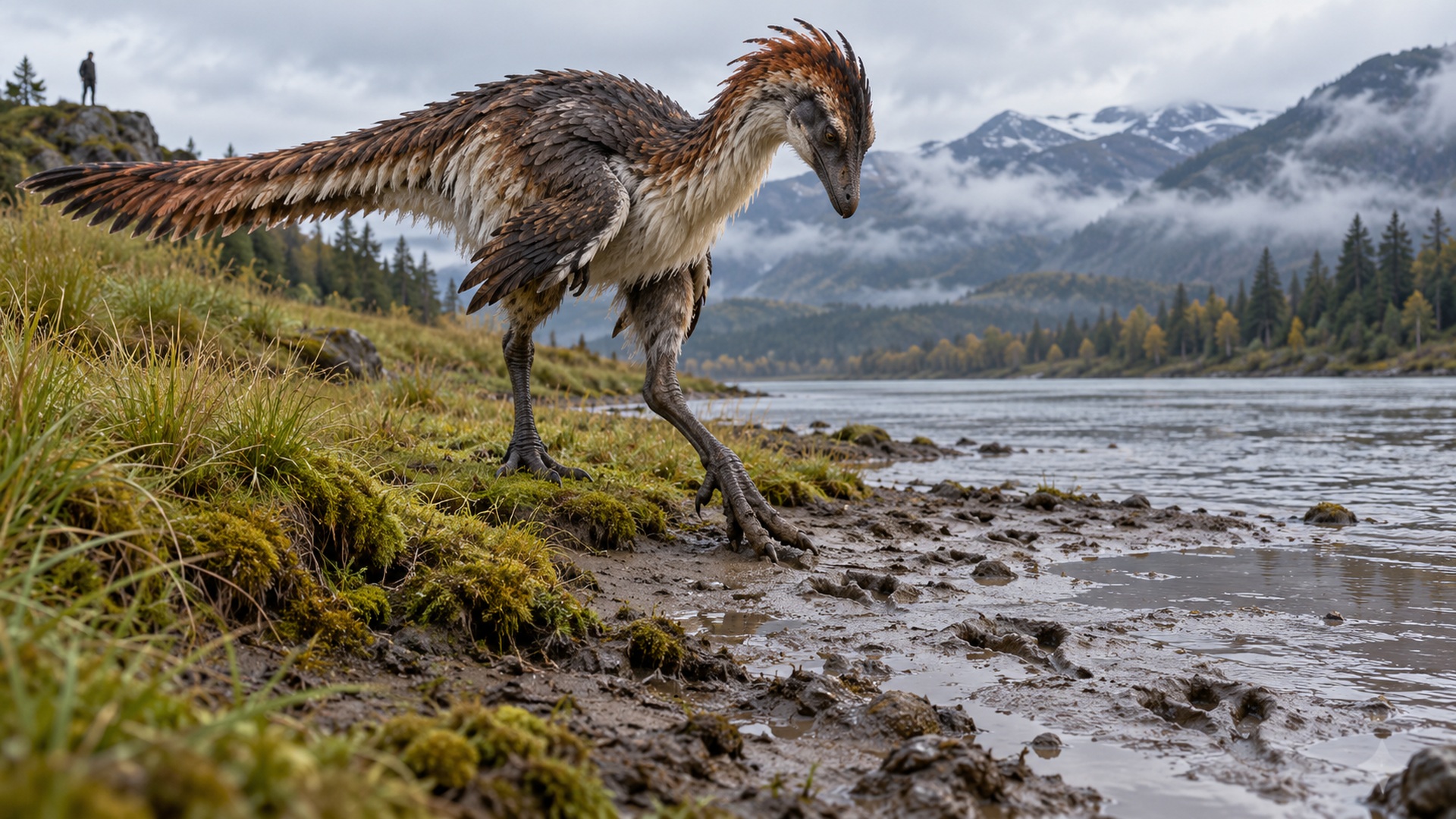
A giant approaches a muddy riverbank, places one foot near the edge, then turns toward firmer ground. An observer might immediately decide that water is its weakness. The visible event supports a narrower conclusion: the animal changed its route after testing a particular patch of ground. It may dislike unstable footing, lack enough space to turn, or simply prefer another crossing. Finding a believable monster’s weakness begins with that distinction between an event and an explanation. In fiction, anatomy and behavior can supply clues, but a convincing discovery needs more than one suggestive moment. Compare situations, consider competing causes, and follow the creature through ordinary activities as well as dramatic encounters. The result is a limitation the audience can recognize as part of the animal’s established life, rather than a convenient answer introduced just before the ending.
A: It changed its route in that setting; the underlying reason still needs comparison.
A: Compare behavior across situations with different visible goals and similar physical demands.
A: It also reflects where and when observers searched.
A: Detection and recognition can occur at different stages.
A: When clear movement contradicts the capability inferred from appearance.
A: Repeated choices and available alternatives are needed for a broader claim.
A: A temporary condition can alter performance without defining a permanent limitation.
A: They must arise from separate observations rather than repeated versions of one account.
A: It can expose a mistaken theory or reveal a visible condition previously overlooked.
A: It explains established clues and predicts later behavior under understandable conditions.
Describe the Observation Before Naming Its Cause
A useful account states where the creature was, what happened immediately before its response, and what changed afterward. Describe the foot placed in mud, the brief pause, and the chosen detour. Avoid putting an invisible motive into the first sentence. That preserves the difference between observable movement and the interpretation later attached to it.
The level of detail matters. Refusing one bank is different from refusing every body of water, and hesitating is different from being physically unable to proceed. A creature may choose a cheaper route while remaining capable of the more difficult one. Those distinctions prevent a preference from becoming an absolute anatomical rule without supporting evidence.
For a story, let different characters propose explanations while retaining the same underlying event. One sees caution, another sees a limitation, and a third notices the unstable sediment. The disagreement can generate suspense without requiring anyone to ignore obvious facts. Later observations can resolve part of the uncertainty instead of simply replacing the original clue.
Separate Capacity From Immediate Motivation
An animal does not demonstrate every ability whenever an observer wants to see it. A monster that remains on the ground might be unable to climb, unwilling to spend the effort, or uninterested in what lies above. Its present choice establishes behavior in that setting. It does not automatically establish the full range of actions available to its body.
This is especially relevant when the observer cannot see the creature’s goal. A retreat may preserve a resource, maintain distance from young, or lead toward a familiar refuge. More than one explanation can fit the same path. A convincing inference compares occasions on which the proposed capability would have served different visible purposes, while acknowledging what remains unknown about the animal’s state.
Use Anatomy to Generate Possibilities, Not Verdicts
Body proportions can suggest questions about movement. Broad shoulders invite attention to clearance, a long tail invites attention to turning space, and a heavy-looking torso invites attention to support. Yet an outline does not reveal every joint, tissue property, or internal arrangement. Treat the sketch as a source of predictions to compare with behavior. A creature that appears awkward may move efficiently through a mechanism the first observer missed, while an elegant silhouette may conceal a narrow range of comfortable motion. The story becomes more interesting when anatomical guesses can be corrected by a clear view of the living animal.
Look for the Same Relationship in Different Settings
Suppose the creature avoids another soft margin but crosses a firm stone ford. That comparison makes water alone a less satisfactory explanation. If it also hesitates on unstable dry ground, substrate becomes a stronger candidate. The new observations narrow the possibilities because they separate features that were combined in the original encounter.
Comparisons do not have to become laboratory scenes. A journey can naturally present several routes with different surfaces, widths, and slopes. The reader notices the recurring relationship as the characters travel. What matters is that the settings differ in relevant ways and that the account does not quietly change several conditions while claiming to have isolated just one.
Read Gait as a Sequence of Support and Motion
A gait is more informative than a single dramatic pose. Watch which limbs support the body, how the center of the trunk shifts, and how the feet meet the surface. A brief stumble alone can result from a local irregularity. At the muddy bank, suppose the forefoot sinks and the trunk shifts backward before the animal withdraws. At a second soft margin, the same sequence recurs. That repeated relationship makes loss of stable support a stronger candidate than the unfamiliar appearance of the gait alone.
The tail can be part of that sequence rather than an ornamental attachment. It may change position as the animal turns or accelerates, although the exact function requires evidence. Record the movement before assigning it a balancing role. If the same pattern appears across several turns, the connection becomes a plausible interpretation that later scenes can support.
An unusual gait need not indicate injury or poor design. It may suit a body plan or habitat unlike the observer’s own. The useful limitation appears when the movement fails to meet a particular task, not merely when it looks unfamiliar. That distinction allows the monster to remain capable while giving its physical rules enough detail to matter.
Follow Feeding Behavior Beyond the Dramatic Bite
Feeding can reveal reach, handling ability, preferred resources, and the locations to which the creature returns. It can also mislead an impatient observer: taking one food does not prove a diet restricted to that item. Look for repeated choices and the surrounding opportunities. In the river case, record whether comparable food is visible across both the muddy approach and the firm ford. If the giant seeks the same vegetation after taking the longer firm route, motivation becomes less useful as an explanation for the first retreat. Its detour appears to preserve food access while changing the ground crossed. Even then, the inference should match the evidence rather than claiming that one missed meal establishes its entire physiology.
Map Where the Creature Is Absent as Carefully as Where It Appears
A distribution pattern can suggest a habitat dependency, but absence is difficult to interpret. Perhaps observers never visit the missing area at the relevant time, or the animal passes through without leaving an obvious trace. A map of sightings also maps human effort. A blank region therefore begins as a question rather than proof of a barrier.
Combine the map with visible transitions. If the monster repeatedly approaches a terrain boundary and turns back, the boundary becomes more informative than a place nobody has searched. Its behavior can suggest which feature matters, such as cover, slope, or available water. The scene should leave room for several possibilities until later evidence separates them.
Keep Sensory Detection Separate From Recognition
A turned head may show that the creature detected something, but not what it detected. Sound, movement, scent, and another animal’s response may occur together. Assigning the reaction to one channel requires more than the observer noticing their own most obvious cue. A monster can be impressive precisely because its relevant information is initially unclear.
Recognition presents a second problem. The creature might detect an event and still investigate before identifying it. That delay need not mean its sense failed. It may mean the available signal supports several interpretations, just as a distant noise can attract a human listener’s attention before its source becomes clear.
Show how the animal resolves that uncertainty. It may change position, pause, or use another sensory channel. Those actions give the observer clues about information gathering without turning the animal into a simple device. A limitation in one setting can arise from incomplete evidence even when the sensory anatomy itself works normally.
Distinguish a Stable Trait From a Temporary State
The monster observed after intense activity may behave differently from one seen at rest. Fatigue, recovery, developmental stage, and immediate priorities can influence performance without defining a permanent species trait. Avoid generalizing from a single unusually demanding interval. The same caution applies when comparing a small individual with a much larger one.
A story can make the difference visible through continuity. An animal that initially moves carefully may later regain a familiar stride after spending time in refuge. Its changing behavior supports a state-dependent explanation. The observer learns something about conditions and timescales, which is more precise than discovering an unlimited ability that disappears whenever the plot needs a delay.
Give Alternative Explanations a Fair Chance
A strong theory survives an attempt to explain the observation another way. If the creature stops beside a dark doorway, consider both physical clearance and the object beyond it. If it avoids a sound, consider its loudness, source, and meaning rather than assuming a special frequency. The alternatives need to fit the visible sequence, not merely be imaginable. This discipline strengthens the final discovery because the reader has seen why one explanation accounts for more of the evidence than its competitors.
Preserve a Useful Unanswered Question
An investigation need not explain the creature completely to reach a useful conclusion. The characters may establish that it crossed the firm ford and repeatedly withdrew from soft margins while remaining uncertain about deeper water or stronger currents. Those untested conditions need not be forced into the same conclusion. Keeping that boundary visible gives the discovery a defined scope. It also prevents a narrow observation from becoming an implausibly comprehensive account of an unfamiliar species.
The next encounter can then test another question rather than undo the first answer. A clear limit remains clear, while a different behavior introduces fresh evidence. Readers retain what they learned and can participate in interpreting the new scene. The monster’s mystery grows through additional detail instead of depending on the investigation forgetting its own results.
Let Evidence Change the Characters’ Confidence
An early guess can remain tentative without making the characters indecisive. They may act cautiously while stating what they know and what they expect. A later observation can increase confidence, narrow the claim, or reveal that two separate constraints were being confused. That progression gives investigation a meaningful shape.
Confidence should change for a reason. Repeating the same rumor through several characters does not create several independent observations. Likewise, a dramatic witness can be sincere while misjudging distance or sequence. The narrative can respect the witness and still examine the account’s limits.
The discovery becomes satisfying when the audience can reconstruct it. The muddy bank, firm ford, and dry unstable slope point toward a relationship between gait and support. The conclusion follows a chain of events already present in the story. It does not require an expert to announce an unrelated biological fact at the last moment.
Show What Would Count Against the Explanation
A useful limitation predicts something beyond the original scene. If unstable footing is the proposed problem, a comparable surface should prompt a recognizable adjustment. If the monster crosses it easily under matching conditions, the explanation needs revision. That possibility keeps the investigation honest and makes the creature’s behavior consequential.
Sometimes the contradiction reveals a missing condition rather than complete failure. The new surface may have a firm layer beneath it, or the animal may use a different posture. Establish the difference visibly. Adding an invisible exception after every contrary event would make the supposed rule impossible for the reader to understand or evaluate.
The Firm Ford Explains the Earlier Retreat
At the firm ford, the giant enters shallow water and crosses with its ordinary walking sequence. This does not demonstrate that every depth or current is safe for it. It does directly contradict the broad claim that contact with water itself caused the earlier retreat. Combined with repeated hesitation on soft banks, the crossing makes footing a better explanation for the observed route choices. The food on both sides also helps: the animal did not merely turn away because the first bank offered nothing it wanted. The discovery now accounts for a retreat, a detour, and a successful crossing without changing the creature’s abilities between scenes. Its practical limit is the support available during that gait under the conditions observed. Another surface or a different depth can remain uncertain, but the original muddy bank no longer needs a mysterious water aversion to explain it.