The Canyon Giant Has Conditions, Not a Secret Defeat Switch
Consider a fictional four-legged browser with a four-meter-wide shoulder region, an air-breathing respiratory system, flexible joints beneath back plates, and a diet centered on tough riverside vegetation. It travels between open feeding terraces and shaded water. These are selected features of an invented animal, not measurements inferred from a real species. At a three-meter-wide canyon slot, its ordinary walking posture cannot fit; along a broad terrace, the same shoulders support powerful movement. This article follows that one creature to explain ecological and physical limits, rather than cataloguing folklore weaknesses such as silver or sunlight. Its width, resources, heat management, senses, and recovery each create a different kind of dependency. None automatically cancels its strengths. Watching the giant respond to those conditions makes a weakness consequential without turning it into an arbitrary instant defeat.
A: Its limitations can instead arise from anatomy, resources, behavior, and habitat.
A: Strength does not remove geometric limits on clearance and support.
A: Sustained and repeated performance requires a continuing resource supply.
A: Detection, location, and interpretation are distinct information problems.
A: State, context, and learning can change its available choices.
A: Its exchange, support, and movement systems need to work in that setting.
A: The value of specialization depends on the habitat and available resources.
A: Comparable conditions produce contradictory outcomes without an established change.
A: Different life stages may use places and resources that observers have not sampled.
A: Together they explain routes, schedules, refuges, and the distribution of the creature.
Define the Task Before Calling a Trait a Weakness
A limitation has meaning in relation to an activity. Our four-meter-wide browser can travel along a broad terrace, yet its ordinary shoulder posture cannot enter the selected three-meter slot. The obstacle is clearance, so simply increasing muscle force would not answer it. Sensitive hearing can provide useful information while still depending on the kinds of sound available. These traits are not simply good or bad in every situation. Describe what the monster is trying to accomplish, what conditions surround it, and which part of the task its body cannot perform efficiently. That approach gives the limitation a cause and keeps the creature’s strengths intact elsewhere.
Large Bodies Need Suitable Space and Support
A giant’s dimensions affect the routes it can use. Turning requires clearance, climbing requires appropriate support, and a wide stance may not fit a narrow ledge. Those restrictions follow from geometry before any unusual physiology is considered. A monster that moves confidently across a plain can therefore hesitate at a passage that a smaller animal crosses easily.
The ground matters too. A surface that supports the animal in one setting may differ from soft sediment or an unstable slope elsewhere. Exact outcomes depend on the body, contact area, substrate, and motion, so size alone does not determine every result. In a story, show the creature assessing the route, testing support, or choosing a detour. Those actions communicate a physical constraint without turning an impressive animal into an inexplicably helpless one.
Powerful Activity Has a Resource Budget
Forceful movement and sustained activity require usable energy. A creature can draw on intake and stored resources, but those resources are finite under ordinary biology. The rate at which energy can be supplied also matters. An animal might perform a demanding action briefly without being able to repeat it continuously.
This distinction can shape behavior between encounters. After a steep terrace climb, the canyon browser pauses near its feeding ground rather than immediately repeating the ascent. That observed pause would establish a break in activity; its internal energy use would still require measurement. The example separates the schedule we can see from a physiological number we have not measured. That pattern does not establish a precise feeding interval without further information about its physiology and diet. It does establish that performance belongs to a continuing budget rather than appearing independently whenever a scene demands it.
An invented energy source can change that budget, yet it should be defined. If a creature draws power from sunlight, for example, the story needs to consider access, storage, and the difference between immediate input and stored reserves. The chosen exception should explain its relevant capability. It should not silently provide unrelated solutions to every need for matter, repair, or environmental exchange.
Heat Balance Can Restrict When Activity Is Practical
Body temperature reflects exchanges with the environment as well as internal processes. A creature’s size, covering, behavior, and physiology all contribute to the situation. One cannot infer a universal safe or dangerous temperature from its appearance alone. For this profile, shaded shallows and cooler activity periods are specified parts of its thermal strategy. Losing that resting place changes the available schedule; it does not establish a universal temperature at which all plated animals fail. These habits make its schedule part of its biology. A change in conditions can then alter performance for an established reason instead of introducing a surprise temperature rule at the end of the story.
Breathing Systems Belong to Particular Environments
An organism needs a way to obtain what its metabolism requires and exchange materials with its surroundings. The canyon browser is explicitly air-breathing, even when it rests in water. Its nostrils must remain accessible to air under the proposed behavior. Deep water is therefore not automatically equivalent to a suitable shallow refuge, and permanent submergence would require a different respiratory account. A monster that spends long periods in both settings should have an explanation for how it maintains essential exchange in each.
This does not mean every aquatic creature becomes helpless out of water or that every large body inevitably lacks oxygen. Those conclusions would require specific evidence. The useful limit is conditional: a particular design works within the environments its exchange system can support. Showing the animal returning to a suitable setting can reveal that dependency without assuming that all creatures share the same respiratory arrangement.
Exceptional Senses Still Receive Incomplete Evidence
A sensory system can detect only the signals available to it. Strong sensitivity does not guarantee an unobstructed signal, perfect localization, or a correct interpretation. The environment can change transmission, and several sources can produce overlapping evidence. The browser may hear movement behind the canyon wall yet lack a direct acoustic path to identify its source. Turning or moving toward a clearer opening can improve the evidence without requiring hearing to become inexplicably ineffective. That distinction preserves the value of an impressive sense while allowing the animal to pause, investigate, or make a mistake. The limitation concerns information, not an arbitrary decision to stop using an ability that worked in earlier scenes.
Specialization Connects Success With Particular Resources
The giant’s selected feeding apparatus handles tough riverside plants. That ability explains its repeated terrace visits, while seasonal loss of those plants would require another food, stored reserves, or movement to a productive reach. It can also connect the animal’s movements and survival to the availability of that resource. If the food changes location or becomes seasonally scarce, the monster must respond through movement, reserves, dietary flexibility, or another established strategy. The dependency belongs to the same adaptation that produced its advantage.
A broad diet offers a different arrangement, but it is not automatically superior in every habitat. Processing different foods can require suitable behavior and anatomy, while a reliable specialized resource may reward focused adaptations. For fiction, choose the relationship that supports the creature’s ecology. A monster’s menu should explain where it lives and how it uses its time rather than functioning as a decorative list of anything large enough to look dramatic.
Dependence can involve places as well as food. A creature might need an appropriate nesting area, refuge, or route between seasonal habitats. Such requirements give its territory a meaningful shape. A map of those places can reveal more about its limits than an invented substance that affects every member of the species for no anatomical reason.
Protective Traits Can Compete With Other Tasks
A covering that provides mechanical protection must coexist with movement, growth, and the rest of the body. In this profile, the back plates clear the shoulders during a normal stride but make a low rock overhang another clearance problem. The restriction concerns the defined external shape; it is not a claim that armor universally locks joints. A large defensive posture may need room to develop. These are possible relationships to examine, not universal penalties that must accompany every protective feature.
The key is consistency across actions. If a monster’s back plates remain clear of its shoulders during a charge, they should not suddenly immobilize the same joints during an ordinary turn without an explanation. A genuine tradeoff follows the design under comparable conditions. It gives the audience a reliable relationship to notice instead of a limitation that exists only when the plot needs it.
Instinct Is a Behavioral Bias, Not a Remote Control
Innate tendencies can influence where an animal goes, what it attends to, and how it responds. That does not mean its behavior is one rigid sequence unaffected by state or surroundings. A fictional creature can have a recognizable tendency while still making choices among available actions. The same signal may not produce an identical response under every circumstance.
Learning and experience can also change the meaning of a repeated encounter. A creature that investigates unfamiliar movement once need not investigate it in exactly the same way forever. Allowing adaptation makes the monster feel more capable. It also keeps a behavioral limitation from becoming a mechanical trick that overrides every other part of its life.
A coherent story can show a tendency, a consequence, and a later adjustment. Perhaps the animal initially uses an exposed route but subsequently chooses cover after experiencing disturbance there. Its anatomy has not changed, yet its behavior reflects new information. The audience can understand both the original limitation and the reason it no longer predicts the creature perfectly.
Map the Giant’s Requirements Onto One Valley
The canyon giant’s range connects three selected features: broad feeding terraces, shaded resting water, and passages wide enough for its ordinary gait. A narrow spur may contain abundant plants yet remain outside its usual route because the approach does not fit. An exposed terrace may be visited during a cooler part of the day. Its distribution follows the combination of access and usable conditions rather than any one feature alone.
That map also distinguishes this individual from smaller members of the imagined species. A juvenile could use a narrower passage while depending on different cover nearby. The adult’s absence from the spur would not prove that all ages avoid it. Keeping the same valley in view lets growth, behavior, and recovery change the practical route without changing the basic question: which places can this animal use in its present state?
Growth Creates Different Needs at Different Stages
A species does not spend its entire life at its most impressive adult size. Smaller individuals may use different shelters, consume different resources, or face a different balance of movement and protection. Growth can change those relationships gradually. For a fictional life cycle, connect each stage with conditions that support it rather than assuming that juveniles are identical adults reduced to miniature proportions. This also gives apparent absences a possible ecological explanation: observers looking only in the adult habitat may be missing other stages of the same creature’s life.
Recovery Can Limit Performance Without Ending Survival
Remaining alive after a demanding event does not prove immediate restoration of full capability. A creature may need time and suitable conditions before returning to its previous activity. Repair can compete with other uses of resources. That makes rest, retreat, and refuge meaningful parts of an otherwise formidable animal’s behavior.
The limitation should correspond to what actually occurred. A monster that expended substantial effort might resume slowly, while one that experienced only a minor disturbance need not show the same recovery sequence. Describe the observations carefully. Reduced activity can support an explanation of recovery without proving exactly which internal process is responsible or granting the narrator knowledge that no character possesses.
The Canyon Giant Can Remain Formidable While Taking a Detour
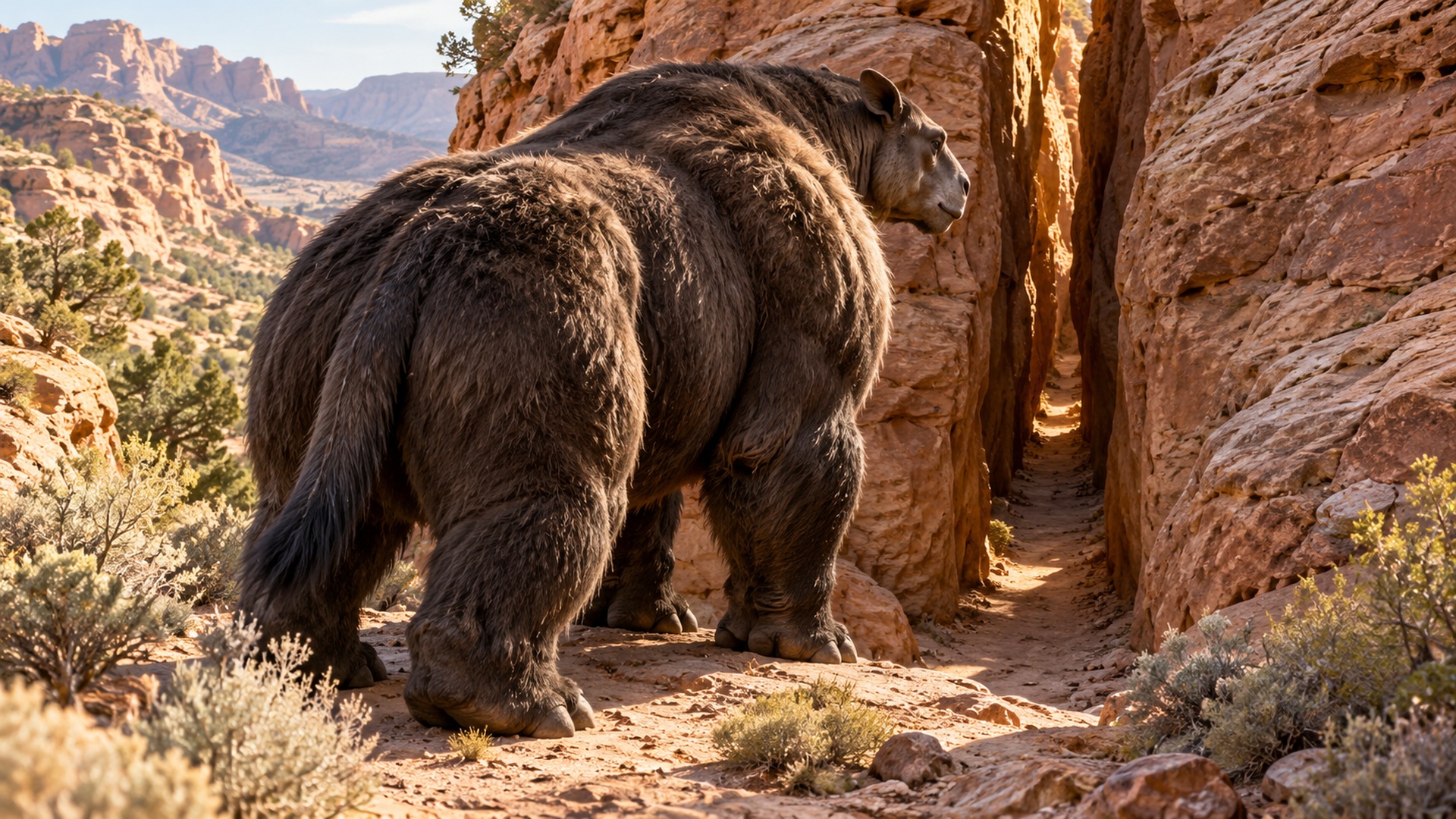
Return to the broad-shouldered creature at the canyon. It turns its head, approaches the slot, and stops before committing its body to a space that cannot accommodate it. The pause reveals a geometric limit and an ability to respond to the setting. Neither observation contradicts its strength.
It then follows the rock face toward a wider opening. The detour costs time and changes the route, but the animal remains capable in the space that suits its body. This sequence makes a limitation consequential without requiring a spectacular defeat. It also establishes something viewers can recognize when the same terrain appears again.
If the creature later squeezes through that exact slot, the story needs a changed condition: a different body orientation that genuinely fits, an altered passage, or a previously established ability to change shape. Consistency is what turns the setting into evidence. A monster’s biggest weaknesses become convincing when they emerge from rules that also explain its ordinary successes.