Buildings Keep Their Histories and Acquire Their Ghosts
An empty corridor can belong to a palace, prison, family home, or ship. Its shape may suggest suspense before anyone tells a ghost story, but the story changes how each doorway is understood. Famous haunted structures draw their force from that combination of material place and accumulated narrative. Some have documented histories of imprisonment or loss; others became mysterious through unusual architecture, later retellings, and tourism. The examples below are a selection of widely discussed places, not a measurable ranking of paranormal activity. Their historical records and haunting traditions require different kinds of evidence. Keeping those strands distinct makes the structures more interesting: readers can appreciate a compelling legend while understanding the human lives, institutions, and physical spaces that gave it somewhere memorable to take hold.
A: Their reputations are not a standardized measure of paranormal activity.
A: The account identifies the historic site's own interpretation and guide Jake Bradshaw's 2025 ABC Radio discussion.
A: Traditions associate her return with a place tied to her documented execution.
A: The house's interpretation identifies stairs rising into a ceiling and doors that do not provide an ordinary onward route.
A: Identifying a feature does not prove a later claim about her private intentions.
A: Yes, if their different purposes and evidential limits remain clear.
A: No. It identifies the ship's promoted Jackie tradition without turning it into a verified passenger death.
A: Lighting changes atmosphere without determining the history of the narrative.
A: They show how audiences, media, and interpretation reshape a place's reputation.
A: Keep their historical lives visible and identify legends as legends.
The Tower of London: Anne Boleyn and Tower Green
The Tower of London is a fortified complex, not one isolated tower. Its buildings have served royal residence, defense, custody, and ceremony across many centuries. Within that large institutional history, Anne Boleyn supplies a precise human association. Henry VIII’s second queen was taken there as a prisoner in May 1536 and executed on 19 May. The place had previously belonged to her royal life; confinement transformed the meaning of a familiar setting.
Historic Royal Palaces retells the tradition that Anne’s ghost walks at the site of her execution on Tower Green. The historical person and event are documented; the returning figure belongs to the haunting tradition. That distinction leaves the story’s central image intact: a woman associated with royal power is imagined revisiting the ground where that power destroyed her. It is more specific than an anonymous white shape in an old window.
The route through the fortress also matters. Gates, walls, controlled thresholds, and the chapel create a landscape in which movement once depended on authority. A ghost story changes that arrangement by imagining someone who returns despite the ordinary rules of custody and death. The effect is interpretive rather than proof of an apparition. Reading the legend beside the physical fortress gives the encounter a political and architectural setting, while preserving the much wider history of the people who lived, worked, guarded, and were held there.
Port Arthur: The Parsonage and a Chaplain’s Afterlife in Story
Port Arthur operated as a penal settlement in Tasmania from 1830 to 1877. Its surviving buildings and ruins reflect more than prison cells: officials, families, religious staff, and workers also occupied this institutional landscape. The Parsonage brings that domestic and administrative world into the haunting tradition. Reverend George Eastman served as chaplain from 1857 until his death in 1870. The historic site’s biographical material describes the man behind a name later associated with its ghost stories.
In a 2025 ABC Radio interview, Port Arthur guide Jake Bradshaw discussed the Parsonage and Eastman as part of the site’s haunting repertoire, alongside the Blue Lady tradition. Bradshaw described reports of an annoyed-looking former reverend lingering near the house and linked the telling to Eastman’s family being left unsupported after his death. That is the guide’s interpretation of the legend, not a verified return. This is an identifiable contemporary teller of the stories, rather than a claim that every detail has remained unchanged since the convict period. The site itself dates its documented ghost-story associations to 1870. The Parsonage is distinctive because it places an ordinary family home within a place often imagined only through punishment. Rooms used for domestic life acquire another meaning once listeners expect a former resident to remain present. Eastman’s recorded life and the later haunting account answer different questions: one concerns a chaplain and his family, the other how the place is remembered and narrated. Keeping both visible prevents the settlement from becoming an interchangeable collection of frightening ruins.
Bhangarh: Princess Ratnavati and the Enchanted Perfume
Bhangarh in Rajasthan is a ruined fort town with gates, temples, and the remains of formerly inhabited spaces. Rajasthan Tourism retells a legend in which a sorcerer attempts to influence Princess Ratnavati through enchanted perfume. She discovers the trick and throws the substance onto a boulder; the stone then brings about the sorcerer’s death, and his curse condemns the town. This is the tourism authority’s presentation of a tradition, rather than a demonstrated explanation of the settlement’s decline. Another version centers a holy man and a condition concerning the shadow of a building, so there is no need to pretend that one fixed curse account explains every retelling. The setting makes these stories memorable. A gate suggests the community once controlled entry, while roofless interiors invite the visitor to imagine vanished activity. The curse supplies an agent and an ending for that visible absence. Unlike the Tower’s returning named queen, Bhangarh’s story can make the whole abandoned settlement seem subject to an unfinished condition. That is a difference in narrative scale, not evidence that one location has more measurable supernatural activity than another.
Winchester: A Staircase That Ends at the Ceiling
Sarah Winchester purchased a farmhouse near San Jose in 1886 and developed the property until her death in 1922. The present Winchester Mystery House is known for its 160 rooms and complicated circulation. Its own architectural interpretation identifies stairs that rise into a ceiling and doors that lead nowhere. Those are concrete spatial surprises: a visitor approaches a feature expecting passage and instead encounters a barrier or an unexpected destination. The puzzle begins with the house’s material arrangement before any ghost enters the explanation.
The familiar legend says continued construction served a supernatural purpose connected with Winchester firearms and their victims. That is a story about motive, and the existence of an odd staircase does not by itself establish it. Alterations, changing uses, and the effects of the 1906 earthquake also belong to the building’s history. The interesting distinction is between observing a confusing route and knowing why Sarah commissioned a particular change. A house can retain both genuine architectural eccentricity and uncertainty about later interpretations of its owner. Compared with a fortress, its apparent contradictions are intimate: stairs, closets, windows, and bedroom routes are things people normally understand. When those everyday expectations fail, the home becomes difficult to read. The haunting legend gives that difficulty an organizing explanation, but the physical building and Sarah’s life deserve attention beyond the most dramatic version of the tale.
The Queen Mary: Jackie and the First-Class Pool
The Queen Mary began her maiden voyage from Southampton on 27 May 1936. The liner later served as a troopship during the Second World War before returning to passenger service, and she arrived in Long Beach in December 1967 after retirement from ocean travel. These changes matter to the haunting reputation because the same structure has contained luxury travel, wartime transport, working machinery, and a later life as an attraction and hotel. A corridor can belong to several chapters of the ship’s use.
The ship’s current paranormal-attractions material presents Jackie as a giggling child spirit associated with the First-Class Pool. This is an attributed story used in the Queen Mary’s own paranormal interpretation, not confirmation of a child’s historical identity or death. The pool gives the tradition a precise compartment and an expected kind of activity. A space once associated with leisure is imagined retaining a voice after that ordinary use has changed. The contrast can be evocative without inventing a documented drowning or assigning a real passenger to a legend without evidence.
The liner also changes the geography of a haunting. Repeated cabin doors, enclosed passages, and service spaces belong to one bounded vessel, so a reported presence can seem both local and difficult to leave behind. That differs from Bhangarh’s open ruins and Winchester’s expanding house. The Queen Mary’s story draws on the feeling that many human routines were once compressed into a traveling interior. Understanding which part of the ship a story names makes it more distinctive than a general claim that an old liner must be haunted.
Different Building Types Produce Different Kinds of Suspense
A fortress organizes access, surveillance, and separation differently from a home. A penal institution divides people through controlled movement, while a ship concentrates many functions within a bounded structure. These differences matter to the stories told about them. A figure at a guarded threshold carries another meaning from a presence in a bedroom or a noise beyond a service door. Comparing haunted structures becomes richer when their practical arrangements remain visible rather than being flattened into a list of dark corridors.
Ruins and Intact Interiors Invite Different Imaginations
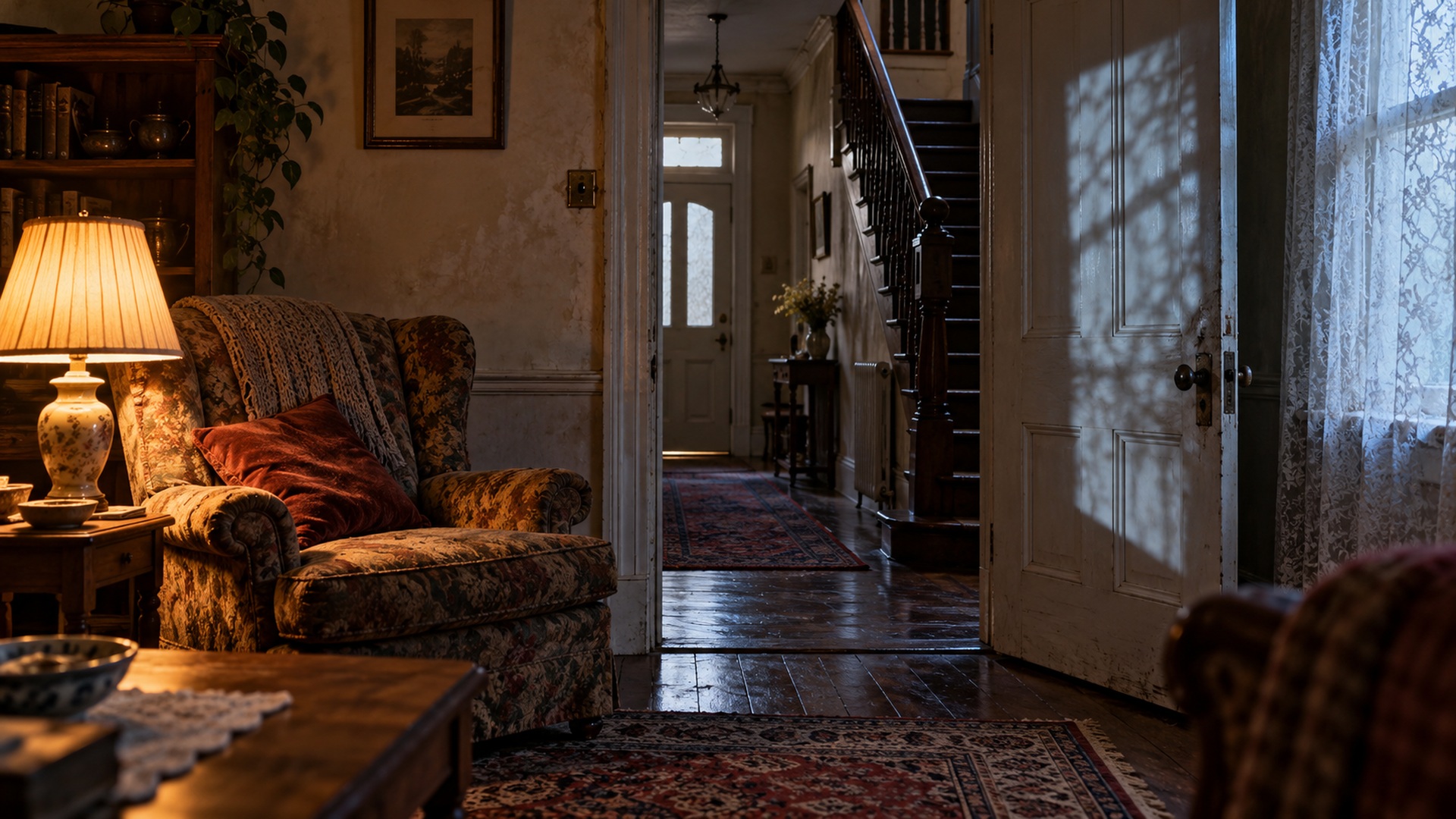
A roofless ruin exposes absence. The viewer must supply vanished floors, furnishings, and everyday activity to imagine the former building. An intact interior creates another tension: rooms remain recognizable, but the expected occupants are no longer there. Both conditions can feel haunting while directing attention toward different aspects of the past.
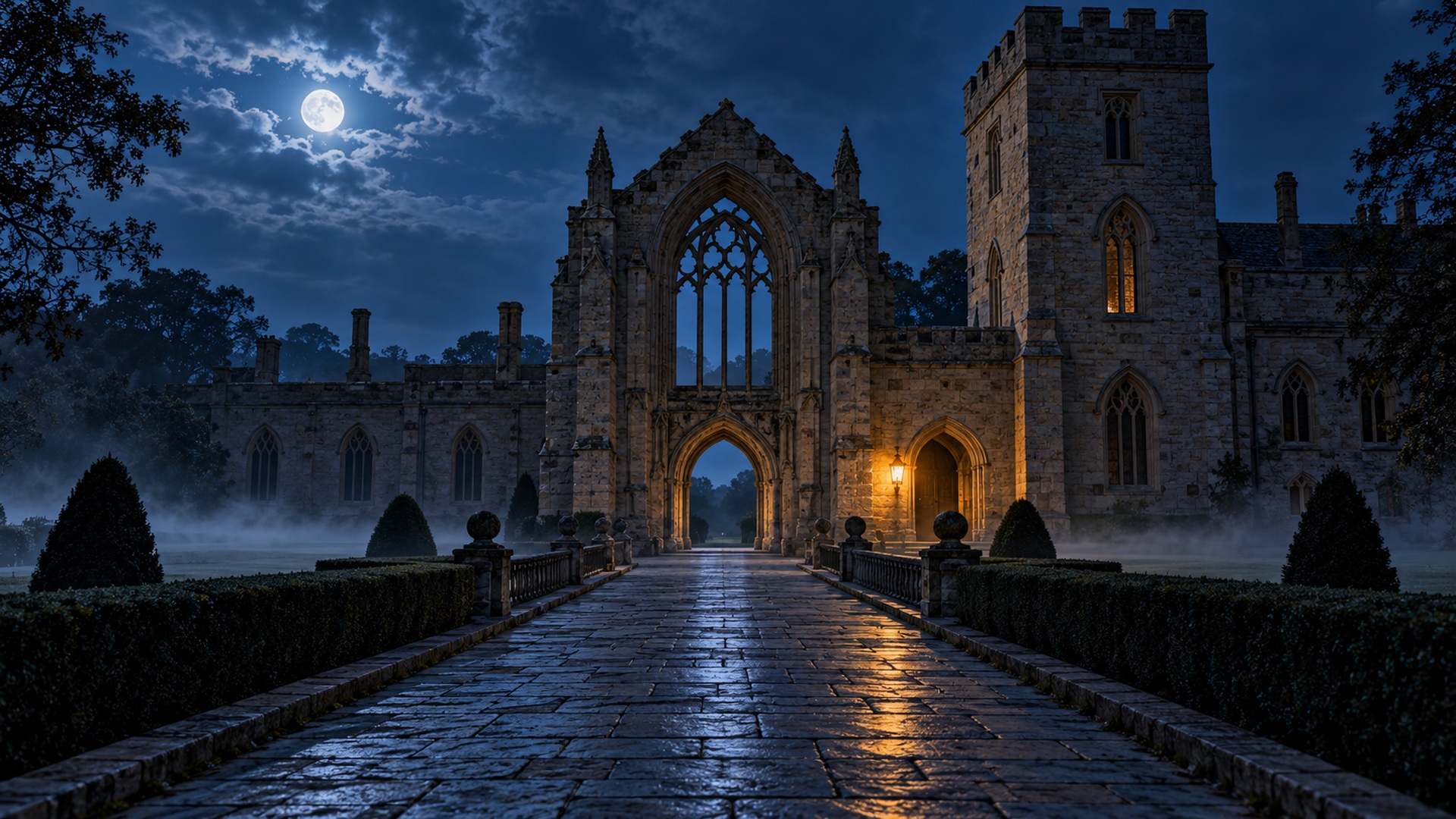
This distinction helps explain why a beautiful place can still feel unsettling. Daylight, open views, and careful conservation do not remove associations carried by its history. Conversely, darkness alone does not establish that a site has a long ghost tradition. The atmosphere produced by a photograph is one layer of interpretation, not a substitute for the place’s actual record.
For readers comparing sites online, notice how framing changes the apparent story. A close view of an empty window suggests enclosure, while a wider view may reveal gardens, neighboring streets, or ongoing conservation. Neither photograph necessarily lies. Each selects a different relationship between the structure and its surroundings.
Read the Structure and the Story Together
The Tower, Port Arthur, Bhangarh, Winchester, and the Queen Mary share a reputation for mystery, but their forms and histories differ sharply. One account centers royal figures, another an institutional landscape, another a curse, another an unusual home, and another an enclosed maritime world. Those differences are the substance of the comparison. The memorable haunted structure is not merely dark; it gives a particular story a place to return.
When reading the next account, ask what is documented about the building, who tells the haunting version, and which details belong to each strand. The questions deepen rather than dissolve the atmosphere. A well-told legend can remain compelling while its boundaries are clear. The structure becomes more vivid when its physical history and its imagined presences are both allowed to retain their own identities.
The Threshold Is Often the Detail That Gives the Story Its Shape
Compare the actual transitions in these accounts. At the Tower, guarded boundaries once controlled the movement of prisoners and royalty. At the Parsonage, a domestic doorway separates a family interior from an institutional settlement. At Bhangarh, ruined gates suggest a town whose former activity must be imagined. Winchester complicates the ordinary promise that a stair will lead somewhere usable, while the Queen Mary’s compartment doors divide many routines within one vessel. These details explain why the stories cannot simply be exchanged without losing something. Anne Boleyn’s return belongs to a place associated with royal custody and execution; the architectural puzzle of a blocked staircase belongs to another kind of narrative. The memorable haunted structure provides more than age, darkness, or a frightening name. Its history and layout give a particular legend a recognizable place to happen, while the attribution tells us which part of that account is history and which part is a story about a presence.