The Ghost Knows Which Staircase to Use
Castle ghost stories rarely remain abstract for long. A figure belongs to a stair, a voice comes from a chamber, or a well becomes the point around which a story turns. That precision gives the legend a route through the building. Castles already organize movement through gates, courtyards, guarded passages, and private rooms, so an unexpected presence can seem to violate an old rule about who belongs where. The main examples tell four attributed traditions from Chillingham, Stirling, Huntly, and Himeji. A short Bran comparison then separates a literary association from a returning-presence legend. These are stories attached to particular places, rather than a scientific ranking of hauntedness. Their power lies in those differences. A castle’s dark legend becomes more memorable when the reader knows which place, which version, and which kind of evidence is involved.
A: The guard, stored silver, water request, and locked entrance establish an ordinary arrangement that the visitor appears to violate.
A: The heritage account distinguishes the incident from unsupported narrative details.
A: No. Historic Environment Scotland distinguishes evidence for a fire from the unverified servant and prediction.
A: A specific feature associated with a local tradition, not proof of every retelling.
A: Household members report cold and illness, followed by voices and disturbance within the chamber associated with him.
A: Shared motifs do not establish one origin, identity, or meaning.
A: The Himeji City castle-history telling, in which an informant is coerced and falsely blamed after a plate is hidden.
A: A maintained room can retain strong associations with former occupation.
A: It may preserve rumors, beliefs, social relationships, or descriptions of interiors.
A: Their differences are part of the tradition's history and evidential limits.
Chillingham: A Request for Water Inside a Locked Pantry
Chillingham Castle’s own ghost-story presentation places a pale woman in the Inner Pantry. In that telling, a footman sleeps there to guard the silver. A woman in white asks him for water, and he begins to respond as though she were an ordinary guest. Only then does he remember the room is locked and that she should not have been able to enter. The story’s turn depends on his practical knowledge of the room, not on an elaborate visual monster.
The request is familiar enough to delay alarm. A guest might need water; a servant might fetch it. The unsettling moment arrives when the routine and the controlled entrance can no longer fit the apparent visitor. That gives the pantry a narrative function different from a generic gloomy chamber. It holds valuable objects, requires a guard, and should exclude an unrecognized person.
The castle also tells of indistinct male voices in its chapel, said to fall silent when someone tries to trace them. That is a separate kind of presence, organized around sound and an unsuccessful search. Both accounts are identified here as the castle’s presented traditions. They make rooms memorable through ordinary uses and reported exceptions, without turning a site’s promotional claims into a measured ranking of paranormal activity.
Stirling: The Green Lady and the Fire Story
Laurie Risk’s 2023 Historic Environment Scotland account retells a version in which the Green Lady was a servant attending Mary, Queen of Scots. She fears a fire, tries to remain awake to guard the queen, then accidentally sets bed curtains alight when she grows drowsy. Mary survives, while the servant dies in the legend. Her later presence is associated with the castle and its stairs. Another reported encounter has a green-clad figure pass a young soldier on the steps. These are attributed versions, rather than one independently established biography.
Historic Environment Scotland makes a crucial distinction: there is evidence for a fire, but not written evidence for the servant or her prediction. Keeping that boundary takes only a sentence and leaves room to tell the actual legend. Its power comes from failed protection becoming a continuing presence. A servant’s ordinary responsibility for a royal room is turned into a story about foreknowledge, accident, and return. The castle’s domestic interior matters as much as its military identity. The steps give a later observer a route along which the figure can appear, while the bed-curtain story supplies an explanation for who that figure is imagined to be.
Huntly: Voices in the Dead Earl’s Chamber
Historic Environment Scotland’s 2020 account by Rachel Pickering follows a narrative attributed to Richard Bannatyne about George Gordon, fifth Earl of Huntly, who died in 1576. After his death, members of the household are said to suffer terrifying cold and collapse before recovering. Later, Patrick Gordon hears speech, groaning, and rumbling within the Earl’s locked chamber. John Hamilton maintains that nobody could be inside. When men investigate with candles, the reported noises return at the doorway, turning a familiar room into a threshold they fear crossing. This is the story as transmitted in the written account, not a verified diagnosis or demonstration of a returning Earl. Its distinctive feature is the movement of attendants between hall, chamber, and doorway. The men know who controls access, so the sound contradicts the household’s own arrangement of space. Unlike Chillingham’s request from a visible visitor, the Huntly narrative offers voices without a corresponding body. The account also carries the religious and political outlook of its teller, which matters when suffering is presented as judgment. The account also lets the reader follow changes in confidence. A trusted household member says access was controlled, another hears the noises for himself, and a later group approaches together with light. Each attempted reassurance becomes another part of the frightening sequence. This is why the locked chamber matters more than an unspecified claim that the castle felt strange after a death. A brief attribution preserves that uncertainty without replacing the sequence of events with a long lecture about historical sources.
Himeji: Okiku’s Count Comes From the Well
Himeji City’s castle-history page identifies a local Banshū Sarayashiki telling. Okiku is sent into Aoyama Tetsuzan’s household to uncover a plot against the castle lord. After the plot succeeds, she continues sending information to her ally. Machitsubo Danshirō discovers her position and attempts to force her to marry him. When she refuses, he hides one of ten valuable plates and blames her for its absence. In the story, she is killed and thrown into the well; afterward, her sorrowful counting is heard there at night.
This gives Okiku more agency and a more specific predicament than a summary saying only that a servant lost a plate. The well becomes the place where the imposed accusation is endlessly revisited. Counting is an ordinary household task, but its repetition makes the missing object into a lasting injustice. The city’s account is a presentation of the legend associated with the site, not proof that the events happened as narrated. Other Sarayashiki versions belong to other settings and should not be silently combined with this one. At Himeji, the named well anchors the telling within a much larger castle complex. A visitor can locate the physical feature while recognizing that the reported nightly voice belongs to the narrative attached to it.
A Castle Is a Household as Well as a Fortress
Rooms that once served kitchens, storage, private apartments, worship, and administration give a castle more than one social world. Ghost stories often become specific when they follow those differences. A servant figure in a working space suggests another relationship to the building from a noble figure in a private chamber. Attending to ordinary functions prevents the entire past from being reduced to battles and dungeons. It also allows people beyond the most famous owners to remain visible in the place’s imagined life.
Thresholds Turn Apparitions Into Violations of Order
A locked room, guarded door, or private stair establishes a rule about access. A legend can then introduce a presence that crosses the boundary unexpectedly. The suspense depends on knowing the rule first. Without that context, the event may be only a figure in an old room.
This gives castle stories a distinctive architectural logic. The building controls movement, but the reported presence appears exempt from that control. The legend can therefore invert the fortress’s practical purpose. A structure designed to determine who enters becomes memorable for a visitor who seemingly requires no permission.
A Short Comparison: Bran and the Fictional Count
Bran Castle’s Dracula association is a different category from the four returning-presence stories above. Bram Stoker’s fictional count and a surviving Romanian castle are not the same kind of evidence. A dramatic silhouette can invite a literary association without establishing that a vampire lived there or that this building was the novel’s definitive model. Bran remains useful as a comparison because it shows how fiction can shape expectations of a real monument. It belongs beside the ghost traditions as a distinction, rather than as a fifth verified haunting.
Recurring Figures Can Travel Between Places and Versions
Named or color-associated female figures appear in many castle traditions, but resemblance does not prove one shared history. Different accounts may give them different origins, locations, and actions. A familiar motif can make a new story easy to recognize while concealing important local differences. Those differences deserve to be preserved.
A comparative article should therefore resist turning every similar figure into a single category with a fixed biography. Identify the site and version before describing what the figure supposedly does. If the local account admits uncertainty, retain it. A gap in the story is part of the surviving tradition, not an invitation to fill it with details borrowed from another castle.
The same caution applies to moral explanations. Some retellings present a presence as a warning, punishment, or expression of unresolved loss. That may be an interpretation offered by a particular teller. It should not automatically become a universal meaning assigned to every story featuring a similar apparition.
A Maintained Castle Can Feel as Unsettling as a Ruin
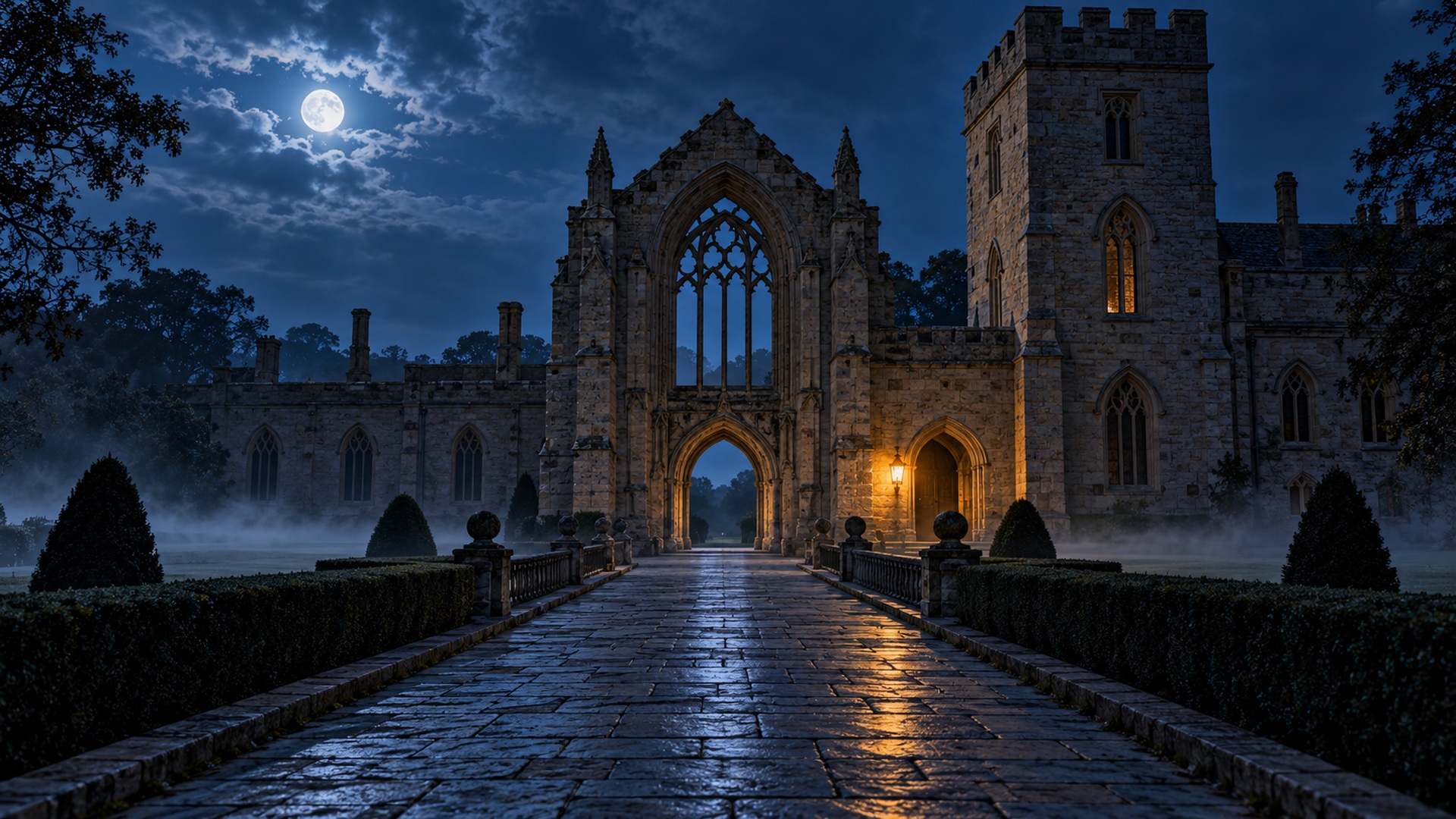
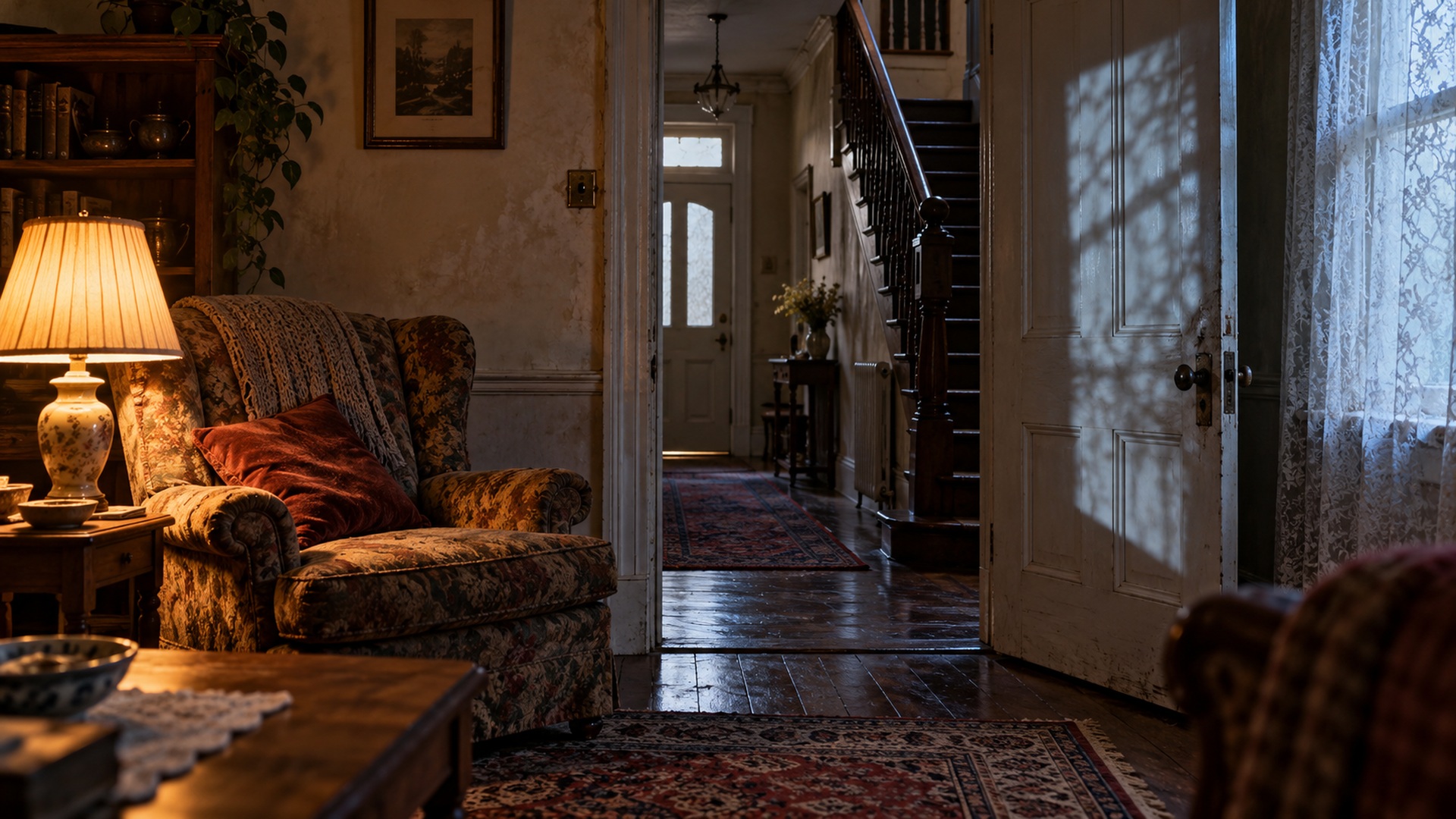
Decay is not necessary for a dark legend. An intact stair can make the implied route of a figure especially easy to imagine, while a restored room can preserve a strong expectation about its former occupants. A ruin instead asks the listener to reconstruct spaces that are partly missing. Both conditions can support atmosphere, but they do so differently. Recognizing that difference helps readers avoid mistaking the style of a photograph for the history or strength of a site’s tradition.
Compare the Route Through the Legend
Chillingham organizes accounts across rooms; Stirling exposes a boundary between an incident and later elaboration; Huntly raises questions about a written source. Himeji focuses attention on a well within a monumental complex, while Bran shows a real place reframed by a fictional association. Together they reveal several ways a castle acquires a dark identity. Their differences matter more than a supposed score for hauntedness.
As a reader, follow the story’s route: where it begins, which threshold it crosses, and what source supplies its details. Then return to the building’s ordinary history. The legend will usually feel more distinctive when the castle remains a particular place with particular people and uses. Its imagined presence becomes memorable because the architecture gives it somewhere precise to appear.
What the Castle Keeps When the Story Changes
Legends can acquire new details while stone stairs and room arrangements preserve another kind of continuity. That does not make the building an impartial witness to every claim made about it. It does provide material questions against which a version can be considered: where a route leads, which spaces existed at the relevant time, and how later changes altered them. A story may remain compelling even when those questions reveal differences between past and present. The contrast can show why one version emphasizes a vanished room while another centers a surviving doorway. Reading the architecture across time gives the legend a history of adaptation. The result is a castle with several layers of meaning, where folklore, documented use, and later imagination meet without becoming the same kind of evidence.