A Giant Footstep Is a Physics Problem
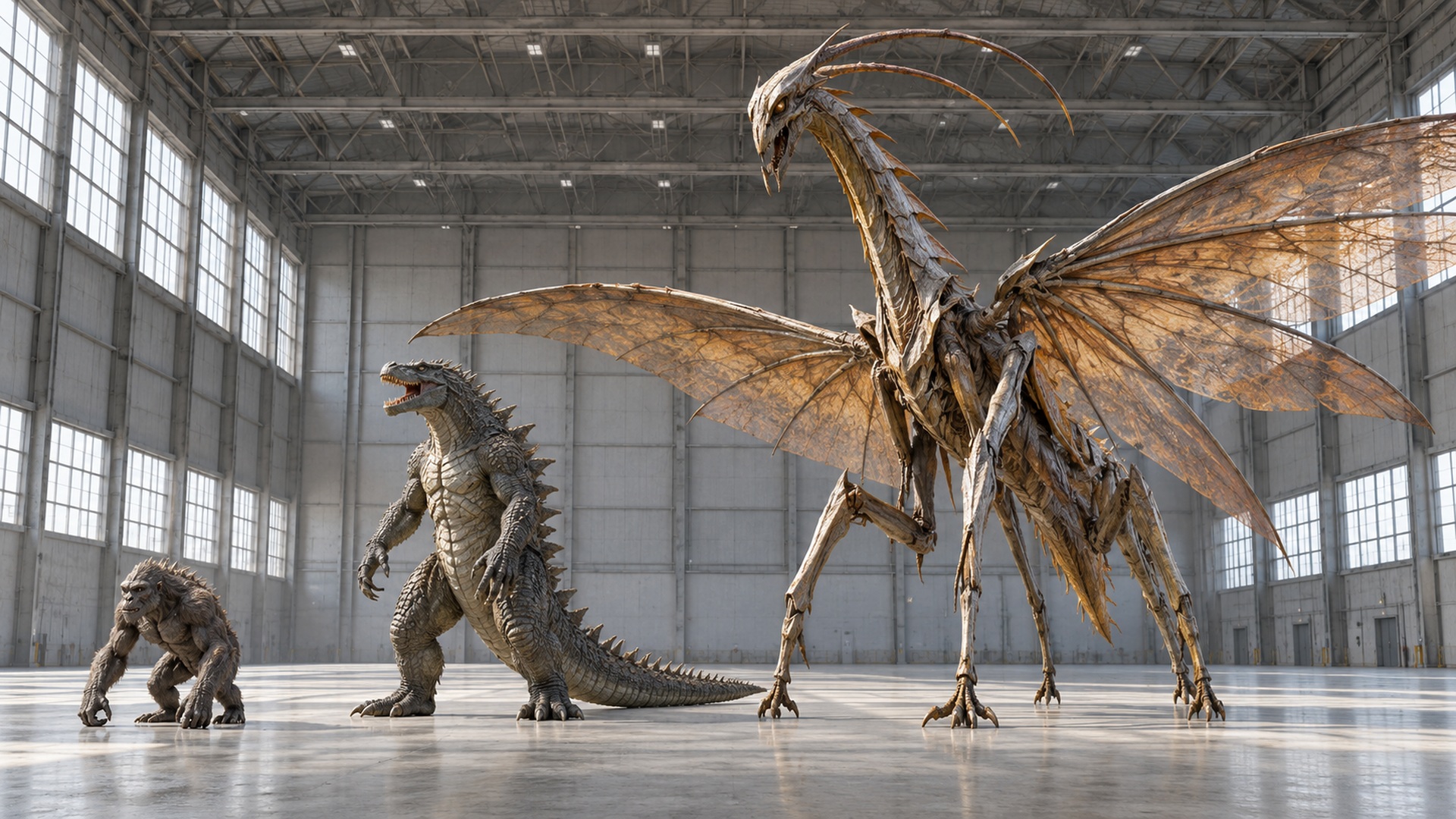
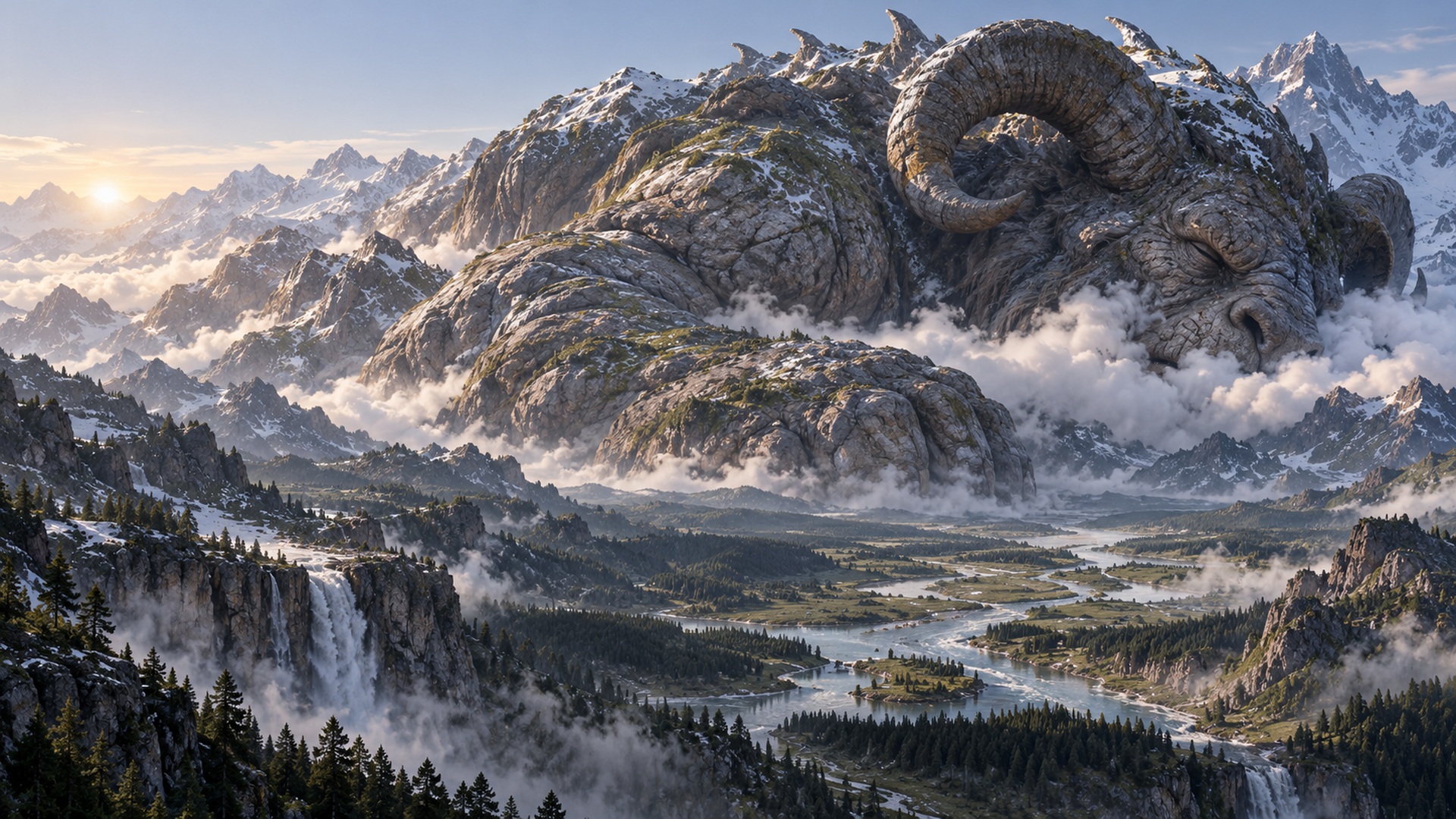
A monster clears a ridge, plants one enormous foot, and makes the landscape seem suddenly small. Cinema can deliver that moment in seconds, but a living creature would have to solve every problem hidden inside the image: holding its weight, moving blood uphill, getting oxygen into deep tissues, shedding heat, and finding enough food to grow. Asking how big monsters could really get therefore leads to several answers rather than one maximum height. A bulky land animal, a floating ocean giant, and a flying predator face different limits even if an artist gives them equally impressive silhouettes. Earth has already produced astonishing bodies, including towering sauropod dinosaurs and immense whales, so the useful starting point is not that giant life is impossible. It is that large bodies work through coordinated adaptations, favorable environments, and compromises. Once we separate those conditions from a movie creature’s unexplained powers, we can imagine giants that feel more convincing and identify the precise places where ordinary biology gives way to fantasy.
A: No. It explains scaling pressures; changed anatomy and lifestyles can accommodate much larger bodies.
A: No. Extra supports leave circulation, movement, heat, and food constraints unresolved.
A: Buoyancy reduces support demands, while their anatomy and feeding ecology make large aquatic bodies workable.
A: Possibly, but length alone cannot establish mass without body proportions and density.
A: No. Lift, muscle power, wing construction, and launching remain separate demands.
A: No. Sauropod gigantism involved interacting anatomical, developmental, and ecological traits.
A: Its weight would decrease, but accelerating its mass would still require force.
A: A persistent species also needs reproduction, habitat, and a population that can survive over time.
A: Yes, provided those materials are an explicit premise with consistent properties.
A: Choose its habitat and daily feeding strategy before assigning an impressive height.
Why Doubling Height Changes More Than Height
Imagine enlarging an animal without changing its proportions or tissue properties. Double every linear dimension and its external surface area becomes four times larger, while its volume becomes eight times larger. If density stays similar, mass also increases eightfold. This relationship, often called the square-cube law, describes geometric scaling. It does not say that every real species follows identical proportions, and it does not by itself identify a universal maximum size.
The difficulty appears when the larger animal must support that extra mass with bones and muscles whose cross-sectional areas increased only fourfold. Under the simplified assumptions, the load per unit supporting area rises. An oversized copy of a lightly built animal becomes mechanically less comfortable even before it starts running. Evolution can change its proportions, posture, and behavior, but those changes mean the result is no longer merely a scaled-up miniature.
A Land Giant Needs a Different Architecture
Huge terrestrial animals tend to distribute forces through substantial limbs and relatively supportive postures. A leg held closer to vertical can reduce some bending demands compared with a deeply crouched stance. Broad joints, altered bone geometry, cushioning tissues, and controlled foot placement contribute too. An animal’s skeleton is a dynamic structure subjected to twisting, impact, fatigue, and repair, so simply describing its bones as stronger leaves most of the engineering unexplained.
For a speculative monster, a heavy trunk balanced over several supporting limbs offers a more plausible starting point than an enormous human body standing on narrow ankles. Additional legs could spread static loads and improve stability, although they also require muscles, coordination, and developmental changes. A low center of mass can help resist tipping. None of these features creates unlimited size, but each changes which mechanical problem becomes critical first.
Behavior belongs in the design as well. A giant that moves deliberately across firm ground encounters different peak forces from one that leaps between cliffs. Quick turns demand lateral forces, and falls become increasingly consequential as bodies get larger. A convincing terrestrial colossus might avoid steep slopes, test soft ground, and use familiar routes because its daily movement is constrained by the same body that makes it intimidating.
Dinosaurs Show That Gigantism Is a Package
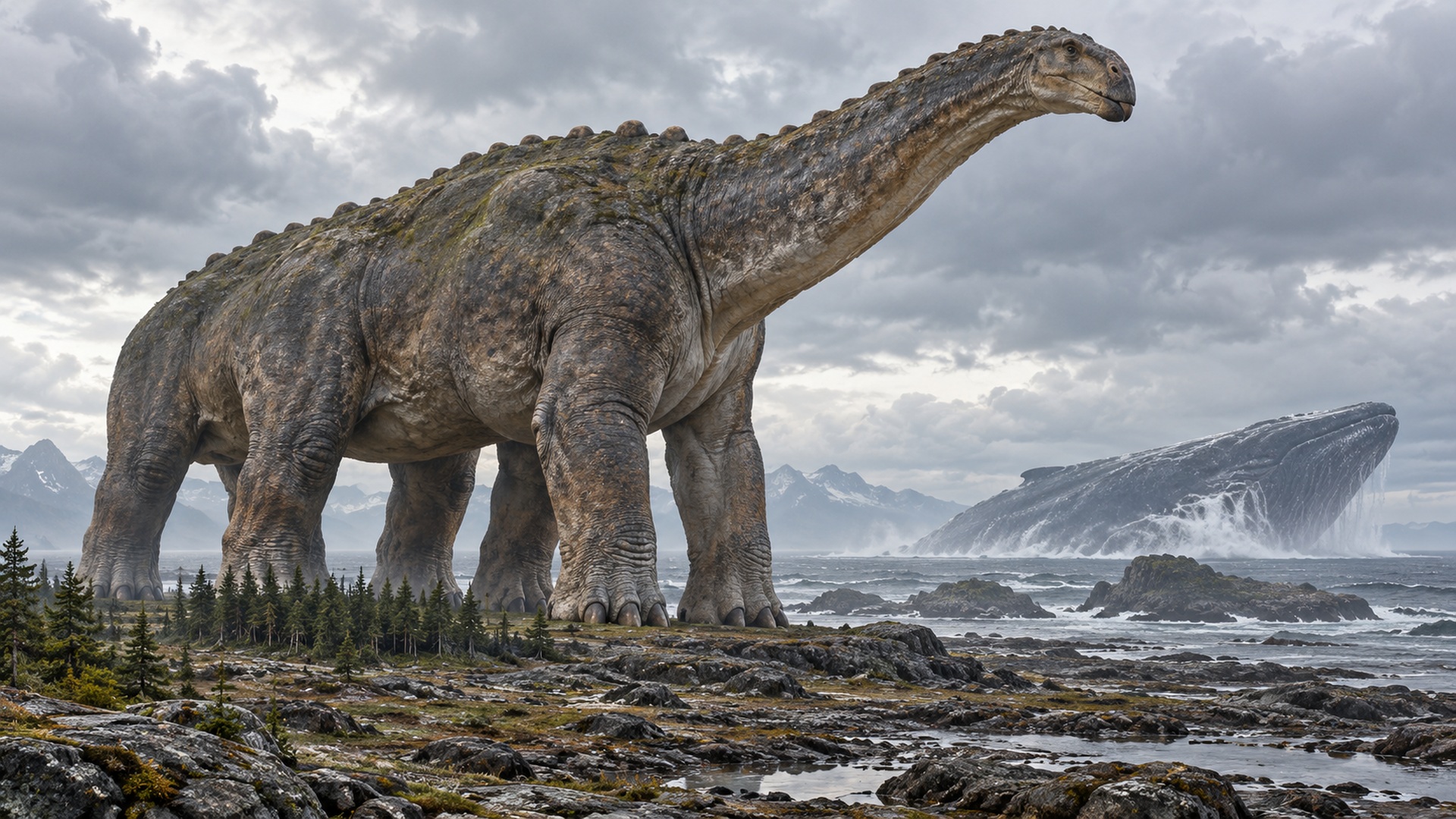
A useful land benchmark is Patagotitan, the long-necked dinosaur displayed as a full-size cast at London’s Natural History Museum. The museum gives an estimated length of about 37.5 meters and a mass of roughly 57 tonnes. Length includes the neck and tail; it is not the animal’s standing height. These reconstructed dimensions put a real giant beside the cinematic image without pretending that fragmentary fossils supply exact measurements.
In their 2011 Biological Reviews paper, Biology of the Sauropod Dinosaurs: The Evolution of Gigantism, P. Martin Sander and colleagues explain gigantism through an interacting package of inherited traits and evolutionary innovations. A relatively small head, long feeding reach, and specialized respiratory anatomy mattered together. An enormous dinosaur was not an elephant with longer legs. Fossil reconstructions also involve choices about missing bones and body volume, so estimates can change as researchers test different methods. The lesson is that land animals have reached tens of meters in length through distinctive anatomy, while a much taller upright movie monster would face a different support and circulation problem.
Water Changes the Support Problem
The Natural History Museum describes adult blue whales as commonly weighing about 72–135 tonnes, with the largest reaching around 180 tonnes. Those masses exceed the museum’s Patagotitan estimate even though a long-necked dinosaur can have a greater nose-to-tail length. In water, buoyancy offsets much of the gravitational load that an animal would otherwise place on its limbs or underside. That is a major reason enormous marine bodies are possible. A whale still has mass and inertia, however, so accelerating, turning, and stopping remain demanding. Water also resists movement, while diving and returning to the surface create physiological challenges. The ocean removes one important restriction and replaces it with a different set of opportunities and costs.
A hypothetical sea monster could therefore reach a size that would be implausible for an equivalent creature walking ashore. Its shape would matter: a streamlined body moving efficiently through water is different from a sprawling, heavily armored animal dragging a forest of appendages. Insulation, respiratory capacity, and the ability to find concentrated food would influence its workable scale. Buoyancy is an enabling condition, not a complete explanation for unlimited growth.
Whales also reveal why length and mass should not be confused. A long, slender organism can stretch farther than a bulky animal while containing much less tissue. Tentacles can increase apparent reach without turning the entire creature into a similarly massive body. When someone describes a sea monster as the biggest creature imaginable, asking whether they mean length, body volume, or weight often changes the comparison completely.
Flight Makes Giant Bodies Especially Demanding
A flying monster has to generate enough lift while carrying muscles, skeleton, organs, and its own lifting surfaces. Enlarging a familiar bird shape raises mass faster than wing area under simple geometric scaling. Bigger wings, altered proportions, different flight speeds, and favorable launching conditions can change the outcome, but each has consequences. A towering creature with tiny decorative wings would need a clearly fictional lifting mechanism rather than ordinary flapping flight.
Large extinct flying reptiles show that the limits of flight extend beyond the bodies of living birds. They also warn against treating every flyer as the same engineering problem. Launch method, wing construction, body posture, and atmospheric conditions all affect performance. For speculative design, a giant glider that launches from exposed heights and exploits rising air is a different proposition from an equally heavy animal hovering over a city.
Oxygen Must Reach Every Living Cell
Breathing is only the beginning of oxygen delivery. Air or water must reach an exchange surface, oxygen must cross into a transport system, and circulation must deliver it to working tissues. A large active monster therefore needs a coordinated respiratory and cardiovascular design. Giving it enormous lungs does not automatically solve long transport distances, pressure requirements, or the demands of a suddenly active muscle mass.
Body shape can ease or worsen those demands. A tall upright animal has to maintain blood supply at a head far above its heart, while a lower body changes that vertical challenge. An animal with long extremities must service them during movement and temperature changes. Specialized valves, vascular control, and heart performance might help, but plausible speculation should acknowledge that these are interacting systems rather than separate upgrades that can be added without cost.
Atmospheric oxygen is sometimes offered as a universal explanation for prehistoric giants. That oversimplifies both Earth’s history and animal diversity. Different groups breathe differently, and oxygen availability interacts with metabolism, development, temperature, and ecology. A monster world with altered air could support different possibilities, but its inhabitants would still need functioning transport systems. Extra oxygen does not repeal the mechanics of supporting a body or the need to obtain energy.
Heat and Food Can Set the Working Limit
Large bodies generally have less external surface area relative to their volume than small, similarly shaped bodies. That can help retain heat in cold conditions, but it can complicate cooling during sustained activity. Internal heat production depends on metabolism and behavior, so a slow aquatic giant and an intensely active land predator cannot be assigned the same thermal problem. Exposed surfaces, circulation changes, and access to cool environments could all contribute to heat management.
Food supply adds a restriction that spectacular creature battles usually ignore. A very large animal needs enough usable energy across seasons and over its lifetime. Predators depend on productive prey populations, while enormous herbivores must obtain and process suitable vegetation. Feeding efficiency, digestive capacity, and travel costs can matter as much as the amount swallowed during one dramatic meal.
Compare two equally heavy imaginary giants: one harvests abundant low-growing plants, while the other eats only large animals. The grazer’s problem is processing a bulky diet and reaching productive feeding grounds. The predator also depends on energy already spent growing its prey, and may travel much farther between profitable encounters. Neither body receives a sustainable food supply simply because its stomach can accommodate a huge meal. Its feeding strategy must work through lean seasons as well as periods of abundance.
One giant surviving briefly is different from a species persisting. A breeding population requires multiple individuals, successful offspring, and enough connected habitat to survive bad years. Large animals leave feeding traces, waste, carcasses, and effects on other species. Describing a hidden population as ordinary wildlife therefore creates an ecological problem as well as an anatomical one: where does its energy come from, and what evidence would its daily life leave behind?
Could Another World Make Larger Monsters Possible?
Lower gravity would reduce body weight for the same mass, easing some structural loads on a terrestrial animal. It would not remove inertia, the need to circulate nutrients, or the energy required to move tissues. A denser atmosphere could change flight opportunities, while deeper or more productive seas could alter aquatic lifestyles. Because planetary conditions interact, changing one number should lead to a redesigned ecosystem rather than an Earth animal receiving unlimited growth permission.
Material assumptions matter too. A fictional organism with tissues unlike terrestrial bone and muscle may tolerate loads beyond familiar biology. Once that premise is introduced, its properties need to remain consistent. Extremely tough tissues might resist damage yet impose costs in growth, flexibility, or repair. A story becomes more satisfying when an unusual material solves a named problem and creates understandable tradeoffs instead of functioning as an explanation for every impossible feat.
A smaller planet would not automatically be a comfortable home for giants. Surface terrain, available nutrients, ocean chemistry, and the stability of a climate would still influence where complex life could thrive. A writer can select favorable conditions, but those choices should create a coherent place rather than a collection of unrelated exemptions. That coherence also offers storytelling opportunities: a visitor from a low-gravity world might move cautiously on Earth, and a marine giant adapted to one ocean might fail in another. Environmental dependence makes extraordinary scale more distinctive because the animal belongs somewhere.
Build a Plausible Giant From Its Habitat Outward
Start with the environment and everyday life. Decide whether the creature is supported by water, stands on firm land, or must take off under its own power. Give it a feeding strategy, a movement style, and a way to cope with temperature. Then consider what its limbs, organs, and behavior must do together. This approach produces an animal whose scale affects the whole design rather than a small creature that happens to have an enormous measurement attached.
The most defensible answer to how big monsters can get is therefore conditional. Earth proves that bodies far larger than humans are possible, while physics explains why familiar shapes cannot grow without changing. The ocean permits solutions unavailable on land, flight adds demanding constraints, and food webs restrict what a population can sustain. A biologically convincing giant earns its size through anatomy and ecology. A fantastical giant can exceed those limits, but knowing which limits it crosses makes its impossible presence more vivid.