A Protected Posture Can Say More Than a Threat Display
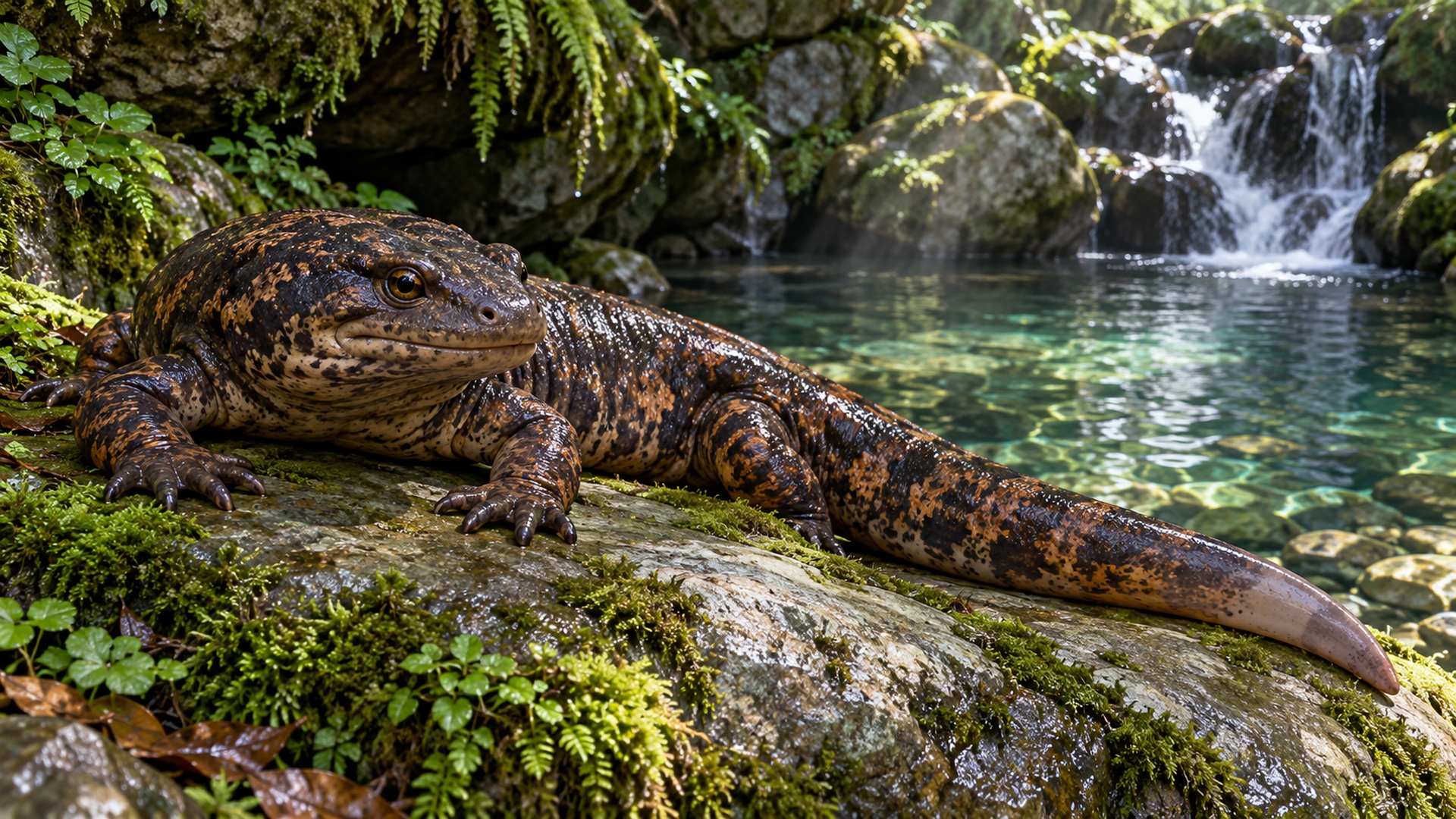
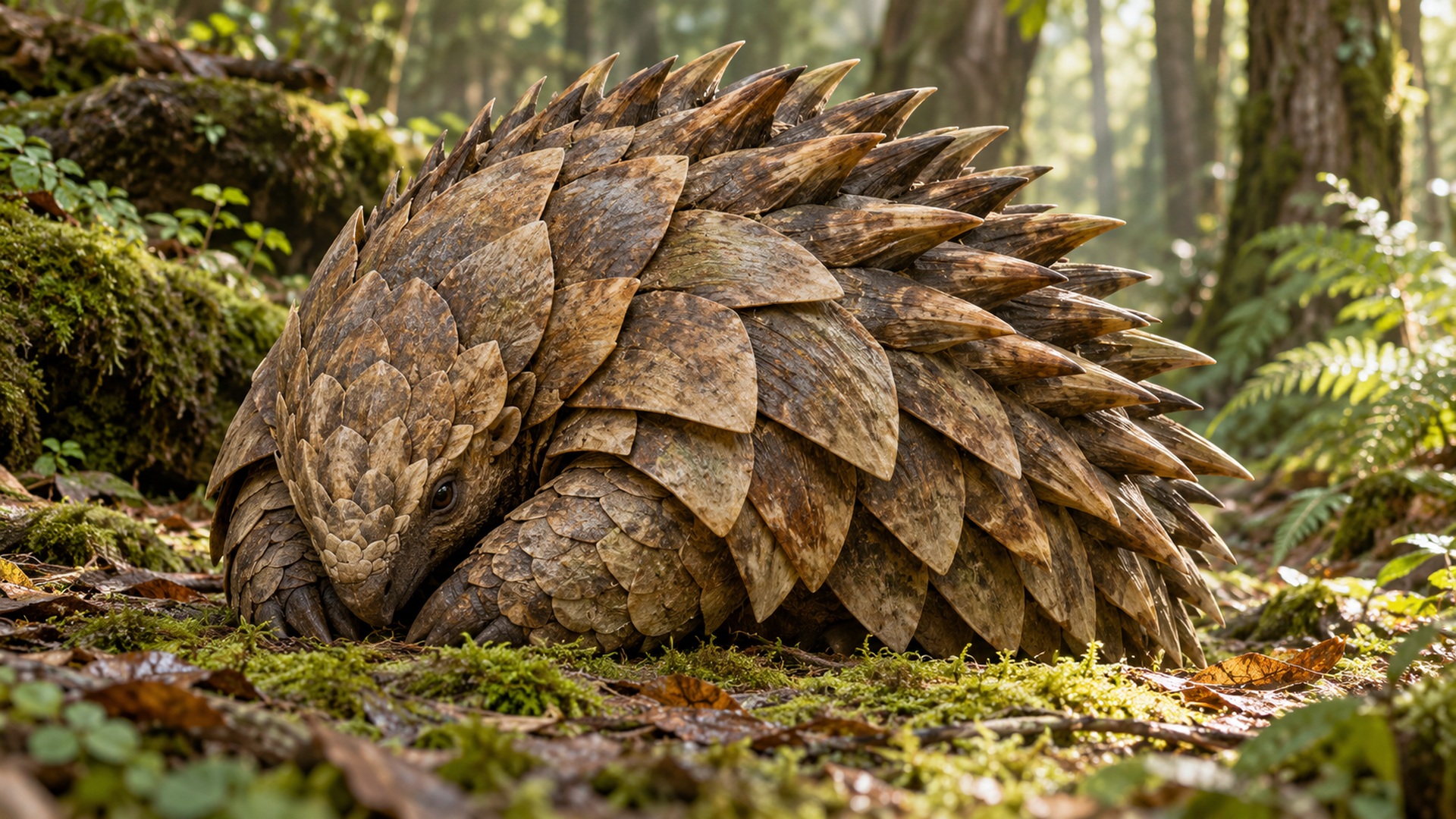
A creature turns away from an approaching disturbance, lowers its head, and brings a heavily protected back into view. Its first response is not an attack. It is a rearrangement of what the other animal can reach. That simple action captures the logic of biological defense: survival traits work against particular threats under particular conditions. Armor can reduce some damage, spines can complicate contact, chemicals can discourage an encounter, and camouflage can prevent one from beginning. Escape and shelter can be as important as any spectacular body feature. A monster becomes more convincing when these options form a coordinated strategy rather than a collection of claims that nothing can harm it. Each protection occupies space, costs resources, and can limit another activity. Exploring those relationships reveals how an extraordinary animal might defend itself while retaining the tradeoffs that make living bodies work.
A: A covering can resist some damage while still transmitting loads.
A: Its movement determines which regions an opponent can reach.
A: Their functions can include display, competition, support, or other roles.
A: A venom claim needs a specialized delivery relationship rather than chemistry alone.
A: A signal can avoid an encounter and conserve a costly or limited resource.
A: Appearance alone does not establish the underlying mechanism.
A: Reducing detection or recognition can prevent a dangerous encounter from beginning.
A: A particular situation may bypass its strengths or impose unnecessary costs.
A: Complementary behavior and anatomy can reduce reliance on a single trait.
A: The protection, recurring threats, habitat, behavior, and costs fit the same animal.
Define the Threat Before Selecting the Defense
A body protected against abrasion is not automatically protected against every impact, pressure, or environmental condition. Different threats load tissues in different ways or avoid direct mechanical contact entirely. The relevant defense depends on what the animal commonly encounters. A creature that spends its life among rough rocks may need a different surface from one that faces gripping predators.
Life stage matters too. A small juvenile can face a different set of opponents from an established adult. The same structural trait can change in effectiveness as body proportions and behavior develop. A coherent monster species therefore need not have identical defenses throughout its life. Protection can grow, shift in emphasis, or be supplemented by different behavior.
This threat-first approach also improves visual design. A broad shielded back suggests one set of encounters; flexible protection around a narrow burrowing body suggests another. The animal’s posture should expose those relationships. Its defense becomes understandable through what it protects and how it places that protection between its vulnerable tissues and the relevant threat.
Armor Reduces Some Damage Without Erasing Force
Natural armor can include scales, plates, shells, and other specialized coverings. Their materials, arrangement, and attachment influence how they respond to contact. A hard surface can resist certain kinds of penetration while transmitting load to underlying tissues. Describing a covering as tough does not explain every outcome for the body beneath it. A monster’s armor therefore needs a mechanical role and a supporting anatomical arrangement rather than a blanket promise of immunity.
Joints Make Coverage a Moving Problem
A protected body still needs to move, feed, breathe, grow, and interact with its environment. Rigid surfaces must be arranged so that necessary motion remains possible. Overlap, flexible regions, and body posture can reconcile some of those demands, but each solution changes how the animal behaves. A shelllike structure around a compact torso creates different movement possibilities from rows of smaller articulated plates.
Armor can affect performance as well as contact protection. Matthew A. Kolmann and colleagues’ 2020 paper Swimming and Defence: Competing Needs Across Ontogeny in Armoured Fishes examines northern spearnose poachers. Their armor changes as they grow, and the study cautions against the simplistic equation of more armor with slower swimming. A fictional monster can draw on that general principle: a protective covering is part of a moving body, and its benefits should be considered alongside its effects on ordinary activity.
Spines Change the Cost of Making Contact
A North American porcupine makes the role of spines concrete: its quills are modified hairs that can detach on contact, rather than projectiles fired at an attacker. Presenting the quilled surface and keeping vulnerable areas away from a threat is part of the defense. A monster with a protected back similarly needs a posture that puts the protection between itself and the likely contact. Long points alone do not explain how it survives an approach from every direction.
A spine also has to survive use and coexist with the rest of the body. Long projections can catch on vegetation, interfere with narrow passages, or require a substantial supporting base. A creature covered in extremely long points may look formidable in a neutral illustration while struggling with its proposed habitat. The design should explain how it moves without constantly obstructing itself.
Not every projection needs the same function. Horns or ridges may participate in display, competition, support, or other activities rather than ordinary defense alone. Assigning a function should follow the animal’s behavior and anatomy. A monster can retain a striking silhouette while its features have specific roles instead of all being interchangeable weapons.
Chemical Protection Needs Production and Delivery
A chemical defense depends on substances the animal produces, obtains, stores, or releases, together with the route by which they affect another organism. Venom is generally associated with specialized delivery, while poisonous effects can arise through exposure routes such as ingestion or contact. Those distinctions matter more than using every unpleasant secretion as a synonym for venom. A fictional species needs an actual mechanism linking chemistry with the encounter.
A striped skunk illustrates directed defensive spray, whereas a poison dart frog illustrates toxic skin secretions; neither is simply a snake-like injection system. Those routes create different encounters and different demands for storage or replenishment. A fictional chemical specialist may therefore warn or retreat before releasing a limited supply. Its chemistry becomes more convincing when the account identifies what is released, how another animal encounters it, and what the carrier must replace afterward.
Warnings Can Prevent an Expensive Test
A display can communicate that approaching or handling the animal may be costly. Color, posture, sound, and movement can contribute, depending on the species and receiver. The display’s value depends on how other animals perceive and respond to it. Bright coloration alone is not a universal guarantee of chemical defense, and an unfamiliar receiver may not interpret a signal in the expected way.
A monster can use a sequence rather than one permanent threat posture. It may become still, orient a protected surface, reveal a contrasting region, and only escalate if the encounter continues. That progression gives the audience information about its state. It also gives other animals a chance to avoid the costs of a physical confrontation.
Deception and resemblance can complicate signaling. A receiver may generalize from one costly encounter to another appearance, while a species can benefit from being mistaken for something less manageable. Such relationships need ecological context. They should not be used to conclude that every dramatic pattern means the same thing in every fictional habitat.
Concealment Protects by Reducing Encounters
A defense need not act after contact begins. A leaf-tailed gecko resting against bark illustrates how body outline, surface pattern, and posture can work together. Background matching, disruptive appearance, and restrained movement can reduce the chance of detection or recognition. Their effectiveness depends on the observer and the setting. A creature may be difficult to notice against a rock face yet conspicuous against open sky. This makes habitat selection part of its defensive system rather than a separate aesthetic choice.
Protection Changes Across a Lifetime
A young creature need not defend itself in the same way as a full-grown adult. Its size, developing covering, available shelters, and ability to move through small spaces can change which strategies are practical. A juvenile could rely on concealment in dense ground cover while adults occupy more exposed routes. This is a possible fictional life history, not a rule that all armored animals follow.
Such differences can explain why observers initially misidentify related individuals. A small hidden form and a large conspicuous one may share anatomy without sharing the same visible defensive behavior. To keep that relationship legible, retain some consistent features while changing their proportions or use. The transition can then tell the audience something about growth and habitat rather than functioning as an arbitrary replacement of one creature with another.
Seasonal condition and immediate circumstances can also influence how a defense is used. An animal attending young may remain near shelter, while one traveling alone can retreat along a broader route. A protective posture that works during a brief confrontation may interrupt feeding if maintained continuously. These limits help distinguish a living strategy from a permanent display pose. They also create a reason to show the monster between dramatic encounters: resting, moving through cover, and interacting with its surroundings reveal how the protection fits its life. A defensive trait becomes most convincing when the creature can afford to carry it every day, even on days when no rival or predator appears.
Escape and Shelter Can Outperform a Heavier Covering
Avoiding contact through rapid departure, climbing, entering water, or reaching a refuge can be a viable defense when the animal’s body and environment support it. The value of speed depends on the route available, while the value of shelter depends on whether it excludes the relevant threat. A gap that protects a small individual may be unusable for a much larger adult.
Shelter also links defense with daily life. A creature may rest near an accessible refuge, choose feeding areas that preserve an exit, or travel along routes that reduce exposure. These choices can explain recurring locations in a story. The monster is not merely waiting there for characters; the place supplies a survival function.
Several Layers Can Reduce Reliance on One Trait
A creature can combine avoiding detection, warning, presenting armor, and withdrawing. The layers need not all be maximally developed. A moderate covering may be sufficient when behavior prevents the most dangerous contacts. That combination can be more plausible than a surface required to withstand every possible event because no other survival behavior exists.
Redundancy also has limits. Adding structures can increase mass, interfere with movement, or compete for developmental and maintenance resources. A design with every possible defense should explain how the features coexist. The most convincing combinations solve related ecological problems without producing an animal unable to carry out ordinary feeding, reproduction, and travel.
Individual condition can change the available layers. A damaged covering, depleted secretion, or restricted refuge may make the animal rely more on avoidance. That variation lets a monster behave differently across encounters while keeping its biological rules consistent. It also makes the environment and the animal’s recent history relevant to what happens next.
Every Defense Belongs to an Ecological Relationship
A protective trait evolves or persists in relation to demands placed on a population, not to a universal list of imaginable dangers. Opponents change, habitats shift, and new situations can expose limits that ordinary encounters rarely test. A highly effective specialist can therefore remain vulnerable outside the conditions that shaped its strategy. That is a general property of adaptation rather than evidence that its protection was never useful.
For monster design, identify the recurring threat, the defense that addresses it, and the behavior that makes the defense available. Then account for the costs and the tasks it does not solve. Armor, spines, chemistry, warnings, concealment, and escape become different answers within one life. The creature feels formidable because its survival strategy is coherent, while its limitations make that strategy understandable.
A Forest Defender Still Needs to Travel Through the Forest
Imagine a low, heavily plated animal moving through roots and fallen branches. Its spines discourage close contact, yet their length and orientation also affect how it passes through narrow gaps. The animal might lower flexible projections while traveling and raise them during a display, or keep rigid spines concentrated on surfaces less likely to snag. Either arrangement connects protection with ordinary movement. Covering every surface in the longest possible points would create a different set of problems for resting, feeding, and sharing space with its own species. The believable design is the one whose defenses remain compatible with the places where the animal spends most of its life.