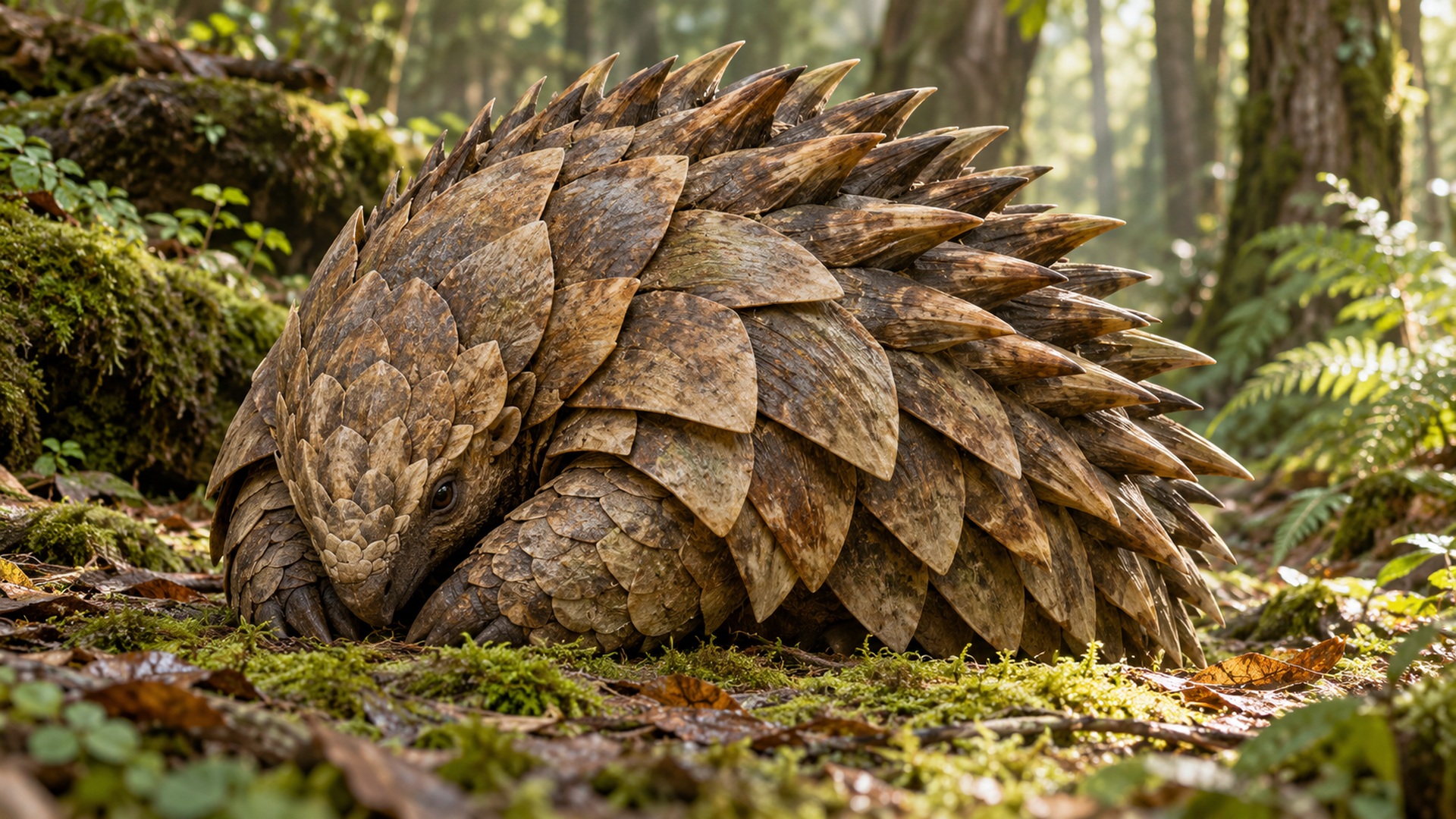
Surviving Is a Sequence, Not One Property
A monster survives an encounter that should have ended the scene, then returns with its damaged body restored. The result can look like one extraordinary trait, but several different mechanisms are being implied. The animal first has to resist or tolerate the initial damage, preserve enough essential function to remain alive, and obtain the conditions needed for recovery. Repairing tissue is different from never receiving damage, while remaining alive is different from immediately performing at full capacity. Real biology offers remarkable examples of resilience and regeneration, yet none supplies a universal exemption from physical limits. A convincing nearly unkillable creature combines specific protections with a workable recovery strategy. Understanding the sequence makes its persistence more impressive because the audience can see what it must accomplish between the moment of injury and its next appearance.
A: Resistance and recovery address different stages of survival.
A: Tolerance can preserve essential function without preserving full performance.
A: Real regenerative processes involve organized, constrained tissue contributions.
A: Suitable matter, patterning, connections, integration, and continuing essential function.
A: Common dependencies can affect multiple components together.
A: Protection from further disturbance can support the conditions needed for recovery.
A: It may have remained alive in a specialized state with defined limits.
A: The particular conditions and mechanism do not justify unrelated claims automatically.
A: It connects the later return with a process, requirements, and a timescale.
A: The same resistance, tolerance, resource, and reconstruction rules apply across encounters.
Resistance, Tolerance, and Recovery Answer Different Questions
Resistance reduces the damage produced by a particular event. Tolerance concerns the ability to retain function despite damage, while recovery restores some capability afterward. A hard covering, a body with spare functional capacity, and a regenerative process therefore represent different explanations. They should not be used interchangeably merely because each can contribute to survival.
Separating them also clarifies a fictional encounter. The monster might withstand one kind of contact but be temporarily impaired by another, then recover in a suitable refuge. That behavior can follow one consistent biology. Calling it invulnerable would conceal the sequence and make later limitations seem arbitrary even when the underlying design makes sense.
A Durable Surface Needs a Body Beneath It
Armor, thick skin, and specialized supporting tissues can change how an animal receives loads. Their usefulness depends on the type, direction, duration, and distribution of the event. A surface that resists one mechanical challenge does not automatically protect organs from every consequence. A monster’s supporting anatomy must work with the outer layer rather than being ignored whenever the covering looks sufficiently imposing.
Essential Function Can Fail Before the Exterior Looks Ruined
Living bodies depend on coordinated processes such as transport, exchange, signaling, and energy supply. A spectacularly intact silhouette does not prove that all of those processes remain adequate. Conversely, some visible damage can be survivable if essential functions continue. The appearance of a body is only an incomplete guide to its physiological state.
For creature design, identify what must remain operational while recovery proceeds. A fictional organism can have unusual arrangements, but the alternatives need an explanation. A damaged region cannot simply be declared irrelevant if earlier scenes depended on it for movement or sensing. Continuity across those scenes makes resilience a meaningful trait rather than a permission to disregard consequences.
This does not require cataloging ways to destroy the creature. The more useful explanation follows its dependence on working systems. A survivor may retreat, change gait, reduce activity, or rely on another sensory channel while a function is impaired. Those adjustments communicate tolerance without implying that nothing happened.
Regeneration Requires Organized Reconstruction
Replacing a complex structure involves more than making additional cells. Tissues need appropriate identities, positions, connections, and integration with the surviving body. Martin Kragl and colleagues’ 2009 Nature paper, Cells Keep a Memory of Their Tissue Origin During Axolotl Limb Regeneration, traced contributions from different tissues during limb rebuilding. It found important restrictions associated with tissue origin, rather than a pool of cells freely becoming every possible structure. The biological process is organized and specific, not a generic substance that can instantly become any missing part.
A fictional regenerator can extend that capacity, but the rebuilt structure should still have a functional sequence. New tissue must become supplied, connected, and mechanically useful. A visibly restored outline does not by itself establish complete recovery of strength, sensation, or control. Treating those as linked but distinct stages makes regeneration more believable and gives the intervening time a role in the story.
Material and Energy Cannot Be Omitted
A body rebuilding tissue needs suitable matter and a source of usable energy. The resources can come from intake, reserves, or an explicitly invented mechanism, but they must come from somewhere. Rapid reconstruction at enormous scale makes that requirement more consequential, not less. A monster cannot gain a complete replacement body through ordinary biology while its material budget remains unchanged and unexplained.
Recovery may therefore influence feeding and activity. The animal could use reserves, seek resources, or reduce other expenditure while repairing. These behaviors connect regeneration with its ecology. A long-lived survivor becomes more coherent when its repeated returns are supported by a habitat and resource cycle rather than by recovery occurring outside the rest of its life.
An extraordinary energy source would solve only part of the problem. Matter, organization, and integration remain relevant unless the fictional premise addresses them too. Defining the exception helps prevent one impressive ability from silently becoming a solution to every unrelated limitation. The creature can be fantastical while retaining understandable internal rules.
Redundancy Can Preserve Capability Under Specific Damage
Some systems can continue operating with reduced capacity or alternative pathways, depending on their organization. A fictional creature might have distributed structures or multiple components serving related functions. That design could improve tolerance of certain localized problems. It would not automatically eliminate common dependencies that affect all of those components together.
Redundancy also requires resources and coordination. Additional structures occupy space and need maintenance, while their outputs must remain usefully integrated. A monster with several similar organs still needs a reason those organs improve survival under the threats it actually faces. Merely multiplying visible parts is not a complete physiological explanation.
Dormancy Is a Conditional State, Not Resurrection
Reduced activity or a specialized dormant state can help some organisms survive particular periods of unfavorable conditions. Such a strategy needs the appropriate physiology, preparation, environment, and transition back to activity. It should not be confused with restoring a body whose essential organization no longer exists. A monster that appears lifeless and later moves may have remained alive in an unusual state, but the story needs evidence or a stated premise for that interpretation.
Persistence Has an Ordinary Side
The survivor also has to maintain its body when nothing dramatic happens. Feeding, resting, and avoiding repeated disturbance can support that continuity. These ordinary activities make later recovery part of the same life rather than a separate supernatural routine.
A brief view of the creature returning to its familiar spring can therefore carry substantial meaning. The audience recognizes a place associated with survival and anticipates a possible return. That expectation comes from established behavior, leaving the monster formidable without making its biology limitless.
Barriers and Maintenance Matter Between Dramatic Events
A damaged surface can affect more than immediate mechanics. Living tissues need suitable conditions and protection against further disruption while they recover. Biological maintenance also addresses ordinary wear, not only spectacular injury. A creature that survives repeated encounters over many years needs those processes to function between the scenes where its resilience is tested.
Repair and defense can interact. A protective posture or refuge may reduce new loads on a recovering region, while behavior limits exposure until function improves. That relationship makes an apparent retreat compatible with extraordinary durability. The monster is preserving the conditions under which its survival machinery works.
Its history can remain visible through scars, altered growth, or changes in behavior. Perfect cosmetic restoration is not the only possible sign of successful recovery. A consistent record of past events can make a resilient animal seem older and more experienced. It also shows that survival has involved adaptation rather than an uninterrupted absence of consequences.
Surviving One Extreme Does Not Establish Universal Resistance
Popular descriptions of hardy organisms often turn a specific experimental result into a claim about every hostile environment. That leap ignores the conditions, duration, life stage, and definition of survival used in the observation. A fictional species can be inspired by real resilience without inheriting every exaggerated claim attached to it. The mechanism should remain matched to the stress it actually addresses.
The same restraint applies inside a story. Surviving cold does not explain tolerance of every chemical or mechanical event. Regenerating one appendage does not prove the animal can rebuild from any remnant. Distinct abilities can coexist, but each additional claim needs support from the design. Otherwise nearly unkillable becomes an undefined label rather than a property readers can understand.
A Recovery Scene Can Make Persistence More Frightening
Showing part of the recovery process gives the later return a causal history. The creature may choose a protected microhabitat, alter its movement, or use resources differently while a damaged structure changes. The audience learns that it can recover under particular conditions. Its next appearance then confirms a process rather than simply reversing the previous scene.
That knowledge can sustain suspense without making every encounter meaningless. The animal’s resilience has limits, requirements, and a timescale. Characters may misunderstand those conditions, and the creature may protect them instinctively or through experience. Both sides act within the same world instead of the monster receiving a new exception whenever it needs to continue.
Different observations can mark different stages of recovery. A closed surface suggests a restored barrier, coordinated motion suggests working control, and carrying the animal’s ordinary weight tests another part of the reconstruction. None of these observations alone proves that every internal structure has returned to its earlier condition. Keeping the milestones separate explains how an animal can look improved while still moving cautiously or spending longer in shelter.
The Refuge Can Reveal What Survival Depends On
Imagine a robust salamander-like monster returning to a shaded spring after a difficult encounter. It rests with its body supported, moves less often, and later emerges with a smoother section at the end of its tail. Those observations suggest a recovery sequence without establishing that the spring magically restores everything. The water, shelter, reduced disturbance, and time spent there could each belong to the explanation. A story can reveal which conditions matter through repeated, consistent observations rather than through one unexplained transformation.
Its next appearance should preserve some relationship to the interval that has passed. Early movement might be careful, followed by more confident use of the restored structure. A visibly different surface can indicate a newer region without requiring an open injury or a detailed depiction of damage. The observer learns that the creature persists through a process. Its return is formidable precisely because that process is reliable under the conditions the animal knows how to obtain.
Separate What Was Observed From What Was Assumed
Witnesses often see the event and the eventual return while missing the time between them. From those two observations, they may conclude that the monster recovered instantly or could survive anything. Neither conclusion necessarily follows. The animal may have retreated, received support from its habitat, or spent a substantial interval operating with reduced capability. A careful explanation can preserve the mystery while distinguishing evidence from inference. Describe the state in which the creature was last seen, the duration of the gap, and what is demonstrably functional when it returns. If a limb looks complete but has not yet carried weight, full mechanical recovery remains an assumption. If the monster appears after many seasons, its return does not establish the same recovery speed as reappearing before dawn. These distinctions make witness accounts richer and keep later scenes consistent. They also allow an extraordinary survivor to retain uncertainty without granting it every conceivable ability. The strongest nearly unkillable design has a recognizable boundary between its demonstrated resilience and the reputation built around it. Legends can enlarge that reputation, but the underlying animal still needs a coherent way to remain alive, rebuild what it can, and resume its place in the environment.