Natural Armor Has to Bend With the Animal
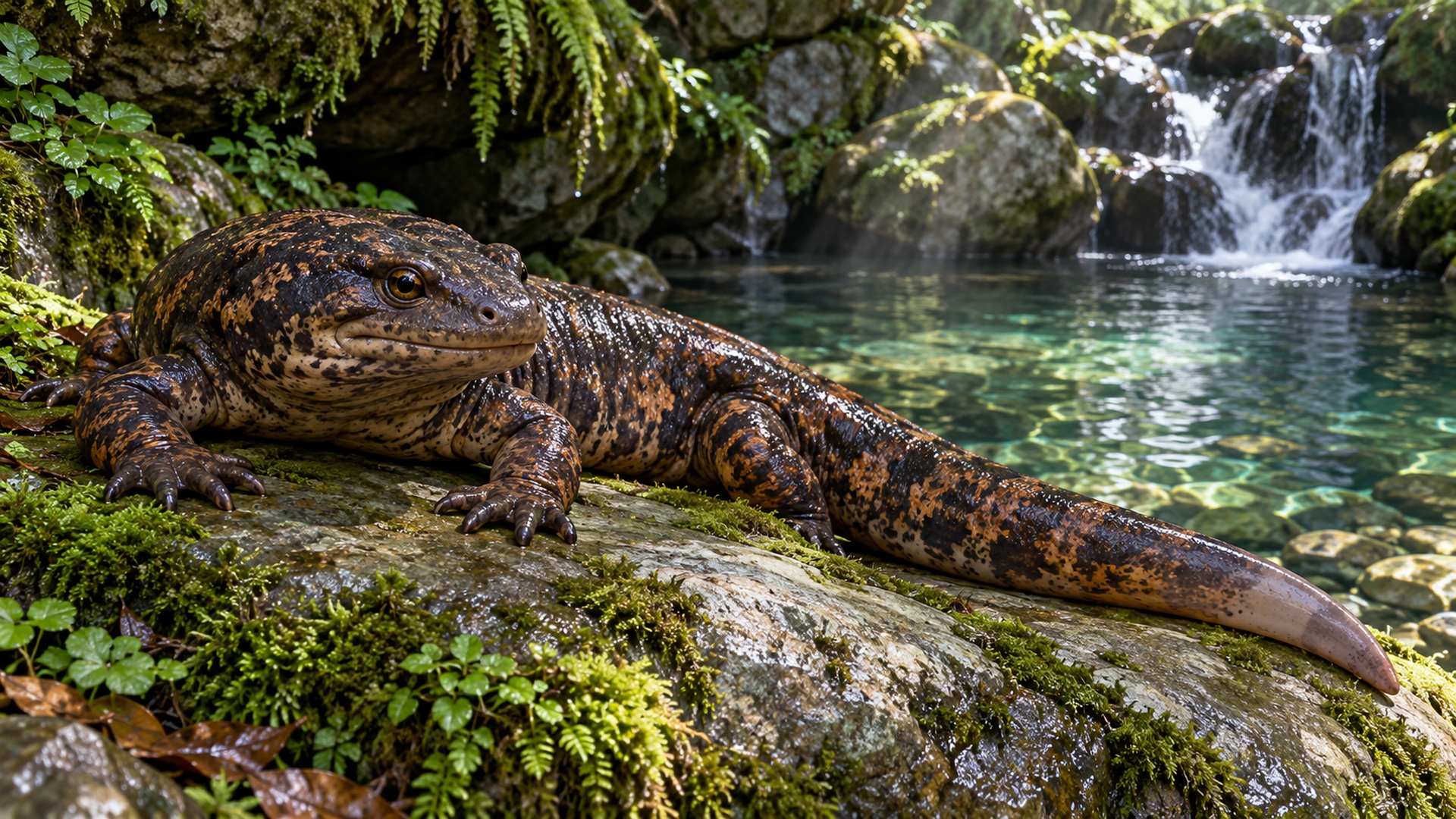
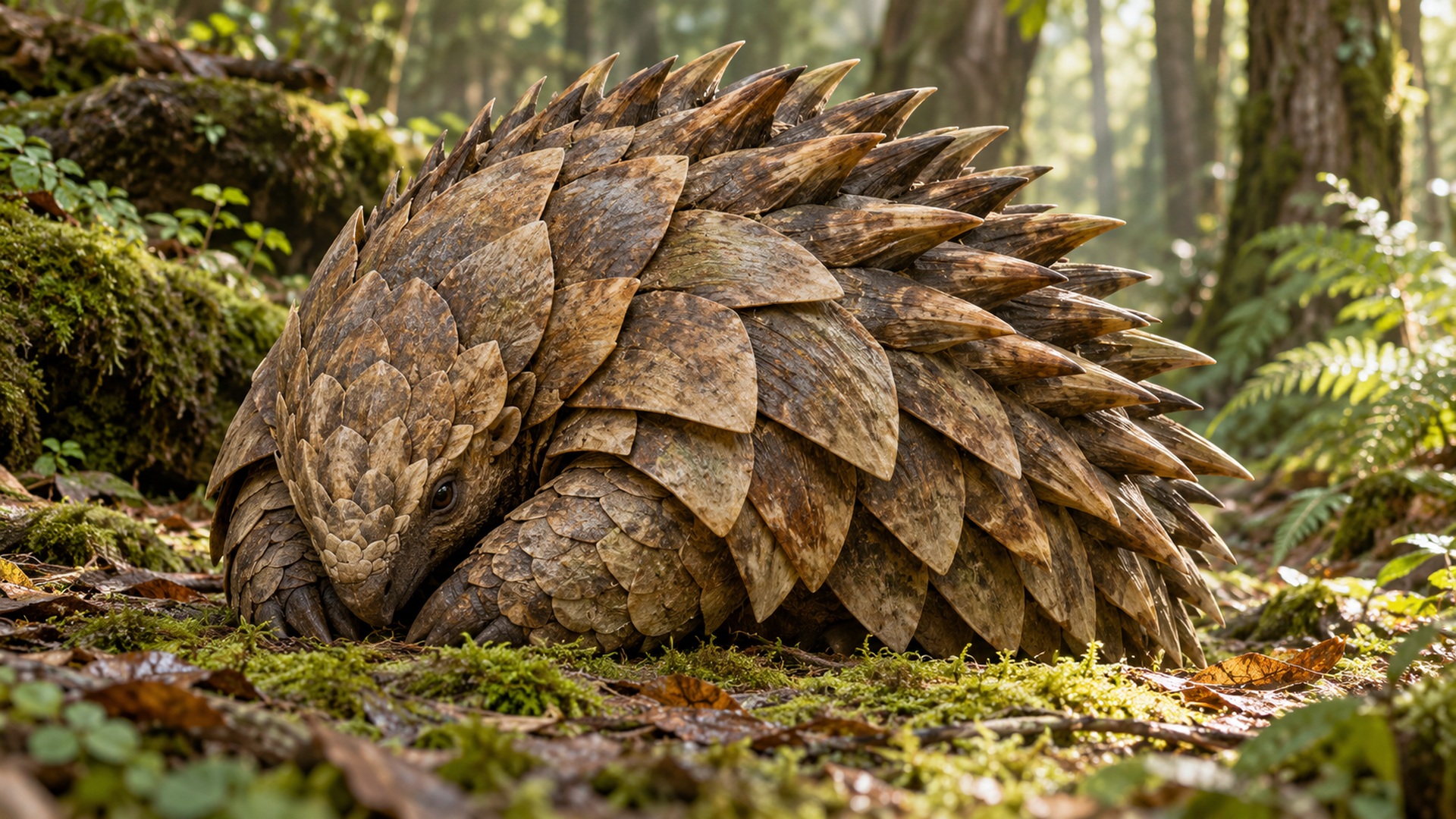
A monster turns its shoulder, plants a forefoot, and pushes through a shallow stream. Its back looks like a solid shield until the movement reveals rows of overlapping plates and smaller flexible scales around the joint. That transition is where natural armor becomes especially interesting. A protective covering cannot be judged only by how hard its most impressive plate appears; it must also attach to a living body, permit useful movement, accommodate growth, and remain compatible with the creature’s habitat. Real animals provide several ways to solve parts of that problem, using shells, mineralized skin structures, scales, and composite tissues. A fictional monster could extend those principles without wearing something that behaves like a metal costume. The most convincing design treats armor as an organized biological system, with a material structure and a body plan that support one another.
A: Different material properties and loading conditions must be considered separately.
A: Osteoderms are bony structures within skin; scale anatomy varies widely.
A: Movement and other functions require appropriate deformation or relative motion.
A: It can influence load carrying and deformation within the complete structure.
A: Geometry, materials, support, and loading must all be reconsidered.
A: A substantial shell needs integration with the supporting anatomy and movement.
A: The design needs a suitable process of growth, replacement, or remodeling.
A: The transition tests its covering and support under a different mechanical setting.
A: Surface appearance alone cannot establish the condition of attachments beneath it.
A: Ordinary resting or feeding can reveal whether neighboring surfaces obstruct one another.
Different Coverings Need Different Anatomical Explanations
Scales, osteoderms, shells, and thickened skin are not interchangeable names for one material. Their composition, origin, location, and relationship to supporting tissues can differ substantially. An osteoderm is a bony structure formed within the skin, while a scale can belong to very different anatomical arrangements in different groups. Identifying the kind of structure being imagined is the first step toward explaining how it functions. In a crocodilian, osteoderms are bone within the skin; in a turtle, the shell includes skeletal elements integrated with the trunk; in an arapaima, individual scales form part of a flexible covering. These examples differ in attachment as well as appearance. A thick skin surface describes yet another arrangement and does not become bone merely because it looks rugged.
A monster can combine features from several inspirations, but the connections still need thought. Plates embedded in skin require an account of the tissue between them, whereas a more continuous shell changes how the body can deform. A convincing description therefore includes what sits beneath the visible surface. The outer pattern alone cannot reveal every property of the covering or establish that all armored animals share the same construction.
Hardness and Toughness Are Different Achievements
Hardness concerns resistance to localized deformation under specified conditions; toughness concerns absorbing energy before fracture. A very hard surface is not automatically the best structure for every loading situation. It may resist indentation while another part of the system limits crack growth or allows deformation. For a fictional animal, the useful question is how the covering responds to the challenges it actually experiences, rather than whether one adjective can declare it universally superior.
Make the Armored Surface Legible in the Story
A few consistent observations can communicate the design without an anatomical lecture. Show the small shoulder elements shifting during a step, the larger back plates retaining their arrangement, and the animal choosing a resting posture that accommodates both. The reader learns how the covering works through actions with understandable consequences. Texture and color then enrich an already coherent structure.
Later scenes can build on that knowledge. The same overlap should respond consistently when the body bends again, while changes in age or condition can have visible reasons. Natural armor becomes memorable when it belongs unmistakably to this creature’s way of living. Its protective appearance is then the visible result of anatomy, materials, and behavior working together.
Layered Materials Can Divide the Mechanical Work
Natural protective structures can combine components with different properties and arrangements. A relatively hard exterior may interact with a more compliant interior, and fibers can influence the path through which loads are carried. The performance belongs to the assembled structure. Copying the appearance of one surface without its underlying organization would not necessarily reproduce its behavior.
Elizabeth A. Zimmermann and colleagues’ 2013 Nature Communications study, Mechanical Adaptability of the Bouligand-Type Structure in Natural Dermal Armour, examined arapaima scales. It describes how their layered collagen architecture responds to loading through changes in fiber orientation. That finding offers a specific example of internal arrangement contributing to mechanical behavior. It does not establish that every fish scale has the same architecture or that a giant version would inherit limitless protection. The lesson for creature design is to give the material an internal organization, not merely a thicker outline.
The monster’s plates could therefore have a hard outer region supported by a fibrous layer, with boundaries that redirect or contain damage under particular conditions. That is a proposed fictional construction, not a claim about an unknown animal. Its effects should remain tied to the chosen geometry and materials. If the same covering also bends readily, the design must explain where that deformation occurs and how much the individual plates contribute.
Overlapping Pieces Need Enough Room to Move
A field of plates can accommodate bending partly through relative movement between neighboring elements. Their size, overlap, attachment, and orientation affect the available motion. The spaces between them belong to the design just as much as the broad surfaces. When a creature curves its trunk, one side of the covering may compress while the other side opens or slides.
This makes a moving view more informative than a static portrait. Watch the neck turn, the shoulder advance, and the tail sweep through a bend. If every plate is drawn as rigidly joined to every neighbor, the implied mobility may contradict what the animal is doing. Smaller elements, flexible connections, or regional changes in construction can make the movement more coherent without pretending that the entire surface behaves like soft cloth.
A Shell Changes the Shape of the Body’s Options
A substantial shell can provide a different protective strategy from many small scales. Its overall curvature, supporting anatomy, and openings influence how it receives loads and how the animal moves within it. The body cannot be treated as a completely ordinary flexible torso with an unrelated rigid dome placed on top. A shell becomes believable when posture and movement reflect the structure the creature actually carries.
Coverage Is Uneven for Functional Reasons
Breathing, feeding, sensing, and moving create different requirements across a body. A broad dorsal surface may support a different covering from an eyelid, throat, or limb crease. Uniform maximum thickness would interfere with some of those tasks. Regional variation can therefore show thoughtful anatomy rather than an artist forgetting to continue the armor pattern.
Those regions also interact. A large plate near a shoulder may affect the clearance available when the limb advances, while neck coverage must permit the head to reach food. Following the full movement helps reveal whether neighboring features conflict. The design becomes stronger when its protective surfaces preserve the ordinary actions required to keep the animal alive.
For a monster, map the covering during at least two postures. One might be a relaxed walking stance and the other a crouch beside water. Notice where the surfaces approach, rotate, or separate. This exercise supplies anatomical continuity without requiring every square inch to offer identical protection against every possible event.
Use Biological Examples as Principles, Not Interchangeable Parts
A fish scale, a reptile osteoderm, and a shell can each inspire a different feature, but their supporting arrangements do not automatically combine without conflict. Ask which property is being borrowed and what surrounding anatomy makes that property possible. A layered material might inspire internal construction, while an overlapping surface inspires mobility. Those are separate design decisions. Keeping them explicit helps a fictional creature remain original while avoiding the assumption that collecting several real defenses produces an animal with every advantage and no integration problem.
Growing Armor Is a Developmental Commitment
A living animal changes size and proportions over time. Its covering has to accommodate those changes through a plausible growth arrangement, whether that involves enlargement, replacement, remodeling, or a more unusual fictional process. Those options should not be assumed to work identically across unrelated kinds of armor. A rigid exterior cannot simply remain unchanged while the body beneath it expands indefinitely.
Growth also raises questions about the juvenile form. Smaller individuals may have different proportions or a covering that has not reached adult development. That possibility gives the creature a life history beyond its most imposing portrait. The adult’s impressive surface can become the result of a gradual biological process instead of an object that appears fully formed at the moment the monster enters the story.
Weight and Distribution Affect the Whole Animal
The mass of protective tissue must be supported and moved. Its location matters as well as its total amount: armor concentrated high on the body creates a different arrangement from protection close to a broad, low trunk. Movement and supporting anatomy should reflect that distribution. An animal with extensive covering may still be agile, but agility needs a coherent body plan rather than an assumption that protective mass has no consequences.
Buoyancy changes the support problem for an aquatic creature, yet it does not remove inertia or the need to move through water. A river monster traveling between bank and channel therefore faces more than one mechanical setting. Its limbs, posture, and covering can be assessed in both. A design that works while floating still needs an explanation for climbing a steep bank or standing clear of the water.
There is no single mandatory appearance for the result. A heavy covering might accompany short robust limbs, a streamlined distribution, or a different invented support arrangement. What matters is that these choices work together. Adding more plates should prompt attention to the rest of the body instead of being treated as an isolated cosmetic upgrade.
The Covering Must Coexist With Heat and Exchange
A living surface participates in more than mechanical protection. An extensive covering can interact with the ways an animal exchanges heat and maintains its boundary with the environment. The details depend on its physiology, habitat, and the properties of the tissues. A fictional armored monster should therefore have a thermal story, especially if it is shown remaining active across very different climates.
Surface Damage Does Not Tell the Entire Structural Story
A scratched plate may remain functional, while a less obvious change at an attachment or connection can have greater consequences for movement. Interpreting damage requires knowing what the structure does and how it is supported. Visible appearance supplies only part of that information. The same principle applies when a restored surface looks complete but its relationship with underlying tissue has not been established.
Maintenance and replacement can appear in quiet scenes. An older region may show wear, a newer surface may differ subtly in texture, or the animal may favor a sheltered resting place. These are possible storytelling choices rather than universal features of armored species. They make the covering part of an ongoing life, with condition and history, instead of an untouched object carried between encounters.
Follow the River Reptile Through One Complete Step
Return to the creature entering the stream. As its forefoot reaches forward, smaller elements around the shoulder permit the limb to advance while larger plates remain organized across the back. The torso bends slightly as weight shifts. A close view shows that a hard-looking body surface can contain several regions with different mechanical jobs.
When the animal climbs onto a stone, the setting changes the demands. Its foot must find support, the limb must move through a useful range, and the trunk must clear the obstacle. Armor around those structures has to remain compatible with each action. The image becomes convincing through that continuity rather than through simply increasing the number or sharpness of visible plates.
Finally, the creature settles on the bank and folds its limbs beneath it. Surfaces that cleared one another during walking now lie close together, with flexible tissue occupying the changing spaces. This resting posture is another test of the design. A natural armored monster feels alive when it can travel, feed, grow, and rest in the same body that makes its protective silhouette so memorable.