Daily Browsing, Spaced Meals, or a Seasonal Fast?
A plant-eating giant could feed in several bouts every day, an intermittent ambusher might take concentrated meals several days apart, and a dormant seasonal creature could go much longer without new intake. Those are three different biological designs, rather than competing answers for one animal. Real elephants, pythons, and denning bears show why body size alone cannot choose among them. A convincing monster schedule also needs a food return, an expenditure rate, a digestive strategy, and enough reserve to handle a failed opportunity. This article develops three explicitly fictional profiles alongside those real analogues and follows one simple energy budget to show how an interval can be estimated. The schedules are design assumptions to test, not measured requirements for an imaginary species. They give a more useful answer than either an endlessly hungry monster or a creature that eats once on screen and mysteriously needs nothing afterward.
A: Different physiology, food returns, activity, and opportunities can produce different rhythms.
A: Daily elephant feeding, intermittent python digestion, and winter denning in black bears illustrate different strategies; they do not supply one shared monster timetable.
A: Usable nutrients, processing, expenditure, and reserves determine the actual contribution.
A: Its selected 200-MJ meal covers four days at 50 MJ per day, but only about 2.9 days at 70 MJ per day.
A: Other nutritional requirements can matter alongside fuel.
A: Stored or gradually processed resources can disconnect those events.
A: Life stage, condition, access, and activity can create variation.
A: They reduce reserves while delaying intake, altering the value of available options.
A: No. The fictional giant still needs its own reserve, reduced-demand physiology, shelter, and workable transition back to activity.
A: Repeated feeding records with clear event definitions, resource amounts, activity, and environmental context.
Define the Feeding Event Before Counting It
An animal can consume food through many small acts distributed across a day. A grazer taking repeated bites, a filter feeder processing patches of small organisms, and a predator using one concentrated resource have different feeding events. Assigning each one meal because it was observed once would create a misleading comparison. The unit being counted should match the behavior.
There are several useful schedules to distinguish. An animal may have a rhythm of searching, another rhythm of successful acquisition, and a different pattern of actual consumption. Stored food can separate those events further. A monster might visit a cache repeatedly without making a new capture, or continue handling a resource across more than one resting period.
For fiction, decide which rhythm matters to the scene. Predicting when the creature leaves shelter is not the same as estimating when it needs another large energy input. Keeping the distinction clear prevents a feeding schedule from becoming an arbitrary countdown. It also gives the animal useful behavior between the spectacular events usually shown on screen.
Metabolic Demand Establishes the Background Cost
A living body uses resources even while resting. Maintaining tissues, operating organs, regulating its internal condition, and responding to the environment all contribute to ongoing demand. Movement and other activities add to that baseline. A monster that appears motionless is not necessarily using no energy, and a short burst of activity is not its whole daily budget.
Physiology changes the amount and timing of that demand. Different strategies for body-temperature regulation and different levels of activity can support different feeding patterns. Those differences should be specified rather than inferred solely from a scaly or furry exterior. A reptile-like appearance does not establish an exact metabolism for an invented species, especially if its depicted behavior differs greatly from the biological inspiration.
A Worked Budget Gives One Hunter a Four-Day Starting Point
Give an invented reed-bank hunter an average expenditure of 50 megajoules per day for maintenance and its usual activity. Suppose a concentrated meal contributes 200 megajoules of energy available to the body after the assumed processing losses. Dividing 200 by 50 gives four days of that average expenditure. If a more active period instead costs 70 megajoules per day, the same return covers about 2.9 days. These chosen quantities describe a fictional model; they are not a calculation from height or a measurement borrowed from a real animal. The result suggests a first draft of major meals roughly three to four days apart under the specified conditions. Absorption takes time, nutrient needs continue, and a failed next hunt makes reserves essential, so four days is not a moment at which the animal automatically becomes empty. Changing the meal return or daily cost changes the proposed schedule for a stated reason.
Food Mass and Usable Return Are Different
A large swallowed mass can contain water, structural material, or components the animal does not absorb effectively. Two equally heavy meals may therefore provide different usable returns. Processing and digestion also consume resources. A creature cannot be assigned a long fasting interval simply because its stomach can physically contain something enormous.
The balance of nutrients matters alongside energy. One resource can provide abundant fuel while leaving another requirement inadequately met. The animal might seek a small supplementary item even when it has enough stored energy for a longer interval. A monster’s interest in food therefore need not always indicate that its entire energy reserve is nearly exhausted.
Digestive Capacity Limits the Rate of Delivery
Food entering the mouth does not immediately become available to working tissues. It must be processed, moved through the digestive system, broken down, and absorbed. The relevant rates depend on the food and the animal’s physiology. An enormous feeding event may lead to a prolonged digestive phase rather than instant readiness for another equally large meal.
Digestive systems can also change with feeding patterns in some animals. Stephen M. Secor and Jared Diamond’s 1995 study, Adaptive Responses to Feeding in Burmese Pythons: Pay Before Pumping, followed physiological changes after meals equivalent to a quarter of the snakes’ body mass. Its measurements over the post-feeding period show why a gut cannot always be treated as an unchanged machine. The experimental meal does not establish a universal feeding interval for wild pythons. A fictional species inspired by such animals would need a consistent account of when its digestive machinery is active and what maintaining or rebuilding that machinery costs.
For creature design, connect the internal schedule to behavior. Rest after feeding might reduce other demands, while a large digestive load could affect movement or posture. Those possibilities should follow the invented anatomy rather than become universal rules. A hunter may remain dangerous during digestion, but its performance need not be identical to that of the same animal after a different interval.
Body Size Changes Demand Without Supplying a Clock
Larger animals often use more total energy than smaller ones while differing in demand per unit body mass. The exact comparison depends on physiology and the conditions being measured. A giant could therefore need a substantial absolute food return without feeding in the same proportions or rhythm as a small animal. Height alone remains an inadequate input.
A larger capacity for reserves can also change the relationship between intake and short-term demand, but it does not establish unlimited fasting. Stored tissue must be maintained and is eventually used. Carrying it affects the body that moves through the habitat. A creature with a long interval between major meals needs enough reserve and a workable way to obtain the next return before that reserve becomes inadequate.
Temperature Can Change Both Activity and Processing
Environmental conditions influence animal performance and physiology in ways that depend on the species. Temperature can affect activity, digestion, and the costs of maintaining a suitable internal state. A desert creature resting during midday and moving during a cooler period may distribute its demand differently from an animal active throughout the day. The useful explanation links conditions to a defined biological strategy. It does not assume that cold always means no feeding or that warmth always produces the same increase in appetite across every possible monster.
Three Feeding Profiles With Real Biological Starting Points
Smithsonian’s elephant accounts describe food supplied daily, while its Burmese python account explains that processing a successful meal can occupy days or weeks. The National Park Service describes winter denning in black bears that can involve months without eating. These examples establish different strategies, not interchangeable timetables. The following three profiles deliberately choose an ordinary rhythm for a fictional creature and state what would need to support it.
| Fictional profile | Proposed rhythm | What makes it workable |
|---|---|---|
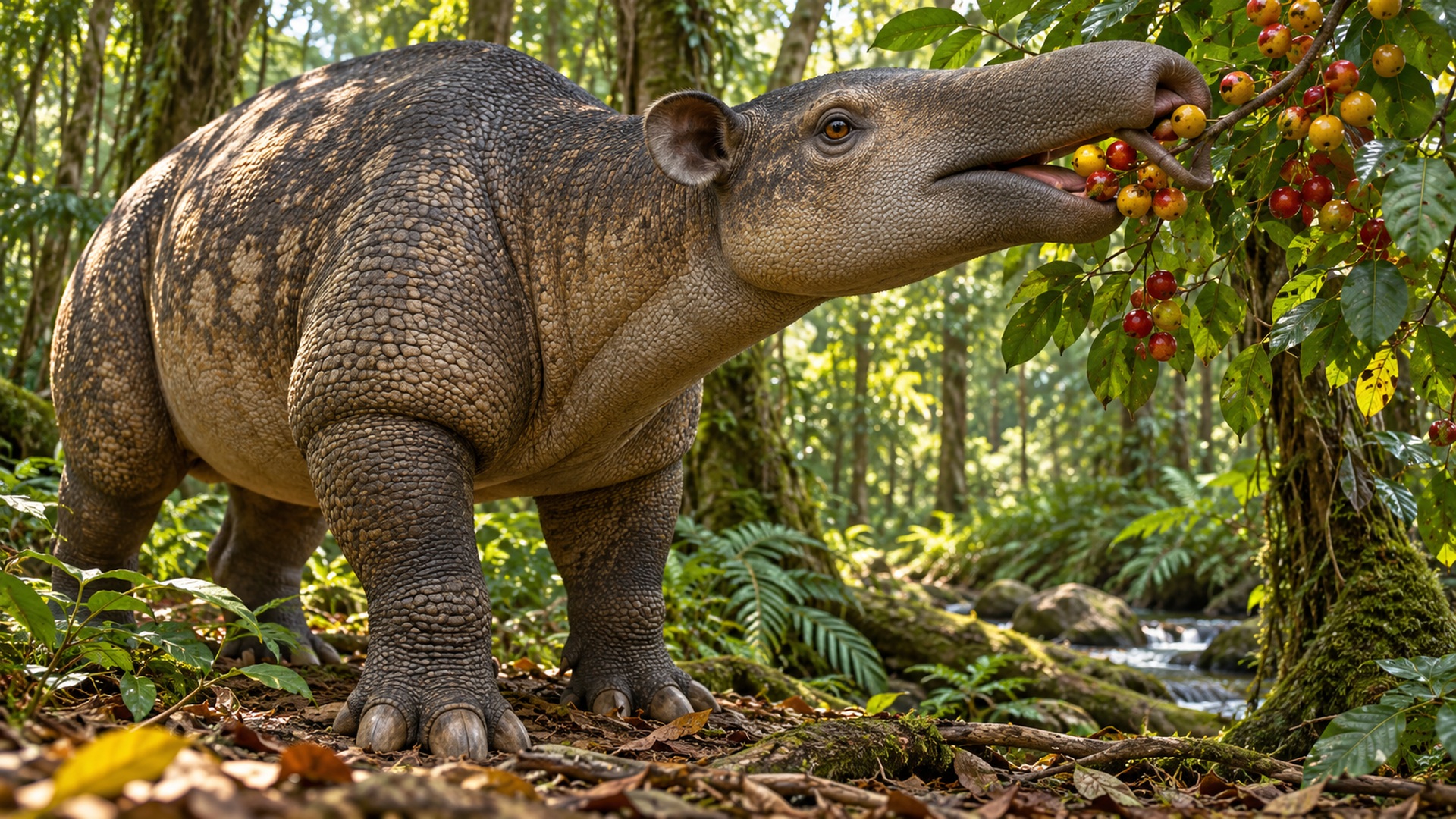
| Valley browser | Several feeding bouts every day | Accessible plants, sustained intake, and a digestive route suited to its main forage |
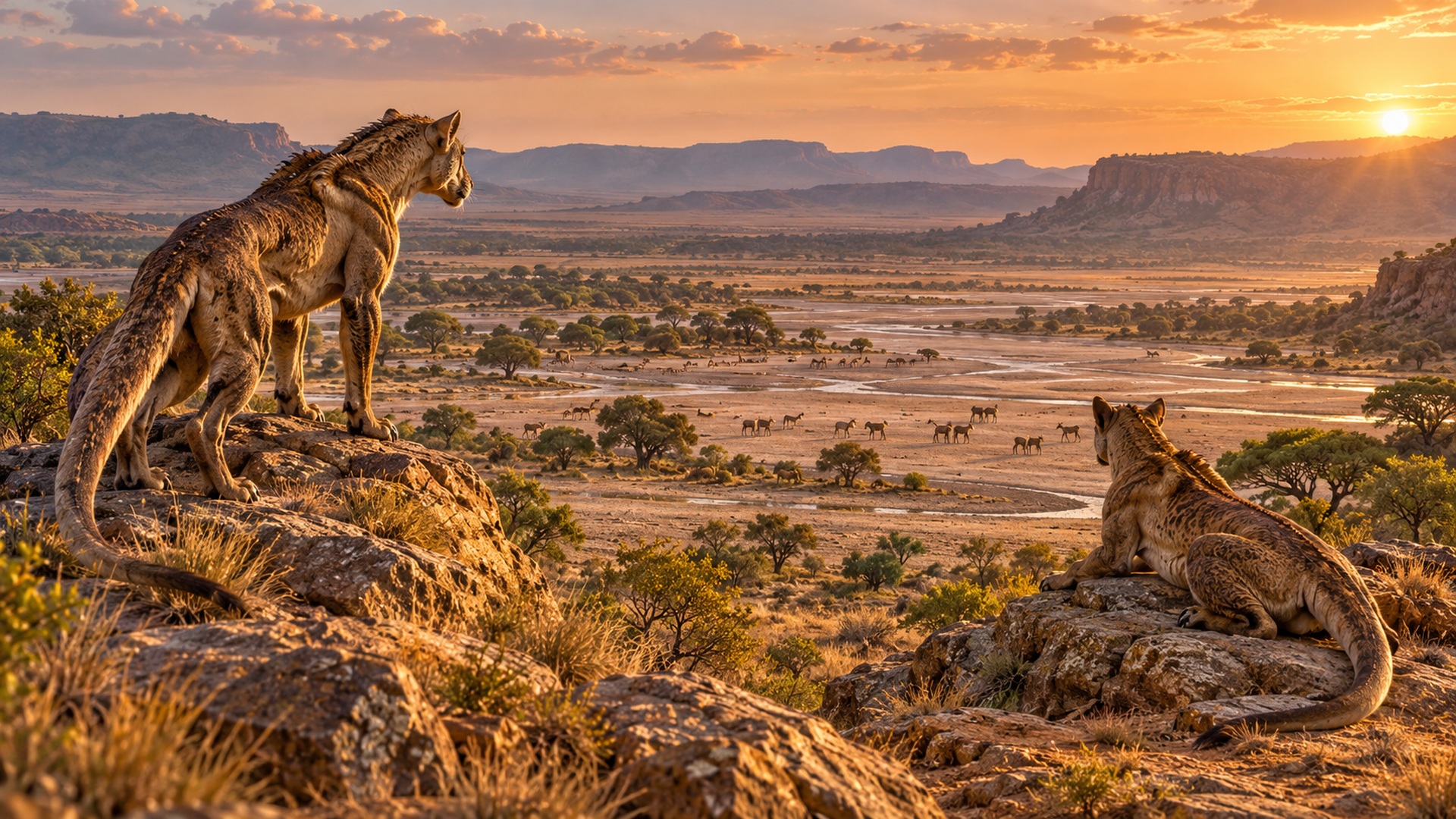
| Reed-bank ambusher | A major meal roughly every three to four days in the worked example | The selected 200-MJ return, 50–70-MJ daily expenditure, and reserves for missed opportunities |
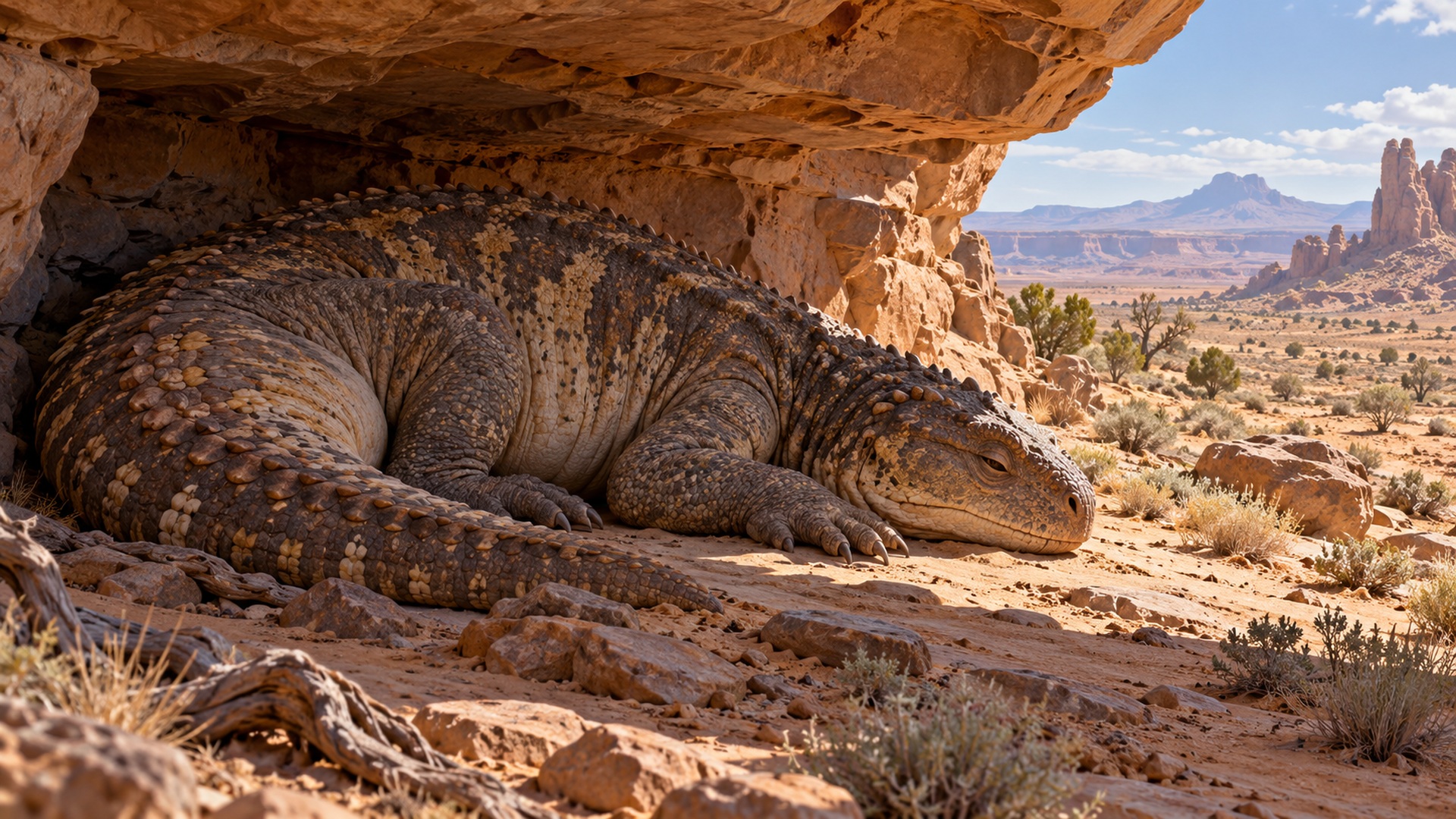
| Winter-den giant | Frequent feeding in the productive season, followed by a selected eight-week inactive winter period | Accumulated reserves, a defined reduction in demand, suitable shelter, and a successful return to activity |
The browser needs dependable daily access rather than one vast monthly stomachful. The ambusher’s interval changes if pursuit becomes more expensive or its actual share of food shrinks. The winter giant is a separate design whose eight-week fictional choice must be supported by its seasonal physiology; a bear’s longer documented fast does not prove the same capacity in a larger invented animal. These profiles also create different visible routines. One animal repeatedly visits feeding patches, one alternates acquisition with processing and recovery, and one concentrates intake before a long seasonal absence. A useful schedule explains those ordinary days as well as the dramatic meal.
Opportunity Makes Real Intervals Uneven
Even an animal with relatively stable needs does not encounter suitable food at perfectly regular intervals. A productive day can be followed by failed searches, competition, or temporary inaccessibility. Its actual feeding schedule therefore reflects chance and resource distribution as well as physiology. A rigid interval may be useful for a story, but a biologically grounded animal would often show some variation around its typical pattern.
Resource concentration changes the problem. A creature using predictable seasonal patches may feed heavily when they are available and then change location or behavior. Another may obtain smaller returns more continuously. Neither strategy can be understood from the interval alone. The size of the return, the search cost, and the availability of alternatives help explain why that timing works.
Failure has a cumulative effect. Repeated unsuccessful attempts use resources while delaying intake, and the animal’s willingness to accept risk can change as its condition changes. That does not mean hunger inevitably produces reckless aggression. A creature might instead conserve effort, switch resources, or move toward a more predictable opportunity.
Growth, Breeding, and Recovery Change the Budget
A growing juvenile needs resources for new tissue as well as ordinary maintenance. Reproduction and recovery can add different demands. The feeding rhythm of a healthy resting adult should therefore not be assigned automatically to every member of the species. A persistent monster population needs schedules that work across those stages.
Individuals can also differ in experience, access, and body condition. A successful established animal may use food differently from a displaced one encountering unfamiliar terrain. These differences provide a grounded reason for behavioral variation within the species. A story does not need every creature to share one precise interval simply because they have similar external anatomy.
Long Fasts Need a Complete Survival Strategy
Some animals survive substantial periods without a major meal, but those intervals depend on physiology, reserves, behavior, and environmental conditions. A monster inspired by that possibility should have a broader strategy than a large stomach. Reduced activity, stored resources, seasonal timing, and suitable shelter may all contribute, depending on the design.
Water and other requirements continue to matter. Surviving without a new major energy intake does not mean surviving without every form of resource exchange. A creature might visit water or change microhabitats while apparently fasting. Such behavior can connect a long feeding interval with a visible routine instead of making the animal disappear from its ecosystem between attacks.
A dormant state is another separate claim. If the monster becomes inactive for a long season, define what changes in its physiology and what supports the transition back to activity. A story can invent extraordinary dormancy, but the effect should not silently erase every energetic and material cost. The interval becomes more convincing when the animal’s whole life accommodates it.
Choose a Feeding Rhythm That Explains the Ordinary Day
A plausible schedule connects average demand, usable food return, processing rate, reserves, and the reliability of the next opportunity. It distinguishes constant nibbling from concentrated meals and successful acquisition from later consumption. The result can be a frequent browser, an intermittent hunter, or a seasonal giant whose behavior changes with the landscape. No single interval applies to all monsters. The best answer explains what the creature does between meals and why that routine allows its body to keep functioning.