A Frightening Face Does Not Decide the Menu
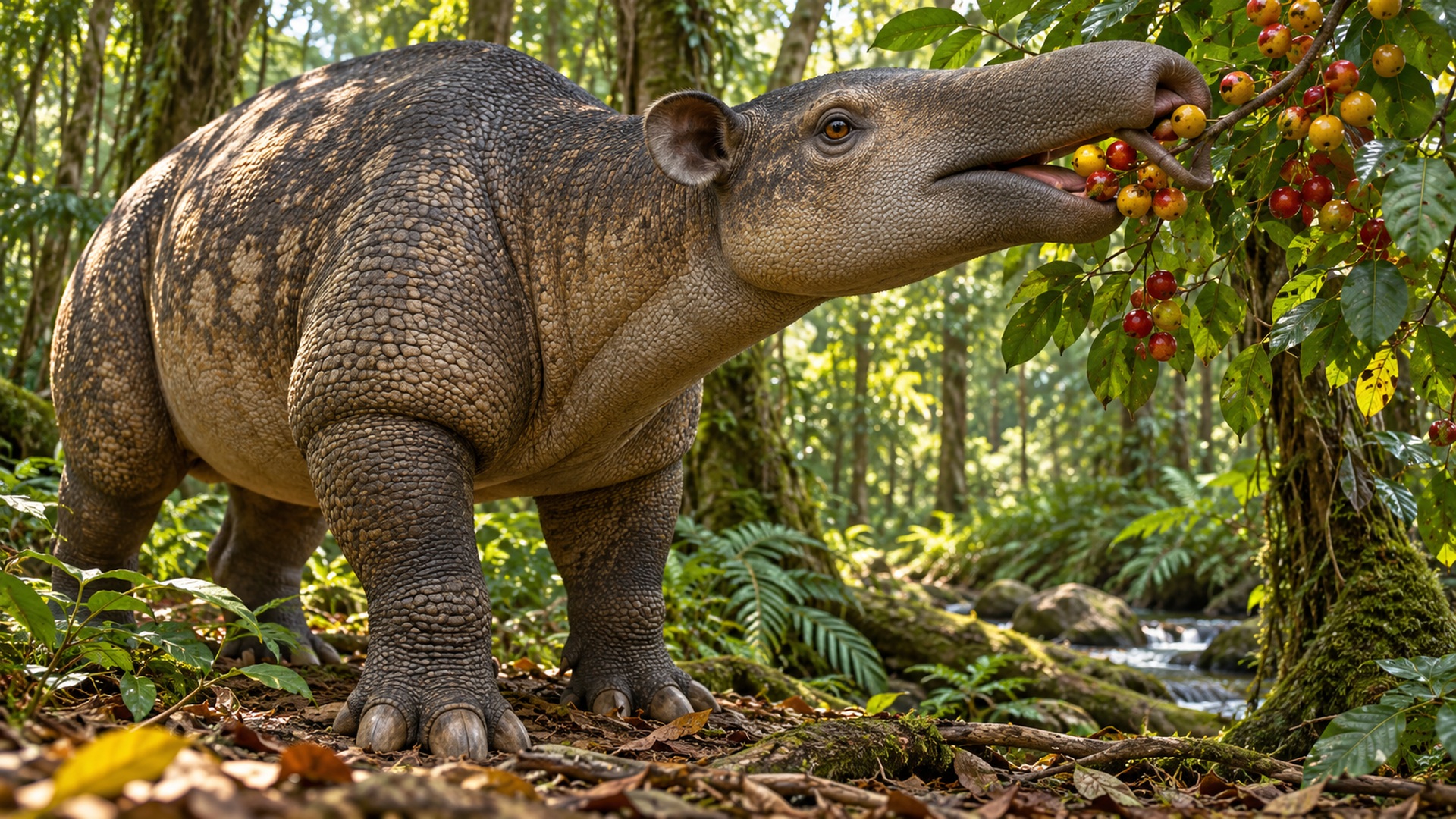
A huge animal steps into view with a deep chest, a heavy jaw, and a silhouette that could dominate a horror scene. Then it reaches for a branch and begins eating leaves. Nothing about being extraordinary requires a creature to live on human prey. A plausible monster diet depends on the resources its habitat produces, the structures it uses to obtain food, and the digestive system that turns that food into usable nutrition. Teeth can provide clues, but a complete explanation needs behavior, physiology, and a food web. A giant grazer, a flexible omnivore, a specialized predator, and a filter-feeding sea beast face very different challenges even if each looks intimidating. Asking what monsters would eat therefore means moving beyond an appetite attached to a design. It means giving the creature a relationship with the world that can support its ordinary days, its growth, and the other individuals needed for a lasting species.
A: Body size and frightening appearance do not determine a complete diet.
A: Dental features need context from behavior, other anatomy, and ecology.
A: A suitable filtering system and concentrated resources can make small food useful to a large body.
A: Flexibility still has anatomical, physiological, and behavioral limits.
A: Its processing strategy may require substantial internal capacity, depending on the invented biology.
A: Ingestion alone does not establish digestion, absorption, or useful energetic return.
A: Height does not specify the relevant mass, metabolism, or digestive system.
A: Changing size and capabilities can support different resource use during development.
A: A defined source of usable energy, body-building matter, and compatible processing chemistry.
A: Resources, acquisition, digestion, life-cycle needs, and habitat all support one another.
Begin With Available Resources Rather Than a Favorite Meal
A diet has to exist somewhere. Plants, prey, fungi, detritus, and suspended particles occur in different quantities and distributions, and those patterns change through time. A creature cannot rely on a resource simply because it looks appropriate in concept art. Its habitat needs to produce enough of the right material within distances the animal can afford to travel.
Access matters alongside abundance. Food high in a canopy, buried in sediment, protected by shells, or scattered over a broad area may require specialized structures and behavior. A forest full of potential nutrition can still be unsuitable for a particular body. Before adding teeth or claws, decide how the creature reaches the resource and what prevents other animals from exploiting it in the same way.
Plant-Eaters Need More Than a Large Mouth
Soft fruit, tender leaves, tough grass, and woody stems create different processing problems. A cow and a horse make the digestive distinction concrete: a ruminant’s major fermentation chamber lies before the small intestine, while a horse relies heavily on hindgut fermentation. Both use microbial partners, but the placement of processing within the digestive route differs. An imagined herbivore needs a compatible system, rather than an unspecified enormous stomach.
The mouth also needs a usable relationship with the chosen plants. Selective handling can help a browser gather particular leaves, whereas removing broader mouthfuls creates another set of intake demands. Teeth, lips, muzzle shape, and any grasping appendage contribute together. Muzzle width alone cannot establish selectivity, especially in a fictional body whose other structures differ from a living analogue. Show the animal gathering a specific resource before deciding that its intimidating jaw must be designed for flesh.
Marcus Clauss and colleagues’ 2013 PLOS ONE review, Herbivory and Body Size: Allometries of Diet Quality and Gastrointestinal Physiology, challenges the simple assumption that greater size automatically provides better digestion of poor food. The useful question is how intake, processing, and resource quality work together. A giant can swallow more vegetation while still needing enough accessible nutrients. The animal’s diet becomes convincing when the digestive route can explain the food it actually obtains.
A Carnivorous Diet Has Several Possible Forms
Animal-based food can come from active predation, scavenging, or resources obtained through mixed strategies. The material itself also varies: a creature specializing on soft-bodied aquatic animals faces different handling demands from one exploiting heavily protected prey. Carnivory is a broad description of resources, not a complete hunting script. A frightening jaw should be matched to the food it can acquire and process over an ordinary lifetime.
Omnivory Offers Flexibility With Real Constraints
An omnivore can obtain nutrition from more than one broad resource type, potentially allowing it to respond to changing availability. That flexibility does not mean every organic object becomes equally suitable food. Digestive capacity, handling anatomy, tolerances, and learned preferences still constrain what the animal can use. A creature can be adaptable while having clear limits.
Seasonal shifts can give a fictional omnivore a coherent routine. It might exploit abundant fruit during one period, use small animal resources opportunistically, and travel toward another habitat when the resource mix changes. The anatomy should allow those shifts without becoming a collection of incompatible specialists. A useful design explains which foods form the reliable base and which serve as occasional supplements.
Filter Feeding Can Support a Very Different Giant
A large aquatic creature need not chase a single enormous victim. It could obtain many small organisms by moving water through a filtering apparatus. The effectiveness of that approach depends on prey concentration, water movement, the structure retaining food, and the energy required to operate the system. The ocean’s size alone does not guarantee enough food in every location.
A filter-feeding monster would therefore need behavior tied to productive patches. It might travel between concentrations, adjust depth, or change feeding movements as conditions shift. Its mouth and internal structures should support repeated processing rather than resembling the teeth of a terrestrial grappler. Those features can make the animal immense and uncanny without making it a conventional attacking predator.
Small food can still support a large body when the harvesting system and resource distribution make the return worthwhile. Conversely, a giant that filters nearly empty water could spend more than it gains. The ecological explanation lies in concentration and efficiency rather than a simple relationship between the size of the eater and the size of each item eaten.
Teeth Are Clues That Need the Rest of the Animal
Dental form can suggest useful functions, such as cutting, crushing, gripping, or grinding. It does not always reveal an exclusive diet, because structures can serve several roles and animals can use resources beyond their apparent specialization. Display, defense, competition, and food handling may all influence a head’s appearance. A monster’s spectacular tusks need not be utensils for its everyday meals.
Other evidence can strengthen an interpretation. Jaw movement, wear, feeding behavior, gut contents where available, and the surrounding ecology provide context. For an invented animal, those details can be designed to agree. A broad grinding surface, repeated browsing behavior, and a habitat rich in accessible plant material form a clearer explanation than one pointed tooth used to declare the creature carnivorous.
Swallowing Is Not the Same as Digesting
An animal may physically ingest material it cannot use effectively or safely. Digestion requires breaking it down, absorbing suitable nutrients, managing unwanted compounds, and moving the remainder onward. Very large chunks create different demands from carefully processed food. A monster that swallows everything in its path needs more than a stretchy throat: its internal chemistry, tissue protection, and processing rate must explain what happens next. If those properties depart from terrestrial biology, that departure should be an explicit premise rather than an assumed consequence of size.
A Change in Menu Can Change the Landscape
A fictional forest herbivore can reveal its diet before it appears. Repeated browsing may leave a recognizable feeding height, scattered fruit remains, and paths connecting productive trees. Those effects should match the animal’s reach and handling behavior. A design with a narrow selective muzzle might leave a different pattern from one that removes broad mouthfuls indiscriminately. The evidence gives the habitat a relationship with the creature rather than placing an isolated model among decorative plants. It can also distinguish ordinary feeding from destruction motivated by defense or disturbance.
Seasonal change can alter that pattern without altering the species. When fruit becomes scarce, an omnivore may shift toward another usable resource, while a specialist may move toward remaining productive areas. The landscape can register the difference through changed routes and feeding traces. Those clues let a story explain the creature gradually, using ecological consequences instead of a menu presented as a list. They also make its diet a constraint: if a character proposes that the animal lives in a particular region, the available resources and expected traces should support that interpretation. An apparently suitable hiding place is not necessarily a place that can nourish the animal through its full resource cycle.
Body Size Changes the Resource Problem
Large animals often require substantial absolute food intake even when their needs per unit of body mass differ from those of smaller animals. The relevant relationship depends on physiology, activity, and the comparison being made. A huge body cannot be assigned a believable menu by multiplying a person’s daily meals by its height. Height does not directly specify mass, metabolic demand, or digestive performance.
A very large herbivore may spend much of its day obtaining and processing accessible material, while a predator may rely on less frequent concentrated returns. These are possible strategies, not universal schedules. Each needs enough habitat and appropriate resource renewal. A creature that consumes its food base faster than it recovers must move, change resources, decline in number, or rely on a fictional source beyond the ordinary food web.
Growth and reproduction add demands not captured by describing one resting adult. Juveniles may eat different foods or occupy different habitats, and breeding individuals may require resources that are unavailable during other periods. A lasting monster species therefore needs an ecological story for several life stages. One adult’s impressive feeding scene is only a small part of that explanation.
Minerals and Water Belong in the Diet Story Too
Energy is not the only requirement for a living body. Tissues need suitable chemical building materials and other nutrients, while water balance depends on physiology and environment. A diet that supplies abundant energy could still be incomplete in another respect. A fictional creature’s ordinary activities might include visiting a mineral source, using water-rich food, or moving between resources with complementary properties.
These needs can give habitat features a behavioral role. A repeated visit to an exposed bank may reflect resource use rather than territorial aggression. A migration can connect different seasonal requirements. The details should follow the invented species’ actual biology instead of being added as universal rules for all monsters. They help explain why a creature cares about particular places even when no prey is visible.
A Literal Diet of Stone or Fire Requires New Chemistry
Fiction often gives creatures extraordinary foods: metal, flame, gemstones, or ambient energy. Those ideas can work within a designed world, but physical ingestion alone does not establish nourishment. The organism needs a usable source of energy and the matter required to maintain and build its body. A mineral could provide one needed component without supplying the entire energetic basis of life.
A fire-eating creature presents another distinction. Heat is an energy transfer, but making it support biological work requires an appropriate mechanism and conditions. A story can invent those, yet it should not treat ordinary feeding anatomy as a sufficient explanation. An unusual metabolism becomes more compelling when its resource requirements and waste products remain consistent.
The same reasoning applies to magical nutrition. If the creature draws on an invented environmental source, define its availability, limits, and consequences. A resource that solves every shortage without conditions makes its feeding ecology difficult to understand. A specific source can instead explain migration, competition, habitat dependence, and vulnerability while keeping the creature extraordinary.
Build the Menu From a Working Food Web
A coherent monster diet connects accessible resources with acquisition anatomy, digestive processing, and the needs of the whole life cycle. It explains what the creature eats often, what it uses opportunistically, and what becomes difficult during lean periods. The result may be a terrifying herbivore, a patient filter feeder, or a flexible omnivore rather than another relentless human hunter. Those alternatives widen the imaginative possibilities because each creates a different relationship between body and habitat. The animal’s meals become evidence of a living system rather than an isolated spectacle.