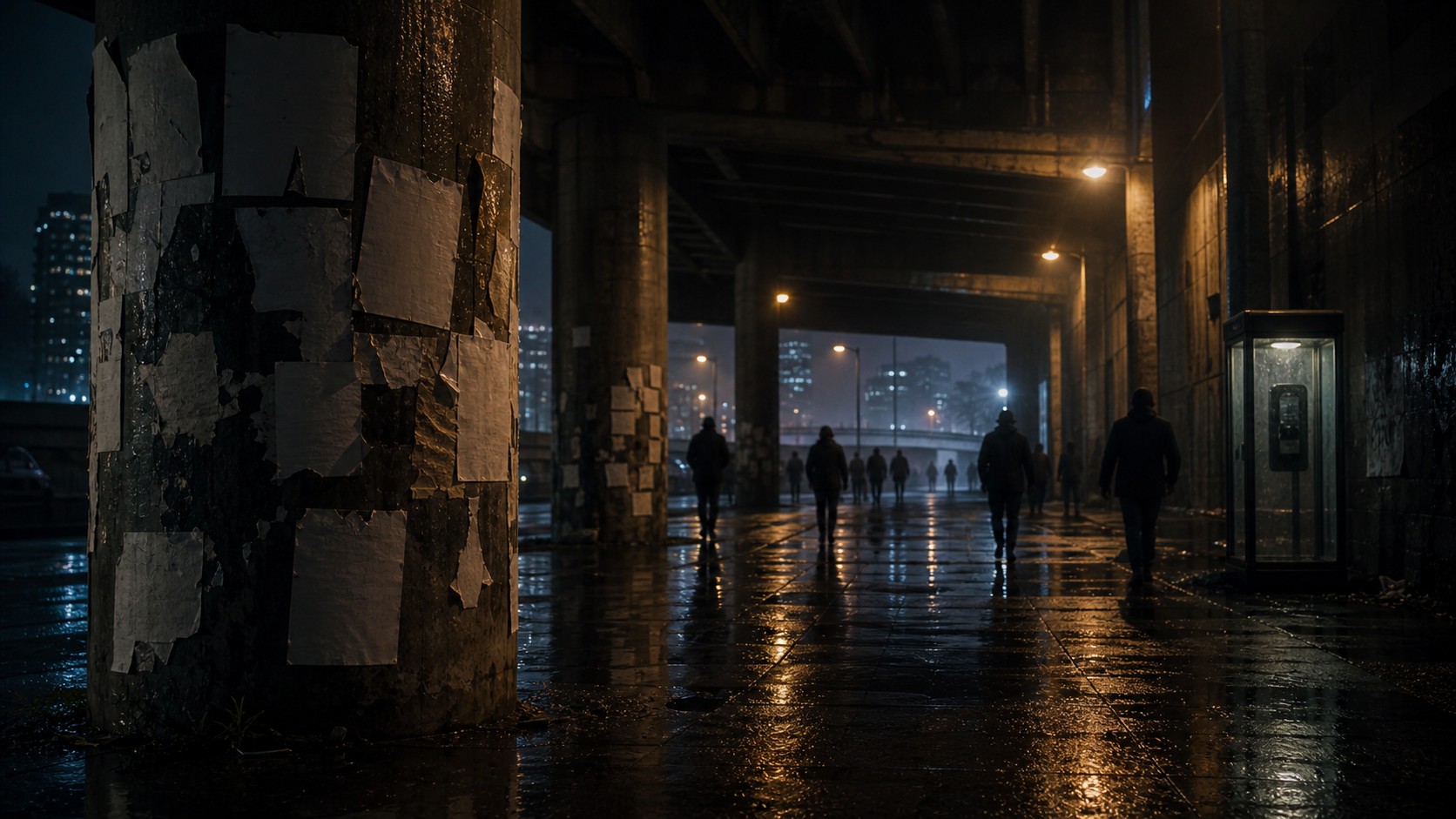
What Famous Urban Myths Are Really Doing
The most famous urban myths are explained less by whether they are true than by why they are so easy to repeat. They usually take an ordinary situation and reveal a hidden danger: the stranger was not harmless, the call came from nearby, the object was not what it seemed, the shortcut had a cost, the institution knew more than it admitted. These myths become famous because they are compact, dramatic, and emotionally efficient. They give modern fear a story shape, allowing people to warn, entertain, accuse, and bond through a tale that sounds just plausible enough to travel. Famous urban myths also become cultural shorthand. A single phrase can summon an entire scene: the warning call, the hidden stranger, the dangerous ride, the contaminated object, the room that was never safe. People can invoke the myth without retelling every detail because the structure is already known. That shorthand gives the story influence beyond belief. Even skeptics may use it as a metaphor for risk, distrust, or the fear of discovering too late that ordinary life contained a hidden threat. Explanation therefore has to account for more than fact. It has to account for the way these stories become part of how people describe modern unease. Their fame also depends on emotional fairness, even when the facts are wrong. A famous myth usually feels as if someone should have known better, listened sooner, checked more carefully, or respected a warning. That hindsight gives the story its sting. The audience can imagine avoiding the same mistake, which turns fear into a small feeling of control. The myth becomes memorable because it flatters the listener's future caution while frightening the listener's present imagination. Explanation also reveals how famous myths balance entertainment and instruction. People retell them for the thrill, but they justify the retelling as a warning. That dual purpose makes them socially acceptable. A purely frightening story might be dismissed as gossip; a frightening story with a lesson feels useful. Famous urban myths survive in that overlap, where entertainment dresses itself as caution and caution gains the energy of suspense. Famous myths also make excellent memory containers because they are easy to retell under pressure. Their details are vivid but not too numerous, and their warnings can be adapted to the audience. A parent can tell one version to a teenager, a coworker can tell another over lunch, and an online creator can update it for a new platform. The myth keeps its recognizable shape while changing tone, location, and technology. Their fame is also tied to rhythm. A famous urban myth is usually brief enough to tell quickly, dramatic enough to hold attention, and open enough for listeners to imagine the missing details. It is not a full novel; it is a compact machine for suspense. That compactness lets it pass through classrooms, workplaces, family warnings, local groups, videos, and late-night conversations without losing its central force. This is also why the most famous myths are rarely random. They cluster around anxieties that many people already share: unsafe strangers, hidden contamination, unreliable institutions, vulnerable travelers, and technologies that know too much. Their fame reveals where modern confidence is thinnest. Explaining them well means treating fame as evidence of cultural pressure, not proof of truth. The story's reach is itself a clue. That clue deserves careful reading before dismissal. In public memory. Still circulating.
The Structure of a Famous Urban Myth
A famous urban myth often begins in normality. Someone drives home, checks into a hotel, answers a phone, helps a stranger, buys a product, hears a noise, or ignores a small warning. The ordinary opening matters because it lowers the listener's guard. The story says danger can begin inside routine.
Then comes the reversal. The harmless detail becomes threatening, the stranger becomes predatory, the safe room becomes exposed, or the object gains a hidden purpose. That turn is what makes the myth memorable. It gives the listener a jolt and a lesson at the same time.
The ending usually sharpens the warning. Be careful whom you trust. Check the back seat. Do not ignore the call. Do not accept the bargain. Do not assume institutions are honest. Even when the story is false, the structure makes it feel useful.
That lesson is why famous urban myths often feel older than their current details. The phone, hotel, car, or app may change, but the underlying movement is familiar: normal life, hidden danger, sudden reveal, urgent warning. The myth survives because the structure is stronger than any single version.
Why Famous Myths Need Ordinary Settings
Urban myths depend on familiar spaces: roads, apartments, hotels, campuses, hospitals, stores, offices, restaurants, and public bathrooms. These places are not exotic. That is the point. A famous myth works when the listener can imagine entering the scene without preparation.
The ordinary setting also makes the story portable. A hotel myth can move from one city to another. A parking-lot warning can be localized for any shopping center. A phone myth can update itself with each new device. The setting is specific enough to picture and general enough to travel.
Ordinary settings also give famous myths a democratic quality. They do not require a castle, battlefield, or sacred mountain. They happen in places almost anyone might use. This makes the listener feel eligible for the story. The myth says the danger is not reserved for someone else.
The Friend-of-a-Friend Machine
Many famous urban myths use a friend-of-a-friend source because it creates intimacy without accountability. The story is not claimed as ancient legend or distant rumor. It allegedly happened to someone near the speaker's social world. That closeness makes it feel credible while keeping the details hard to verify.
The friend-of-a-friend structure also protects the teller. They are not lying, exactly; they are repeating something they heard. Responsibility diffuses across the network. Each person can claim concern rather than invention.
This machine is perfectly suited to urban life. Cities produce many anonymous encounters, and social networks produce many partial connections. A story can feel both personal and unreachable.
The friend-of-a-friend source also creates a strange balance of intimacy and vagueness. The story is close enough to feel socially real, but distant enough to avoid direct checking. That balance is ideal for circulation. Too distant, and people dismiss it; too specific, and it can be disproven.
This source pattern also allows the story to protect itself from correction. When challenged, the teller may retreat to uncertainty: they only heard it, they cannot name the person, but they still think the warning is worth sharing. The myth survives inside that protective haze.
Fear of Strangers and Hidden Systems
Famous urban myths often reveal anxiety about strangers. The unknown driver, neighbor, caller, patient, customer, worker, or person at the door becomes a potential threat. The myth dramatizes the discomfort of living among people whose histories and motives are invisible.
Other myths focus on systems rather than individuals: hospitals, corporations, landlords, schools, restaurants, police, media, or technology platforms. These stories suggest that hidden processes are operating behind everyday life. The fear is not a monster in the old sense, but an arrangement of power that ordinary people cannot see clearly.
Both types answer the same emotional problem. Modern life requires trust beyond personal knowledge. Urban myths show what happens when that trust feels risky.
Hidden systems can be even more frightening than strangers because they suggest danger without a face. A corporation, hospital, platform, or agency can become the villain of an urban myth precisely because ordinary people cannot see how it works. The story turns opacity into intention.
How Famous Myths Change Over Time
A famous urban myth rarely stays fixed. It absorbs new technology, new locations, new social fears, and new moral lessons. A phone call becomes a text message. A highway story becomes a rideshare story. A rumor once tied to a specific product becomes a warning about apps, data, or surveillance.
This adaptability explains why debunked myths return. The old version may be false, but the story's structure remains useful. When the surrounding world changes, the myth changes costume. The emotional engine keeps running.
Tracking those changes can reveal what each era fears most. Older versions may emphasize strangers at the door, while newer versions emphasize devices, platforms, and institutional opacity. The famous myth becomes a moving record of anxiety.
Change over time is not a weakness of urban myth; it is one of its survival skills. A rigid story dies when its setting becomes outdated. A flexible story moves into new technologies and anxieties. Famous myths remain famous because they can update without losing their twist.
Those updates are worth tracking because they reveal cultural drift. The same old warning may become more technological, more institutional, more domestic, or more conspiratorial depending on what a period fears most.
What Explanation Can and Cannot Do
Explaining an urban myth can identify sources, variants, errors, and social functions. It can show that a famous story circulated decades earlier, that details changed by region, or that no evidence supports the claim. This matters because false warnings can cause real harm.
But explanation does not always dissolve the feeling. A myth may be false and still point toward a real fear: isolation, exploitation, crime, distrust, loss of privacy, or vulnerability in public spaces. The task is to separate the inaccurate claim from the anxiety it expresses.
Good explanation therefore does more than mock belief. It asks why the story found an audience. A myth that millions repeat is not only a mistake; it is a cultural signal.
Why Famous Urban Myths Keep Returning
The most famous urban myths keep returning because modern life keeps producing the conditions they need. People still live near strangers, depend on systems, move through anonymous spaces, and receive more information than they can verify. The myth offers a compact warning where reality offers complexity.
They also return because they are narratively satisfying. A good urban myth has a hook, a twist, and a lesson. That shape is easier to remember than a careful explanation of probability, policy, or social risk. The story wins because it feels complete.
Explaining famous urban myths does not make them useless. It makes their power clearer. They are modern cautionary tales, rumor machines, fear maps, and social mirrors. The question is not only whether they happened. The deeper question is why so many people keep needing to tell them.
Explaining these myths also means acknowledging pleasure. People enjoy the shiver of the twist, the cleverness of the warning, and the social energy of telling a story that makes others react. That enjoyment does not make the myth harmless, but it helps explain why correction alone cannot always compete.
A famous urban myth is therefore both a problem and a document. It can mislead, stereotype, or frighten unnecessarily. It can also preserve a clear picture of what a society finds hard to trust. Explanation works best when it sees both sides.