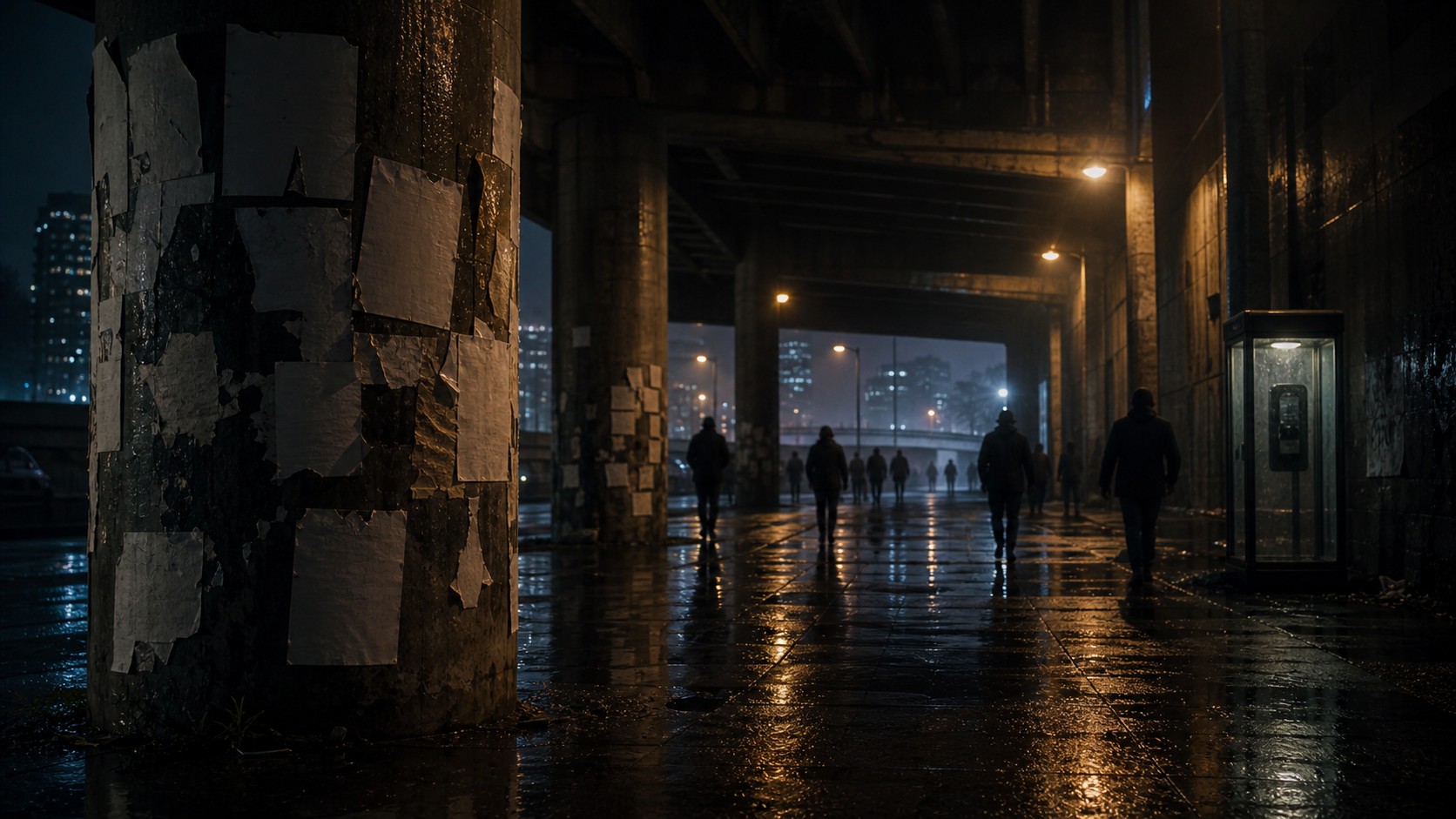
Why Certain City Legends Keep Returning
Modern urban legends that refuse to die usually survive because they are built around fears that never quite leave public life. Cities change, phones change, transportation changes, and media platforms change, but people still worry about strangers, hidden dangers, unsafe shortcuts, institutional silence, and the possibility that an ordinary place has a secret history. A legend that once traveled by word of mouth can return as a forwarded message, a short video, a podcast episode, or a local warning post. It refuses to die because it is less a fixed story than a flexible pattern for explaining why modern life feels more fragile than it looks. Their persistence also depends on how they solve a storytelling problem for anxious communities. Real safety advice is often conditional, statistical, and boring: avoid isolation when possible, verify claims, know your surroundings, use reliable sources, and do not let panic override judgment. A surviving urban legend turns that complexity into a scene with a hook. Someone ignored a sign, stepped into the wrong place, trusted the wrong person, or dismissed a warning that would have saved them. That shape is more memorable than a safety brochure because it feels like experience rather than instruction. The legend also flatters the listener. After hearing it, the listener imagines being more alert than the victim, more careful than the skeptic, more prepared than the person who laughed too soon. That sense of preparedness is part of the reward. It allows the story to be frightening and useful at the same time, even when the usefulness is questionable. Another reason these legends return is that they do not require a single community to preserve them. A story can pass through offices, schools, family chats, local groups, podcasts, videos, and forums, with each channel adding a slightly different emphasis. One version may stress stranger danger, another institutional secrecy, another technology, another the threat of ignoring local wisdom. The legend becomes a shared container for several fears at once. That is why disproving one version rarely ends the whole family of stories. The factual details can be corrected while the emotional container remains intact. In that sense, a legend that refuses to die is less like a rumor with one source than a recurring social habit. People keep reaching for it when they need a warning that feels dramatic enough to matter. The recurring nature of these legends also shows how rumor can behave like maintenance for fear. Each retelling keeps a concern polished and ready for use. If a community is worried about unsafe public space, the legend supplies a scene. If it is worried about technology, the legend supplies a device. If it is worried about institutions, the legend supplies a coverup. This flexibility makes the story feel strangely current even when its bones are old. It is not the literal plot that stays young; it is the anxiety. Another reason these legends survive is that they are emotionally efficient. They compress several lessons into one memorable sequence: be careful, trust slowly, check the setting, respect warnings, and do not assume modern life has removed old dangers. A realistic safety message might need nuance, but the legend offers urgency. That urgency can be useful when it encourages basic caution, yet harmful when it turns vague fear into suspicion of harmless people. Understanding the legend means seeing both outcomes. The story is not just stubborn entertainment. It is a recurring negotiation between caution and panic, between memory and misinformation, between the wish to protect others and the risk of spreading fear without evidence. A legend also lasts when it gives people a way to talk about change without sounding abstract. A neighborhood becomes less familiar, a workplace adds new security rules, a school warning circulates, or a device enters daily life before people understand its limits. The legend translates that unease into a plot with a beginning, a mistake, and a consequence. That is much easier to remember than a general complaint about modern life moving too quickly. The story says, in effect, that the new world has hidden rules and that someone who ignores those rules may pay for it. This is why older legends can feel freshly relevant after only minor edits. The same warning can move from a handwritten note to a voicemail, from a local paper to a forum post, from a friend's warning to a viral clip. Each format changes the authority of the tale. A story heard from a relative feels intimate; a story seen online feels public; a story attached to a local place feels immediate. None of those forms guarantees truth, but each can make the legend harder to dismiss. The real lesson is that persistence is not proof. A story may survive because it is emotionally useful, socially repeatable, and easy to update. That survival deserves attention, but it should lead to better questions, not automatic belief. The final reason these legends keep returning is that they invite participation. A listener can add a local street, a familiar store, a recent app, or a familiar kind of witness and feel as though the story has become more believable. That small act of localization gives the legend new life. It also makes correction more difficult, because the story no longer feels distant. It feels attached to the listener's own map of the world. For that reason, the healthiest response is not to mock the tale, but to slow it down. Ask where it came from, what changed in the retelling, and whether its warning points toward a real precaution or only toward contagious suspicion.
The Adaptable Core
A long-lived urban legend usually has a core that can survive many updates. The details may shift from a payphone to a smartphone, from a motel to a rideshare, or from a suburban road to an apartment hallway, but the emotional situation remains stable. Someone is alone, someone misses a clue, someone trusts the wrong signal, or a familiar place becomes unsafe after a hidden truth is revealed.
This adaptability keeps the legend from aging out. When one version becomes implausible, another version borrows the same warning and places it inside newer technology or a more current setting. The legend does not need to prove itself again from the beginning. It only needs to feel possible in the world the listener currently inhabits.
Rumor as a Survival Mechanism
People repeat durable urban legends partly because sharing them feels protective. The teller may not know whether the story is true, but the warning seems useful enough to pass along. That protective impulse gives the legend moral cover. It is not presented as gossip; it is presented as care.
That is why corrections often struggle. A person who shares the legend may feel they were trying to help. If the story is challenged, they can retreat to the idea that caution is better than regret. The legend survives inside that emotional shelter, where accuracy becomes secondary to the desire to warn.
The problem is that repeated warnings can train people to fear the wrong things. A story may feel protective while distracting from more realistic risks. The legends that refuse to die often persist because they speak to real anxiety, even when their advice is badly aimed.
New Technology, Old Suspicion
Technology gives old legends new rooms to occupy. A haunted call becomes an unknown number. A stranger at the door becomes a doorbell clip. A rumor about hidden surveillance becomes a story about an app. The machinery changes, but the suspicion is familiar: something is happening behind the surface, and ordinary people are the last to know.
These updates work because technology is both useful and opaque. Most people depend on systems they cannot fully inspect. That gap between dependence and understanding is fertile ground for legends. A story that claims to reveal the hidden rule can feel empowering even when it is inaccurate.
Why Debunking Is Not Enough
Debunking can show that a particular version is false, but the legend may return because the fear remains unsatisfied. If people still feel unsafe in parking garages, suspicious of institutions, or confused by technology, a corrected story can be replaced by a nearby rumor. The emotional vacancy is still open.
Effective explanation has to address both the claim and the fear. It should clarify what is false while acknowledging why the story sounded plausible. Mockery may win a factual point and still lose the listener, because the listener may hear ridicule of their caution rather than correction of a rumor.
This is why the most persistent legends often mutate instead of disappearing. They are not single errors; they are rumor ecosystems. A corrected detail becomes an invitation to alter the setting, change the witness, or claim that a different version remains true.
The Power of Familiar Settings
Legends refuse to die when their settings remain common. People still enter elevators, walk through underpasses, open doors to delivery workers, use public restrooms, check into hotels, and drive through unfamiliar neighborhoods. A legend attached to these routines keeps finding new listeners because the setting keeps being lived.
The familiar setting also gives the listener a role. They can imagine themselves making a better choice than the person in the story. That imagined control is satisfying. It turns fear into a rehearsal, and rehearsed fear is easier to remember than abstract safety advice.
Media Keeps the Body Moving
Every communication medium reshapes the urban legend. Oral telling rewards suspense and timing. Printed warnings create authority. Television dramatization gives the legend images. Social media supplies speed, repetition, and the illusion of local relevance. The story survives by taking advantage of whatever channel moves fastest.
Media also trims complexity. A legend that once had regional context may become a simplified warning designed for instant reaction. That simplification helps the story travel but can remove the very details that would allow people to understand where it came from or whether it ever made sense.
The legends that refuse to die often become famous in their simplified form. Once that happens, the simplified version can feel older and more authoritative than it really is.
What Their Persistence Reveals
The persistence of modern urban legends reveals a public appetite for warnings that feel personal and immediate. People want to believe they can recognize danger before it arrives. A legend offers that promise, even when the promise is built on shaky ground.
These stories also reveal distrust. They flourish where people suspect that official explanations are incomplete, that strangers may be dangerous, or that systems are hiding something. The legend becomes a folk explanation for modern unease.
That is why the goal is not simply to laugh these stories away. Their facts may fail, but their endurance points toward anxieties worth understanding. A legend that refuses to die is usually guarding a fear that has not been answered well enough.
Their survival also shows why modern folklore should be studied as a living system. The legend changes because the audience changes, and each revival leaves a trace of what that audience feared most.