Three Returning-Presence Traditions and One Gothic Comparison
At Berry Pomeroy, a white-clad figure is linked in legend with a woman imprisoned by her sister. At Duckett’s Grove, a mother’s curse supplies an explanation for a banshee. At Kuldhara, the departing community is said to forbid future settlement. These are three different narratives attached to places whose ordinary habitation ended, rather than one generic claim that ruins attract ghosts. Their versions need attribution, and their buildings also have histories that do not depend on the legends. A final comparison with New Slains Castle shows another route to a dark reputation: an association with Gothic fiction. That castle’s relationship with Dracula belongs beside the haunting accounts as a different category. Reading the stories together makes the ruins more distinctive while keeping historical departure, narrated return, and literary expectation visible as separate parts of their identity.
A: They can make different claims and organize different relationships with a place.
A: No. Its architectural chronology comes from historical and archaeological interpretation, distinct from the Margaret-and-Eleanor narrative.
A: Its narrative connects coercion, communal refusal, departure, and a continuing consequence.
A: Tourism Ireland tells of a young woman's fatal fall from a horse and her mother's resulting curse.
A: It preserves an interior's outline while exposing it to the outside world.
A: It makes the departing community's refusal continue as a prohibition on later settlement.
A: State what is known and retain the unresolved limits of the evidence.
A: It can show how people organize the meaning and memory of a particular ruin.
A: Its Dracula association illustrates literary expectation rather than the same kind of returning-presence story.
A: Clear distinctions among material history, memory, folklore, and literary association.
Berry Pomeroy: The White Lady and the Imprisoned Sister
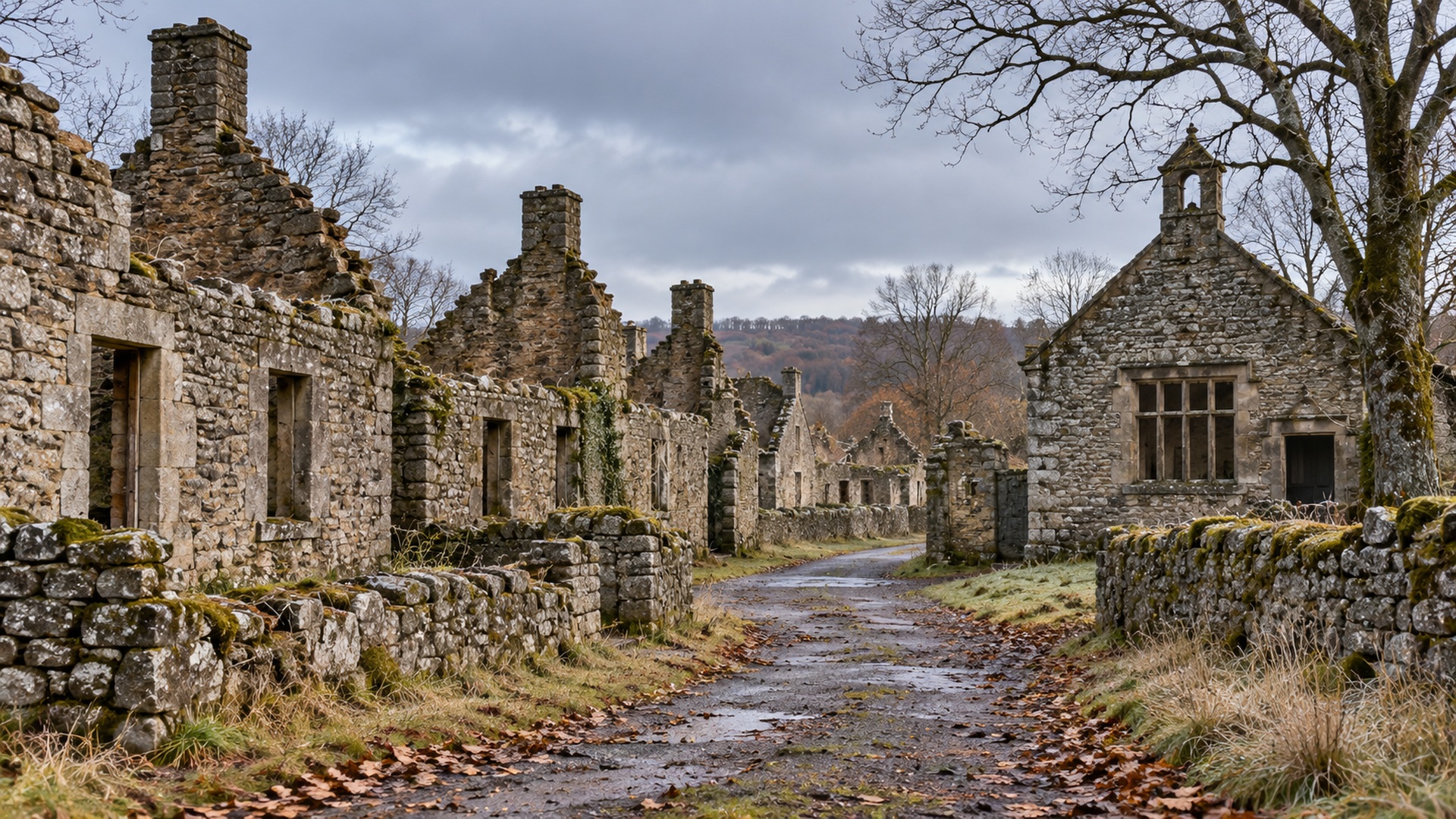
English Heritage dates the surviving Berry Pomeroy castle to the later fifteenth century. The Pomeroys’ much older ownership of the manor should not be confused with a Norman date for this particular fortress. The Seymours later built and expanded a mansion within its defenses, but an ambitious enlargement failed for lack of funds. By about 1700, the place had become an abandoned shell. That is an identified architectural history behind the ruin, rather than a claim that a haunting caused its departure.
The White Lady tradition gives that shell an imagined resident. In the version retold by Devon’s tourism interpretation, Margaret Pomeroy is imprisoned by her jealous sister Eleanor and associated with the castle’s dungeon or tower spaces. The story turns a family relationship into confinement and then into a continuing presence. Those details belong to the attributed legend; they do not establish a documented pair of historical sisters whose biography explains the ruins.
The distinction makes the story more interesting rather than less tellable. The surviving site combines defense, ambitious domestic building, and unfinished plans, while the legend concentrates attention on a much smaller relationship inside it. A tower that once organized access becomes an imagined place of exclusion. The white figure supplies a person to follow through spaces whose ordinary residents have gone. This is why the site’s actual chronology matters: the old manor, surviving castle, later mansion, and modern ghost story are layers, not one unbroken scene. Their overlap helps create the reputation, but they should not all be treated as records of the same event.
Duckett’s Grove: A Mother’s Curse and a Banshee
Duckett’s Grove in County Carlow began as a country house and was transformed into an elaborate Gothic composition with towers and decorative battlements. Ireland’s architectural inventory identifies Thomas Alfred Cobden with that transformation. A fire destroyed the interior in 1933, leaving the striking shell seen in later images. That material event is distinct from the supernatural explanation attached to the family in storytelling.
Tourism Ireland retells a version in which William Duckett has an affair with a young woman who dies after falling from a horse on the estate. Her mother places a curse on the house, and a banshee is said to remain associated with it. This is the promoted tradition, not a verified account of the relationship or a demonstrated cause of the fire. Its narrative focus is a grievance that outlasts the people involved. A banshee’s connection with death and family makes the presence different from a creature randomly occupying a derelict mansion. The ruin gives that continuing grievance a visible location, while the walled gardens and surviving estate layout retain a wider history of use. The same façade can therefore be read in two ways: as evidence of a nineteenth-century architectural transformation damaged in 1933, and as the setting in which a narrated curse is expected to persist. Keeping those readings together gives the place more specificity than simply calling every dark window a possible apparition.
Kuldhara: The Curse Is a Refusal to Let the Village Be Reoccupied
Rajasthan Tourism places Kuldhara near Jaisalmer and tells of a prosperous Paliwal Brahmin community whose departure becomes the center of its haunting reputation. In that version, minister Salim Singh demands to marry the village head’s daughter without regard for her consent. Faced with the threatened consequences of refusal, the community chooses departure rather than submission. The tourism account associates the overnight exodus with 1825.
The villagers are then said to curse the place so that nobody can settle there again. That final action gives the ruins a particular meaning: emptiness becomes a continuing refusal, rather than merely evidence that people once left. The threat is not a figure waiting in one bedroom but a condition placed on the possibility of future habitation. The story grants the departing community an imagined power that remains after its physical withdrawal.
This is an attributed legend, not a demonstrated explanation for every household’s departure or a verified test of whether later residence is impossible. The distinction matters because a vivid narrative can become more complete than the surviving historical record. Its coercion, collective decision, and lasting prohibition form a moral sequence that is easy to remember. The remaining streets and walls give that sequence a visible scale. Compared with Duckett’s Grove, the subject is a whole settlement rather than one family house; compared with Berry Pomeroy, the central action is departure rather than imprisonment. Those differences are the reason to include the places together, rather than treating all three as interchangeable photographs of abandoned buildings.
A Separate Comparison: New Slains and Gothic Expectation
New Slains Castle near Cruden Bay is historically associated with Bram Stoker and the creation of Dracula, as recognized in its Historic Environment Scotland listing. That association is different from verifying a resident ghost or declaring this the novel’s single definitive architectural model. The listing also records removal of the roof and some features in 1925, giving the present shell a material chronology. Its cliff setting and open rooms can invite a Gothic reading even when no specific apparition narrative is being asserted. Slains belongs here as a concise comparison: fiction can shape how a real ruin is encountered. It should not displace the three actual haunting traditions or be presented as evidence that a fictional count once occupied the house.
An Apparition, a Curse, and a Literary Association Make Different Claims
A ghost account may describe a presence seen or heard at a location. A curse narrative can explain why a place remains empty or why an action is forbidden. A literary association links a real setting with an invented story. All can influence atmosphere, but they do not offer the same kind of evidence or ask the reader to understand the same event.
Keeping the categories visible makes the sites easier to compare. Berry Pomeroy’s ghost-story reputation, Duckett’s Grove’s banshee association, Kuldhara’s departure narrative, and Slains’s Gothic literary identity each organize the ruin differently. Their variety is more interesting than calling every site the location of a trapped spirit. It also prevents the article’s title from silently turning a reputation into a verified supernatural condition.
Ruination Exposes the Boundary Between Inside and Outside
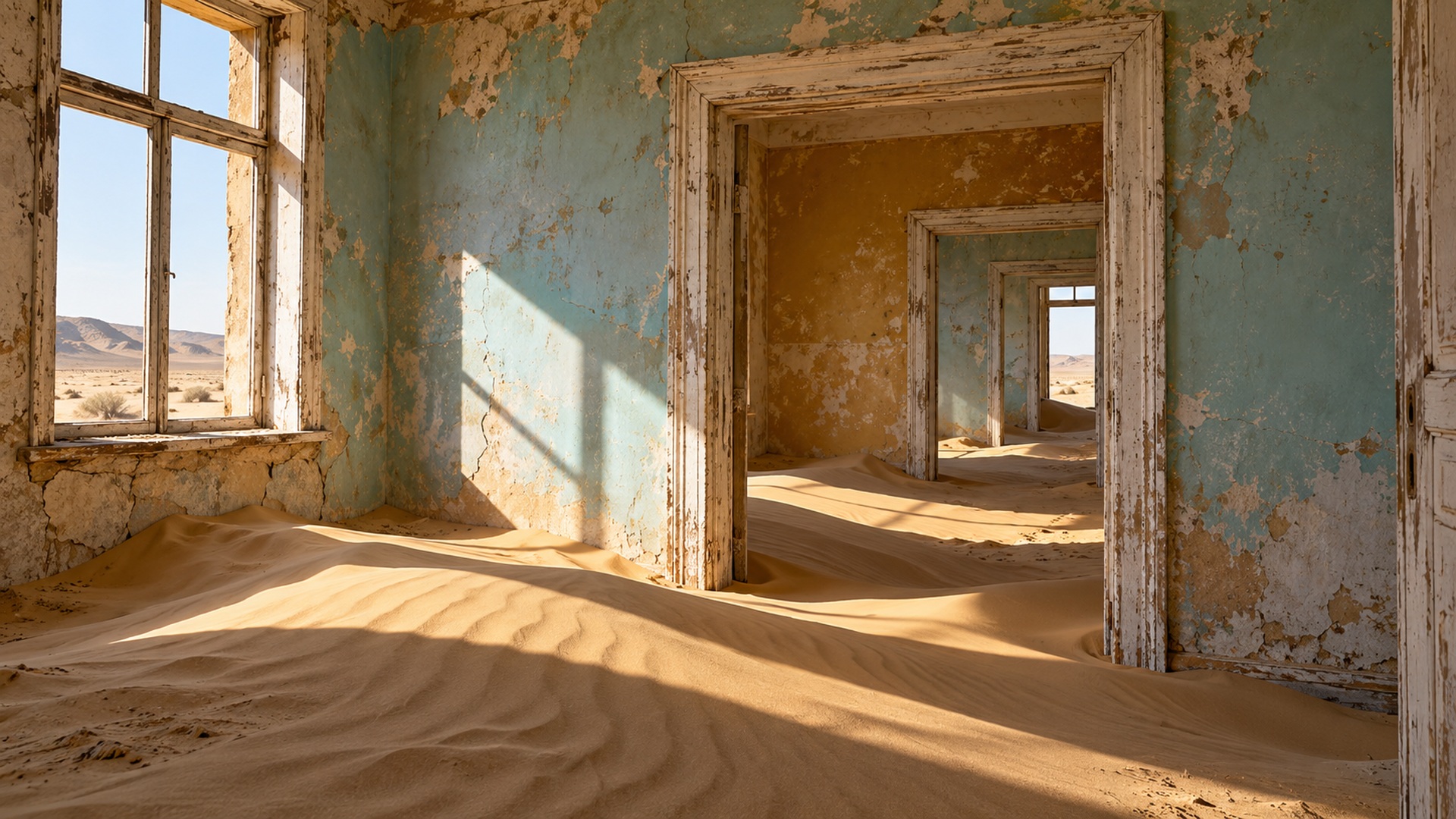
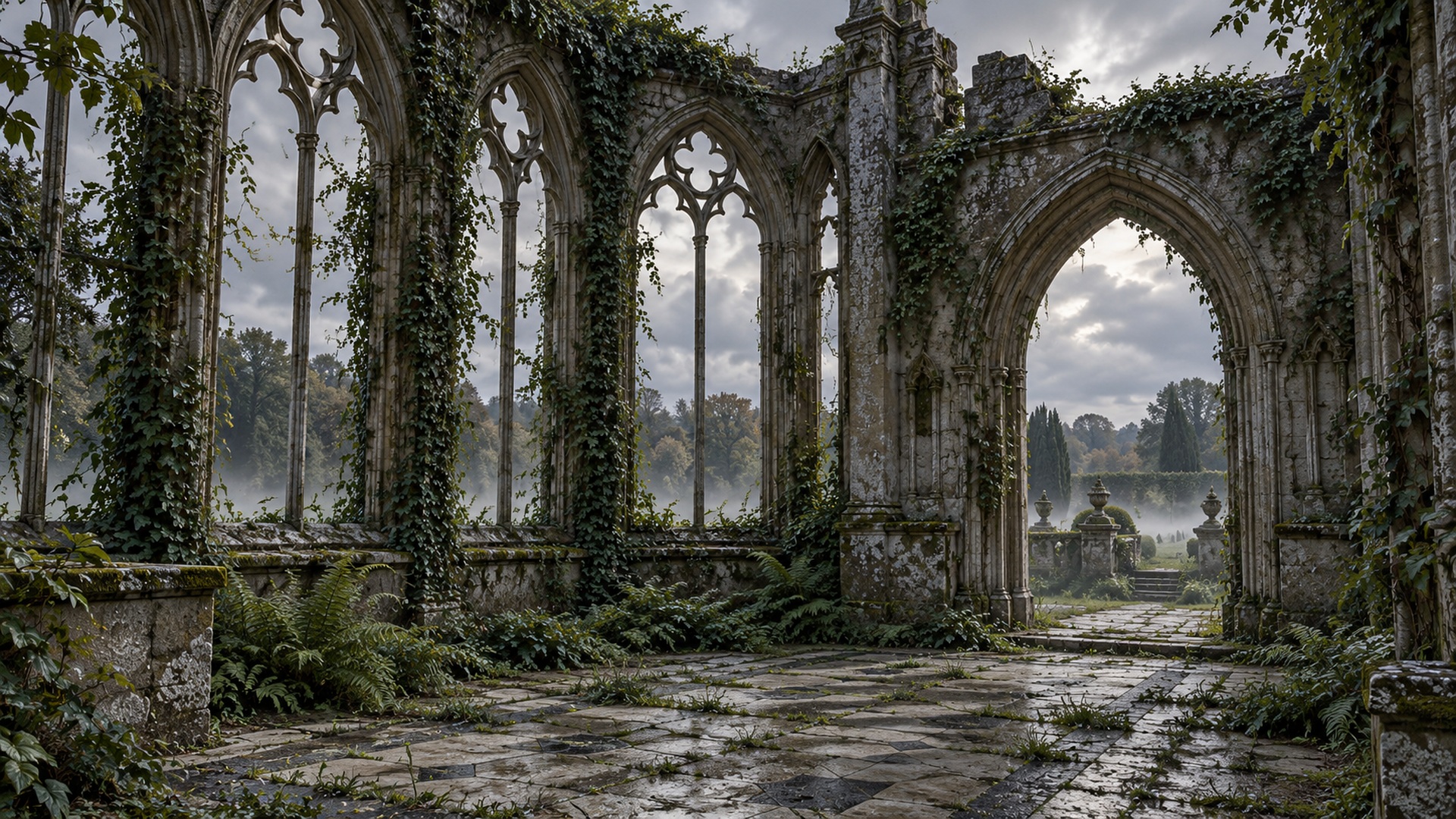
A house normally separates domestic space from weather and landscape. When its roof disappears, walls and windows preserve part of that distinction while failing to complete it. The room remains recognizable, but the sky enters where a ceiling belonged. That contradiction can make the place feel suspended between uses.
A haunting story can occupy the same ambiguity. A figure apparently belonging to the former household seems to restore an interior for a moment, even though the building can no longer support its old life. This is an interpretation of the narrative effect rather than a universal explanation for every report. It helps show why ruins provide more than a dark background.
The effect also works in daylight. Vegetation, open views, and beautiful masonry can coexist with a sense of absence. Fear need not be the only response. Melancholy, curiosity, and admiration can all be part of the experience, which is one reason a ruin’s reputation can attract artists and readers as well as ghost enthusiasts.
A Place Can Be Abandoned in One Sense and Cared For in Another
The original residence may be gone while conservation, gardens, interpretation, or community attachment continues. Calling the place abandoned describes the loss of a former use, not necessarily a lack of present care. That distinction is especially important when a ruin is actively maintained as heritage. The site remains within contemporary social life.
This continuing care can shape its reputation. Paths, restoration, guidebooks, and interpretation decide which spaces and stories later audiences encounter. A haunting tradition may be preserved through those activities. The ruin is therefore not a sealed object waiting outside history; it continues to be understood, selected, and presented.
A Superlative Often Measures Reputation Rather Than Activity
Lists of the most haunted abandoned places usually compare visibility and storytelling fame without a common measurement system. Different sites have different numbers of visitors, different media histories, and different forms of account. Those conditions make a numerical paranormal ranking misleading. A useful list instead states what makes each place distinctive and which sources support its reputation. Readers can then compare traditions rather than assume that the order proves one ruin contains more supernatural activity than another.
The Former Community Remains More Than a Source of Atmosphere
Homes and estates were places of ordinary work and relationships before they became picturesque remains. A settlement’s departure can be connected with pressure, changing circumstances, or a long decline. The people involved should not be reduced to unnamed figures whose only purpose is to leave a frightening setting. Their lives supply the context that makes the place particular.
This is especially relevant to a coercion-centered legend such as Kuldhara’s. The narrative’s moral dimension matters as much as the supposed curse. Likewise, a family-linked tradition at an estate has a different structure from a generic roaming monster story. Reading those relationships preserves the human scale behind the reputation.
Let the Ruin Keep Several Kinds of Presence
A site can hold material evidence, personal memory, folklore, and literary association at once. None has to erase the others. The reader can understand how a roofless room developed, recognize a story told about it, and notice the influence of familiar Gothic imagery. That layered reading makes the place more specific than a simple choice between believing every claim and dismissing the entire reputation.
It also gives comparison a clear purpose. The examples show different ways stories attach themselves to the remains of habitation. A presence can be narrated through a room, a family, a community’s refusal, or an imagined literary world. The physical ruin supplies the recurring location, while the story supplies a way to understand why absence still seems active.
Return to the empty window. What makes it memorable is not a demonstrated figure standing there but the relationship among the surviving frame, the vanished interior, and the account the reader knows. A well-supported article can preserve that atmosphere while being clear about what belongs to history, folklore, and fiction. The abandoned place remains imaginatively inhabited without requiring its legends to become verified events.