Useful Power Is a Whole-Body Achievement
A broad chest and enormous arms can make a monster look powerful before it moves, but the most effective creature in a scene may be a compact specialist with a secure grip and excellent timing. Power becomes useful only when a body can apply it to a real task under real conditions. A forest climber, a swamp ambusher, a territorial wrestler, and an armored grazer all need different combinations of force, control, and persistence. Their strongest traits should therefore be judged as parts of an integrated animal rather than as isolated upgrades. Muscles need leverage, leverage needs stable support, and an impressive burst needs enough recovery for the creature to survive its next encounter. This perspective gives monster design more variety than simply making each new beast larger or more muscular. It also explains why an apparently modest feature, such as a gripping foot or a well-positioned tail, can change an encounter. A truly powerful creature has a body and behavior that turn its available resources into effective action.
A: Its grip, leverage, timing, and preferred conditions may fit the task more effectively.
A: Reliable attachments and coordinated transfers of support are central to that habitat.
A: Protection can preserve function during contact, allowing existing force to remain usable.
A: It can aid some stability tasks while imposing other costs such as reduced clearance.
A: A creature's best opening effort may not represent its performance in a prolonged encounter.
A: Experience can improve positioning, surface selection, timing, and grip choice.
A: Its contacts, joint movements, support, and recovery all follow from the creature's body.
A: Reach and close-range leverage serve different purposes, so limb proportions should match the task.
A: Tradeoffs make its advantages understandable and create meaningful differences between creatures.
A: A profile describing tasks, environment, contact mechanics, stability, duration, and recovery.
Four Traits Define a Useful Power Profile
Start with four practical traits: the force a creature can apply to its best task, the control that keeps it on target, the durability that preserves function, and the endurance that makes another attempt possible. A giant arm answers only part of the first question. A climber also needs secure contact; a wrestler must hold balance when the other body changes direction. This profile explains useful power more clearly than one overall strength score.
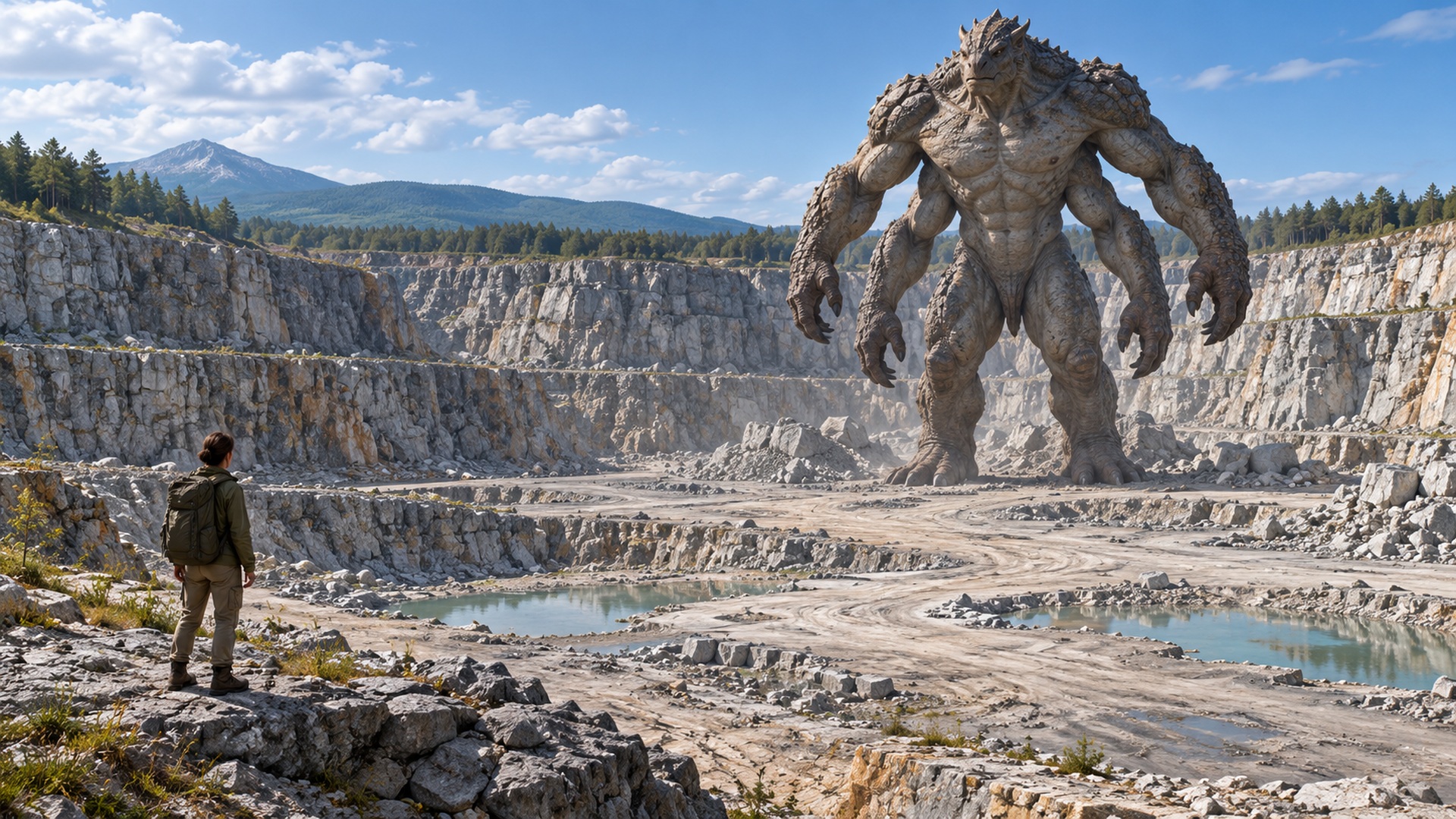
Give each trait a visible job in the animal’s ordinary life. A root-climbing creature uses its grip to maintain support, while a heavily built grazer may use a planted stance to resist being displaced. The climber’s advantage is not simply that its muscles are better. Its contacts and proportions suit an action the grazer rarely attempts. Conversely, the grazer’s mass and support can make a close pushing contest favor it.
Compare the weakest part of each combination as well as its signature feat. A rapid ambusher may perform one powerful movement but need recovery, while a less explosive animal can repeat a moderate effort. Thick armor may preserve the grazer after contact while limiting how quickly it accelerates. The sections below follow these traits through the body so that an impressive feature has an actual purpose and an understandable cost.
Begin With the Task the Creature Must Master
Strength has meaning in relation to an action. A burrower moving compacted soil faces a different challenge from a climber supporting its body beneath a branch. A territorial animal may need to resist displacement rather than deliver a damaging strike. Before selecting impressive traits, decide what the creature does repeatedly enough for its anatomy to be shaped around that demand.
This task-based approach prevents mismatched designs. Extremely long limbs might help reach across gaps but complicate close, forceful handling. Heavy armor might protect a slow defender while burdening a creature that relies on rapid acceleration. A successful monster can still have extraordinary abilities, but their combination should support a recognizable way of life. Its power becomes easier to understand when viewers can see what the body is built to accomplish.
A Secure Grip Converts Potential Into Control
Grip determines whether force reaches the intended target. A creature with capable muscles can still lose contact with a smooth surface, a struggling opponent, or an awkward object. Gripping structures may include curved claws, flexible digits, textured pads, hooks, or jaws. Their effectiveness depends on the material being held and on the direction of loading, so no contact structure deserves a universal best label.
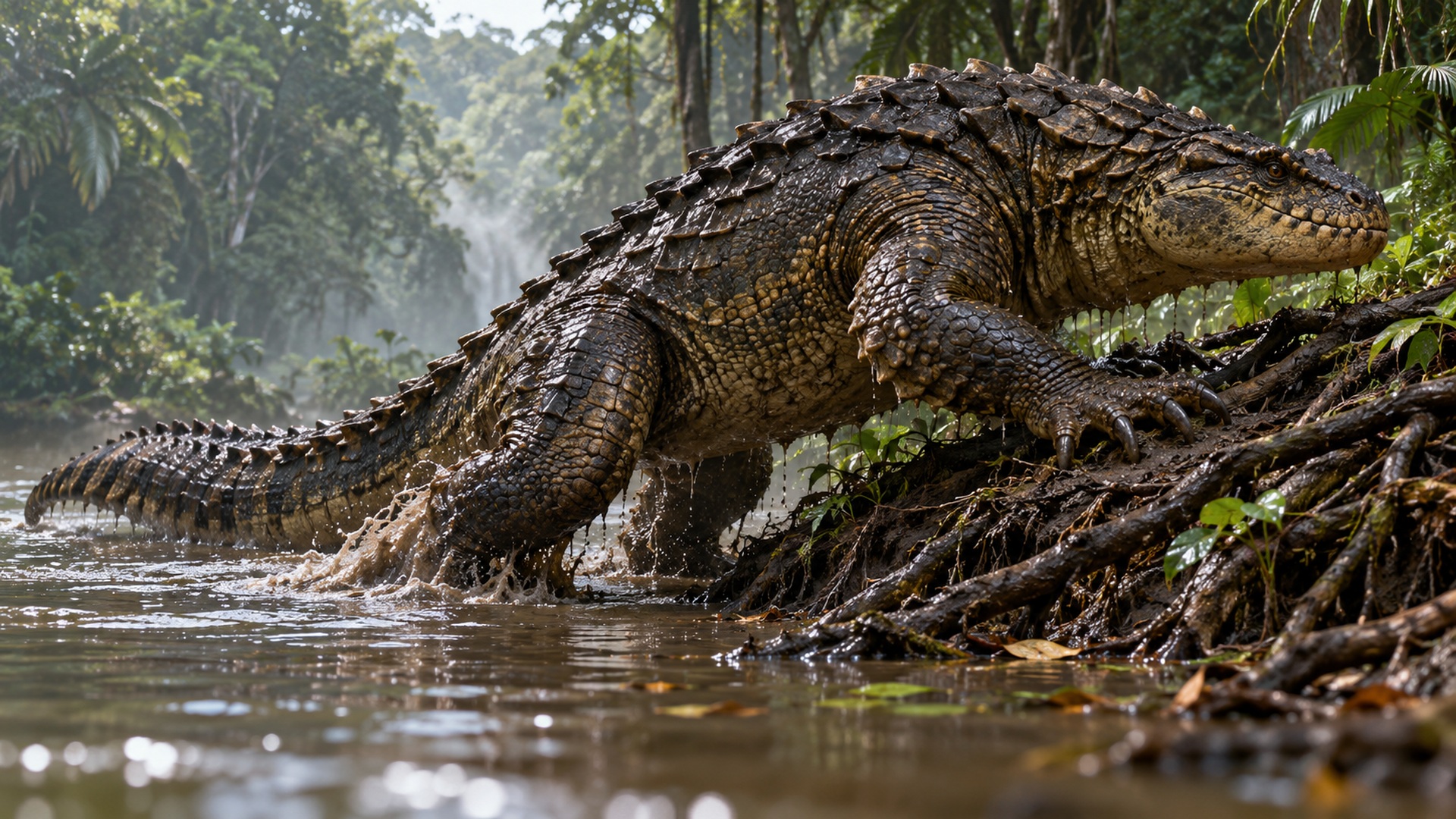
Consider a root-climbing swamp predator. Digits that curl around roots could provide purchase where a broad flat foot would slide. The same digits might be less useful on a featureless stone slab, especially if their claws cannot penetrate it. Contact specialization gives the animal an advantage in its habitat while leaving believable difficulties elsewhere. It also creates a visible action vocabulary: grasp, brace, test, and pull rather than an effortless glide over every surface.
Release matters as well. An appendage that catches securely but cannot disengage quickly may trap its owner during a changing encounter. Coordination between contact points allows the animal to move while preserving support. A powerful climber therefore needs more than one spectacular claw; it needs a sequence of reliable attachments and controlled transfers of body weight.
Body Proportions Shape the Available Leverage
Short, substantial limbs can favor forceful actions close to the body, while longer limbs offer reach and larger movement paths. These broad tendencies are modified by joint geometry and muscle arrangement. A deep shoulder or hip region may house substantial musculature, but its external appearance does not specify how effectively that muscle acts. The useful design is the connection between shape and performance.
A compact grappler might draw an opponent toward its torso, using a stable stance and favorable joint positions. A long-limbed striker might instead create speed and reach at the end of an extended limb. Neither design is automatically superior because they solve different problems. Their encounters become interesting when each tries to create the distance and contact conditions that suit its own mechanics.
Balance Allows Force to Stay Directed
A monster can lose an encounter by tipping or being rotated even when it has greater muscular force. Stability depends on the relationship between its center of mass, supporting contacts, and external forces. A wider support area can help in some situations, but its value changes as the body moves. A stance that resists one direction of pushing may be less effective when the load changes direction.
A tail can contribute through balance, contact, or counter-movement, depending on its structure and behavior. It should not be treated as a weightless accessory. A heavy tail must be carried and controlled, while a supporting tail requires anatomy that tolerates the loads it receives. When these details are integrated, a creature’s turn or brace can communicate power more clearly than simply adding bulk to its arms.
Low-slung bodies offer another possibility. They can keep mass nearer the ground and make some kinds of displacement difficult. Yet clearance over obstacles, movement through deep vegetation, and the length of useful steps may change. A strong design allows the advantages of stability to appear alongside the practical costs of living close to the surface.
Acceleration Turns Force Into an Opportunity
Many encounters depend on when force arrives. An ambusher may need a brief, rapid acceleration to close a small gap before its target reacts. A slow, exceptionally strong body could fail that task if it cannot generate useful movement in time. Acceleration depends on the net force available relative to the mass being accelerated, including the creature’s own tissues.
That relationship makes distribution important. Heavy structures far from a joint can increase the rotational demands of moving a limb quickly. A creature optimized for a sudden strike may keep certain distal parts comparatively light while placing force-producing tissues closer to the body. A heavily armored specialist could accept slower motion in exchange for surviving contact. Both are powerful in distinct ways, and the story should let their timing reflect those choices.
Durability Keeps Power Available After Contact
Strength without tolerance for impact can be self-defeating. A creature that strikes hard enough to damage its own joints will not remain effective for long. Supporting tissues, contact surfaces, and protective structures need to match its behavior. Durability is therefore part of usable performance, even when it does not increase the maximum force of a single action.
Armor can protect vulnerable regions, but coverage and mobility must be coordinated. Rigid protection around every joint would interfere with motion unless the design provided articulated or flexible regions. Thick skin might resist one kind of damage while offering less protection against another. A convincing powerful monster has defenses suited to the threats it commonly encounters rather than a vague claim of being immune to everything.
Repair changes the timescale of the advantage. An animal that recovers effectively between encounters can continue using its strength over a lifetime. Instant regeneration, by contrast, is a fictional premise requiring an explanation for material, energy, and tissue organization. The more carefully the story defines that premise, the easier it is to understand why the creature sometimes presses an advantage and sometimes withdraws.
Endurance Makes Repeated Effort Possible
A short burst and a prolonged struggle draw differently on the body. Sustained work needs continuing energy supply, oxygen delivery where appropriate, and heat management. A creature that dominates the first few seconds may lose effectiveness if the encounter lasts longer than its preferred performance window. Endurance allows another animal to remain useful after the burst specialist has to recover.
Daily life creates the background demand. A monster may need to travel, feed, defend territory, and care for offspring before any dramatic confrontation begins. Carrying oversized muscles or armor consumes resources even when they are not being used at full capacity. The strongest practical animal is not necessarily the one with the largest possible reserve; it is one whose reserve is affordable within its habitat and behavior.
Sensory Timing and Coordination Multiply an Advantage
A creature must locate a target and coordinate its body before its physical traits can help. Reliable information about distance, direction, and movement can make a moderate amount of force more effective than a much greater effort applied at the wrong moment. This does not turn perception into literal muscle strength. It explains why effective power includes choosing when and where to act.
Coordination also prevents different traits from interfering with each other. A jaw attack may require the forelimbs to stabilize the body, while a rapid turn may require a tail movement before the next footfall. A monster that can combine these actions smoothly appears integrated and alive. One that performs unrelated spectacular moves without transitions can feel like a list of abilities attached to a model.
Learning adds flexibility. An experienced animal may recognize unstable ground, avoid an opponent’s strongest position, or select a more secure grip. Those behaviors let the same body achieve different outcomes without any change in anatomy. A creature can therefore become more formidable through experience, giving a story room for development beyond another increase in size.
Specialization Creates Both Signature Moves and Limits
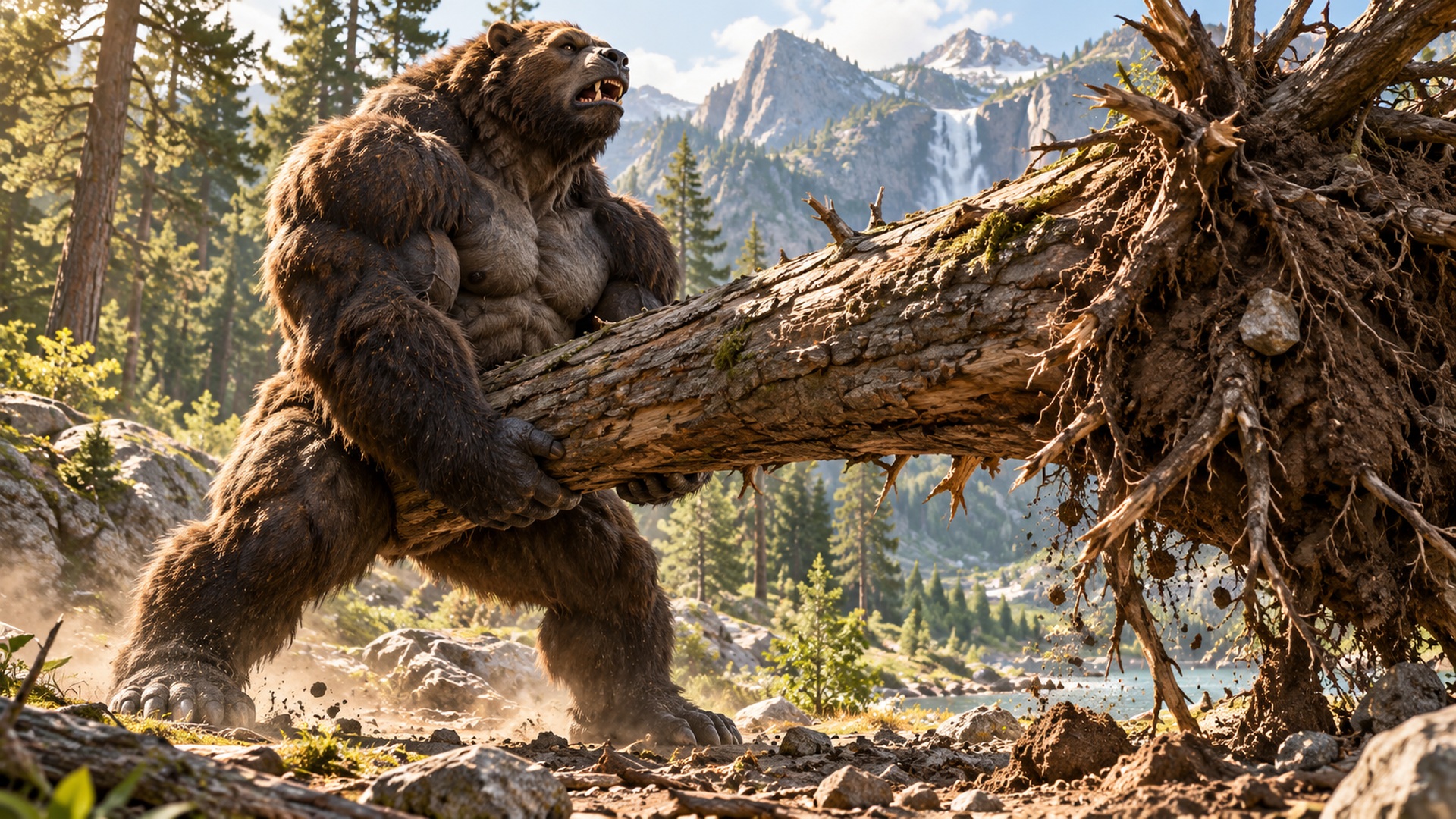
A memorable monster often has one characteristic action that reveals its entire design. It may clamp and hold, drive forward behind protected shoulders, wrench sideways with its neck, or anchor itself before pulling. The action connects contact structures, leverage, balance, and timing. Viewers understand its power because the movement seems to emerge naturally from the body.
The same specialization should constrain alternatives. A body excellent at pushing through dense vegetation may not turn elegantly in a narrow passage. A secure clamping system may take time to reset, and a heavily protected head may change visibility or maneuverability. These limits do not diminish the creature. They make its strengths readable and create conditions under which other animals or characters can respond intelligently.
Put the Complete Power Profile Into Its Habitat
Picture the root-climber hauling itself above shallow water while the armored grazer remains on firm ground. Roots give the climber several secure contacts, and its ability to transfer weight between them matters more than the size of its chest. In an open pushing contest, the grazer’s planted body may be more effective. Move the encounter onto a polished surface and the climber loses the footholds that made its strength useful. The decisive traits are force, control, durability, and endurance working in particular conditions. That is what gives a powerful creature an identity: its best feat emerges from the whole animal, and a changed situation exposes a different part of the same design.