For as long as humans have told stories, monsters have existed alongside them. No matter where people lived, whether in dense forests, vast deserts, remote islands, towering mountain ranges, or bustling ancient cities, they created tales about terrifying creatures that lurked beyond the boundaries of safety. These monsters appeared in countless forms. Some were giant beasts capable of destroying villages, while others were cunning spirits that preyed upon human weaknesses. Certain creatures haunted rivers and oceans, while others hid in caves, forests, and forgotten ruins. Although these legends varied greatly from one culture to another, the existence of monsters in nearly every society raises an intriguing question: why does every culture have its own monster legends?
The answer lies deep within human psychology, history, and culture. Monster legends are far more than frightening stories designed to entertain. They reveal humanity’s greatest fears, explain mysteries that once seemed impossible to understand, reinforce social values, and preserve cultural traditions across generations. While the details of these creatures may differ, the reasons behind their creation are remarkably similar. By exploring why monster legends appear throughout the world, we gain insight into both ancient civilizations and the universal experiences that connect all people.
A: Because every culture faces fear, danger, death, mystery, nature, and the need to teach important warnings.
A: No. They can teach lessons, protect traditions, explain mysteries, mark sacred places, and help people process grief or danger.
A: Nature can be beautiful and dangerous, so monsters often represent storms, forests, oceans, predators, darkness, and disease.
A: Shapeshifters reflect fear of deception, hidden danger, betrayal, and the idea that appearances cannot always be trusted.
A: They are memorable, emotional, entertaining, and useful for teaching survival rules and cultural values.
A: Yes. Urban legends, cryptids, horror movies, internet myths, and creepypasta are modern forms of monster-making.
A: They reflect different landscapes, religions, histories, dangers, customs, and storytelling traditions.
A: Yes. Some guard sacred places, punish disrespect, protect communities, or keep people away from dangerous areas.
A: They are often tied to real places, real fears, eyewitness claims, family warnings, and stories told as truth.
A: They show what people fear, value, protect, remember, and pass on to future generations.
Monsters Helped Explain the Unknown
One of the primary reasons monsters emerged in cultures around the world was humanity’s need to explain the unknown. Ancient people lived in a world filled with mysteries that could not be answered through science. Strange sounds echoed through forests at night. Storms appeared without warning. Diseases spread through villages with devastating consequences. People vanished while traveling through wilderness areas and were never seen again.
Without scientific explanations, communities turned to storytelling. Monsters became convenient ways to explain frightening or confusing events. If someone disappeared near a river, perhaps a creature living beneath the water had taken them. If livestock mysteriously died, a supernatural beast might be responsible. If strange noises came from the woods after dark, people imagined monsters lurking among the trees.
These explanations helped reduce uncertainty by giving fear a recognizable form. Instead of facing an invisible mystery, people could identify a specific creature responsible for the danger. This process made the unknown feel slightly more understandable, even if the explanation itself was terrifying.
Fear Creates Powerful Stories
Fear is one of humanity’s strongest emotions, and it has played a major role in the development of monster legends. Throughout history, people faced countless dangers. Predators hunted humans. Harsh weather threatened survival. Food shortages, disease outbreaks, and violent conflicts were common realities.
Monster stories transformed these dangers into memorable narratives. Instead of simply warning people about risks, storytellers created creatures that embodied those threats. Forest monsters represented the dangers of getting lost in the wilderness. Sea monsters symbolized the unpredictable power of oceans. Demons and evil spirits reflected fears about death, suffering, and misfortune.
Stories driven by fear are often remembered more easily than ordinary information. As a result, monster legends became effective tools for preserving knowledge and passing important lessons from one generation to the next. The emotional impact of these tales ensured that they remained part of cultural traditions for centuries.
Every Environment Creates Different Monsters
One fascinating aspect of monster folklore is how closely creatures reflect the environments in which they were created. Cultures often developed monsters inspired by the landscapes surrounding them. As a result, monster legends vary dramatically depending on geography.
Communities living near oceans frequently told stories about sea monsters capable of sinking ships and dragging sailors beneath the waves. Coastal cultures often feared creatures that emerged from the depths of the water. In heavily forested regions, legends focused on monsters hiding among trees, waiting to ambush travelers who wandered too far from established paths.
Desert cultures created creatures associated with endless sand, isolation, and harsh conditions. Mountain communities imagined powerful beings living among remote peaks and hidden valleys. Arctic regions developed monsters connected to winter, starvation, and survival in extreme environments.
These environmental influences demonstrate how folklore monsters often emerged from real-world experiences. The dangers people faced in daily life became transformed into supernatural creatures that reflected local conditions and concerns.
Monsters Reinforced Social Rules
Monster legends often served practical social purposes. Many stories were designed to encourage behavior that benefited the community while discouraging actions that could cause harm. Through folklore, societies used fear to reinforce important values and rules.
Parents frequently told children stories about monsters living near dangerous rivers, cliffs, caves, and forests. These tales reduced the likelihood of accidents by discouraging children from exploring hazardous areas alone. Similarly, stories about shape-shifting creatures or deceptive spirits warned people to be cautious when dealing with strangers.
Many monsters punished behaviors that communities considered harmful. Greed, dishonesty, arrogance, selfishness, and disrespect often attracted supernatural consequences in folklore. By attaching frightening outcomes to undesirable actions, these stories encouraged individuals to follow social expectations.
Because these lessons were delivered through memorable narratives rather than direct instructions, they remained effective across generations. Monster legends became powerful tools for maintaining social order and cultural stability.
Death and the Afterlife Inspired Countless Creatures
Few mysteries have influenced folklore more than death. Every culture has grappled with questions about what happens after life ends, and these questions frequently gave rise to monster legends. Ghosts, spirits, demons, vampires, and countless other creatures emerged from humanity’s attempts to understand mortality.
Many folklore monsters are directly connected to death and burial traditions. In some cultures, individuals who died under unusual circumstances were believed to return as dangerous spirits. Improper burials, broken rituals, and unresolved grievances often transformed the dead into supernatural threats.
These stories reflected genuine concerns about mortality and the unknown nature of the afterlife. They also reinforced important cultural practices surrounding funerals, mourning, and respect for the dead. By linking spiritual consequences to specific actions, communities encouraged people to honor traditions and maintain social harmony.
Death remains one of humanity’s greatest mysteries, which helps explain why so many monster legends continue to focus on the boundary between life and the supernatural world.
Monsters Reflect Human Psychology
Monster legends reveal a great deal about human psychology. Many creatures represent fears that exist across cultures regardless of geography or historical period. Fear of darkness, fear of isolation, fear of betrayal, fear of disease, and fear of death appear repeatedly in folklore around the world.
Shape-shifting monsters provide an excellent example. Creatures capable of disguising themselves as humans appear in many different cultures. Although the specific legends vary, these monsters often reflect fears about deception and betrayal. They suggest that danger may be hidden beneath familiar appearances.
Similarly, monsters that lurk in darkness tap into humanity’s natural discomfort with environments where visibility is limited. Fear of unseen threats likely developed as a survival mechanism long before civilization emerged.
Because these psychological fears are universal, monster legends continue to resonate with modern audiences. Even when people no longer believe the creatures are real, the emotions they represent remain deeply familiar.
Religion and Spiritual Beliefs Shaped Monsters
Religious beliefs have influenced monster legends throughout history. Many cultures viewed the world as a place where supernatural forces actively interacted with humanity. As a result, monsters often became symbols of evil, temptation, punishment, or spiritual chaos.
In numerous traditions, monsters served as opponents for heroes, gods, or divine figures. These conflicts symbolized larger struggles between order and disorder, good and evil, civilization and chaos. By defeating monsters, heroes restored balance and demonstrated important virtues.
Religious monsters often carried deeper symbolic meanings than ordinary beasts. They represented spiritual dangers that believers needed to avoid. Demons, malevolent spirits, and cursed creatures reinforced moral teachings while adding dramatic elements to religious stories.
These connections helped monster legends become deeply integrated into cultural identities, ensuring their survival across centuries.
Why Similar Monsters Appear Worldwide
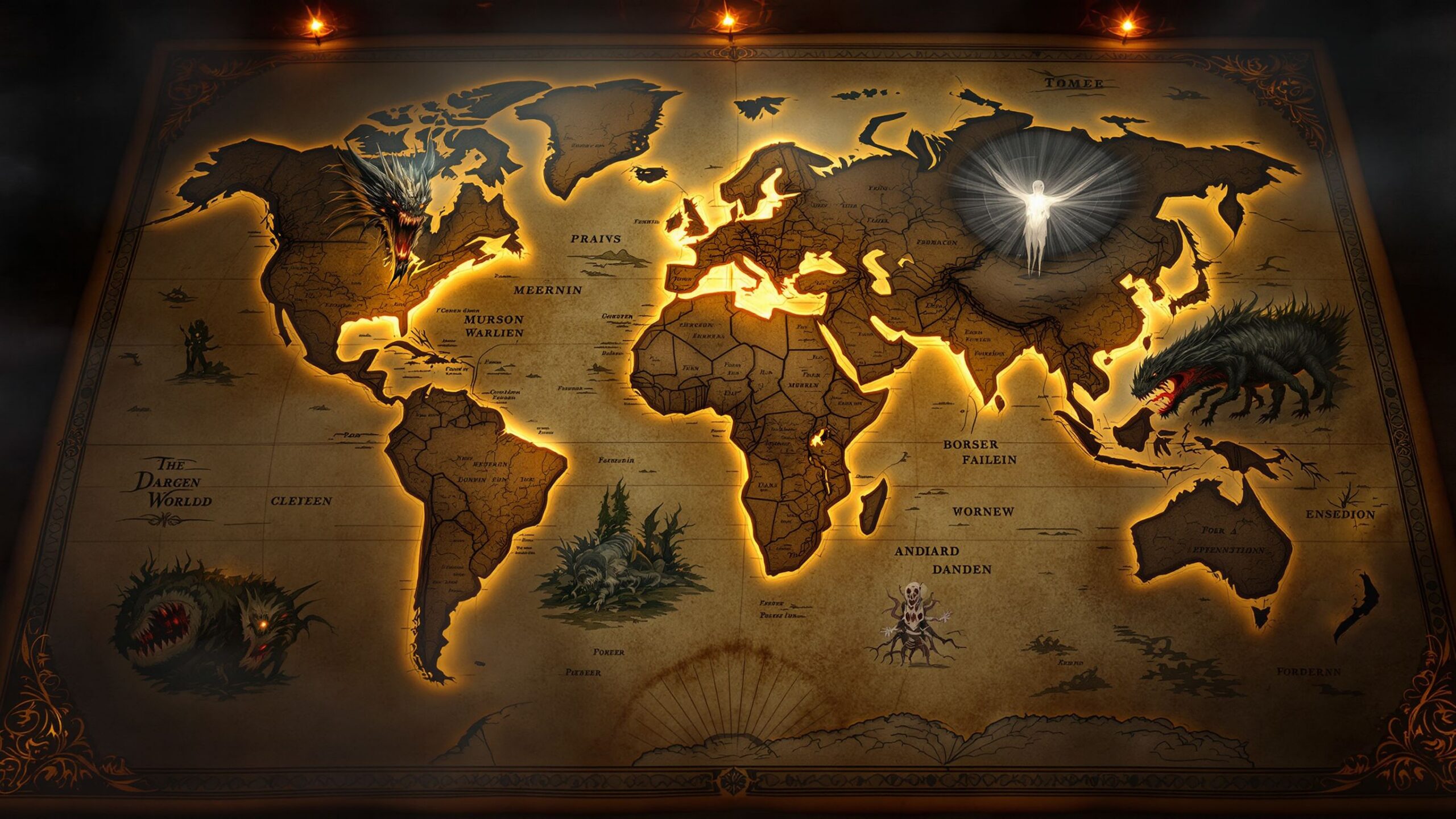
One of the most fascinating aspects of folklore is the appearance of similar monster types in cultures that developed independently. Dragons, giants, vampires, shape-shifters, sea monsters, and ghostly spirits appear across multiple continents despite significant geographic separation.
This phenomenon occurs because humans share many of the same fears and experiences. Different societies often encountered similar challenges involving predators, disease, natural disasters, and mortality. As a result, they created creatures that reflected comparable concerns.
A dragon in one culture may differ greatly from a dragon in another, but both often symbolize powerful and dangerous forces. Likewise, vampire-like creatures appear in numerous traditions because fears surrounding death, disease, and the dead are nearly universal.
These similarities reveal the shared aspects of human nature while highlighting the unique ways different cultures express common fears through storytelling.
The Enduring Appeal of Monster Legends
Monster legends continue to thrive in modern society despite advances in science and technology. Films, novels, television shows, podcasts, and video games regularly draw inspiration from folklore creatures because the themes they explore remain relevant.
People still fear the unknown. They still worry about betrayal, loss, death, and forces beyond their control. Monsters provide powerful symbols for these concerns, allowing audiences to explore difficult emotions within the safety of fictional stories.
Modern creators often reinvent ancient creatures for contemporary audiences, but the foundations remain remarkably similar. The monsters may look different, but the fears they represent continue to resonate across cultures and generations.
This enduring appeal demonstrates the remarkable power of folklore and storytelling. Monster legends survive because they address fundamental aspects of the human experience that never truly disappear.
Conclusion
Every culture has its own monster legends because every culture has faced fear, uncertainty, danger, and mystery. These stories emerged as ways to explain the unknown, teach important lessons, reinforce social values, and explore humanity’s deepest concerns. Although monsters vary greatly from one region to another, they often reflect similar emotions and experiences that connect people across time and geography.
From sea monsters and dragons to ghosts and shape-shifters, folklore creatures reveal the creativity and resilience of the societies that created them. They offer valuable insights into history, psychology, religion, and culture while continuing to entertain audiences centuries after their origins. The persistence of monster legends demonstrates that while technology and knowledge may transform the world, humanity’s fascination with mystery, fear, and storytelling remains as powerful as ever.