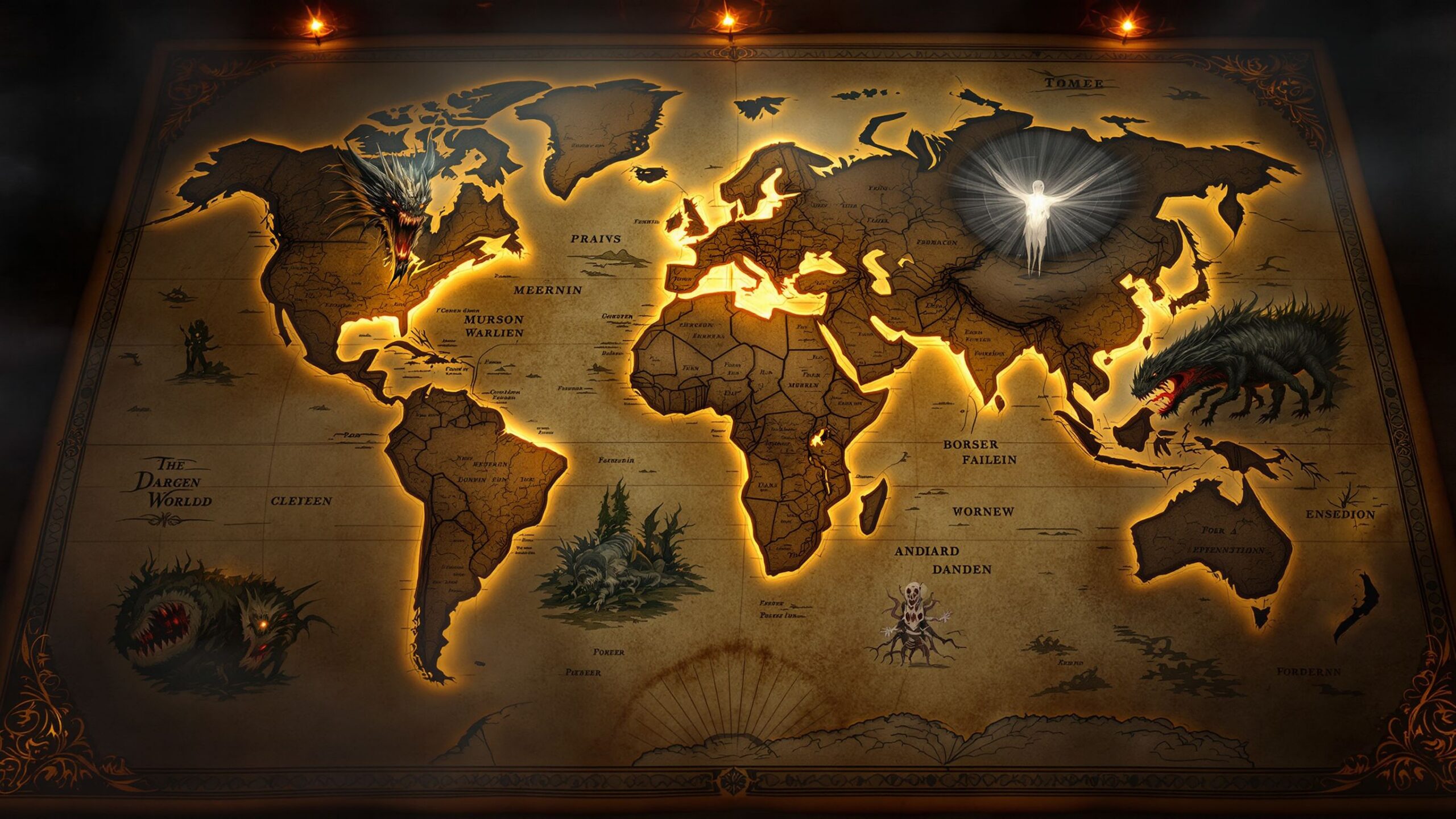
Every culture has its own nightmares. Long before horror movies, haunted houses, and bestselling thrillers captured the public imagination, people gathered around fires to share stories of terrifying creatures lurking just beyond the edge of civilization. These monsters were born from fear, mystery, and humanity’s attempt to explain the unknown. They lived in dark forests, haunted rivers, wandered lonely roads, and waited in places where ordinary people feared to travel. While many of these legends originated centuries ago, they continue to fascinate modern audiences because they tap into universal fears that remain as powerful today as they were generations ago. Folklore monsters often served important purposes within their communities. They warned children to stay away from dangerous locations, encouraged people to follow social rules, and provided explanations for strange events that could not otherwise be understood. Over time, these stories evolved into rich legends filled with unforgettable creatures. Some were demons, some were ghosts, and others were something far stranger. Together, they form a remarkable collection of monsters that reveal the fears and beliefs of cultures around the world.
A: It depends on the type of fear, but the Wendigo, Nuckelavee, Aswang, Manananggal, and Pontianak are often considered deeply disturbing.
A: Folklore monsters are legendary, but many grew from real fears, dangerous places, cultural beliefs, and unexplained events.
A: Monster stories teach warnings, explain mysteries, preserve traditions, and help people talk about fear in memorable ways.
A: Vampires are the most famous, but the Chupacabra, Aswang, Pontianak, and other regional creatures also have blood-drinking traits.
A: Kelpies, sea serpents, river spirits, lake monsters, and certain Yōkai are commonly connected to dangerous water.
A: Werewolves, Aswang, Skinwalkers, fox spirits, Djinn, and many trickster beings are known for changing form.
A: Forests represent isolation, wild animals, getting lost, ancient secrets, and the fear of leaving safety behind.
A: No. Some are protectors, warnings, tricksters, guardians, or complicated beings that punish certain behavior.
A: They connect old fears with modern storytelling, inspiring horror movies, books, games, art, and campfire tales.
A: A terrifying appearance, a strong warning, cultural meaning, mystery, and a story that feels possible in the dark.
Why Folklore Monsters Exist
Folklore monsters often emerged as a way for people to understand the world around them. Before scientific explanations existed, communities used stories to explain strange disappearances, deadly illnesses, natural disasters, and mysterious events. Monsters became symbols of the dangers that people faced every day. Parents used these tales to keep children away from dangerous places. Elders used them to teach moral lessons and reinforce social values. Over time, these stories evolved into rich traditions that became deeply woven into local cultures. Although the details vary from one region to another, many folklore monsters share common themes involving fear, survival, greed, death, and the unknown.
The Wendigo: The Spirit of Endless Hunger
Among the most terrifying creatures in North American folklore is the Wendigo. Found within the traditions of several Indigenous peoples, particularly among Algonquian-speaking communities, the Wendigo represents greed, starvation, and the loss of humanity. This monstrous being is often described as an emaciated giant with sunken eyes, razor-sharp claws, and a skeletal appearance that reflects eternal hunger. Some stories give it deer-like features, while others portray it as a horrifying human-like creature twisted by supernatural forces.
The Wendigo is especially frightening because it was once human. According to many legends, a person becomes a Wendigo after committing acts of cannibalism during desperate circumstances. Once transformed, they are consumed by an insatiable craving for human flesh. No matter how much they eat, their hunger only grows stronger. In some tales, the creature grows larger with every victim it consumes, creating a terrifying cycle that can never end. The Wendigo remains a powerful warning against selfishness, greed, and abandoning one’s humanity.
Baba Yaga: The Witch of the Dark Forest
Eastern European folklore introduces one of the most famous supernatural figures in history: Baba Yaga. Unlike many monsters that are purely evil, Baba Yaga exists somewhere between helper and destroyer. Her unpredictable nature makes her especially frightening because no one can be certain how she will respond to those who seek her out.
Baba Yaga is usually depicted as an ancient witch with iron teeth and incredible magical powers. She lives deep within the forest inside a magical hut that stands on giant chicken legs. The hut moves through the woods and can turn to face approaching visitors. Surrounding her home are fences made from human bones and skulls, creating one of the most disturbing images in folklore. She travels through the air inside a giant mortar while steering with a pestle and sweeping away her tracks with a broom. Those who encounter Baba Yaga may receive wisdom and assistance if they prove themselves worthy, but foolish, greedy, or disrespectful visitors often meet terrifying ends.
The Aswang: A Monster Hiding in Plain Sight
The Philippines is home to one of the most feared monsters in world folklore: the Aswang. What makes the Aswang particularly terrifying is its ability to blend into ordinary society. During the day, it appears completely human and may live among neighbors without attracting suspicion. At night, however, its true nature emerges.
The Aswang can take many forms depending on the story. Some versions resemble vampires that feed on blood, while others transform into giant dogs, pigs, or birds. One of the most disturbing legends describes a female Aswang separating her upper body from her lower half before growing wings and flying through the darkness. Many stories claim that Aswangs prey upon pregnant women and young children. Because anyone could secretly be an Aswang, these creatures create a unique fear rooted in distrust and hidden danger.
The Jiangshi: China’s Hopping Vampire
Chinese folklore contains many supernatural creatures, but few are as visually memorable as the Jiangshi. Often referred to as a hopping vampire, this undead being is said to rise from the grave and drain the life force of the living. The Jiangshi is usually portrayed as a stiff corpse dressed in traditional clothing from ancient Chinese dynasties.
Because its body is rigid, it cannot walk normally. Instead, it moves by hopping with its arms stretched forward. Unlike Western vampires that feed primarily on blood, the Jiangshi absorbs qi, the vital life energy that exists within every living person. Victims become weak and vulnerable as their energy is drained away. Legends suggest that Jiangshi are created when spirits fail to leave the body properly after death or when supernatural forces interfere with burial rituals. The image of a corpse hopping silently through a village under the moonlight remains one of folklore’s most unsettling creations.
The Nuckelavee: Scotland’s Ultimate Nightmare
Among all folklore monsters, few possess an appearance as horrifying as the Nuckelavee. Originating from Scotland’s Orkney Islands, this creature is often considered one of the most grotesque monsters ever imagined. The Nuckelavee resembles a massive horse with a human torso fused to its back. Its most horrifying feature is the complete absence of skin.
Every muscle, vein, and tendon is exposed for all to see. Legends describe yellow veins filled with dark fluid pulsing beneath raw flesh. The creature emerges from the sea and brings disaster wherever it travels. Crops fail, livestock die, and diseases spread through communities after its appearance. Unlike monsters that target individuals, the Nuckelavee threatens entire populations. Its association with famine and sickness made it one of the most feared supernatural beings in Scottish folklore.
The Pontianak: Beauty Concealing Horror
Throughout Malaysia, Indonesia, and neighboring regions, stories of the Pontianak continue to terrify listeners. This ghostly figure is said to be the spirit of a woman who died during pregnancy or childbirth and returned seeking vengeance. The Pontianak often appears as a beautiful young woman dressed in white with long black hair.
Her appearance is intentionally deceptive. Victims are drawn in by her beauty before witnessing her true form. Her eyes glow with supernatural rage, her nails become razor-sharp claws, and her face transforms into something monstrous. Many stories describe her attacking men and feeding upon their flesh. The sound of a crying baby or eerie laughter is often considered a warning that a Pontianak is nearby. Her tragic origin combined with her violent nature creates a particularly chilling legend.
The Rakshasa: Masters of Deception
Indian folklore and mythology contain countless supernatural beings, but the Rakshasa stands among the most terrifying. These powerful demons are shape-shifters capable of taking countless forms. Unlike many monsters that rely solely on strength, Rakshasas are highly intelligent and often use deception to achieve their goals.
They may disguise themselves as attractive humans, trusted friends, or harmless travelers before revealing their true nature. Many stories portray them as flesh-eating predators with immense magical abilities. Some can become invisible, fly through the air, or cast powerful illusions. Their intelligence makes them especially dangerous because they manipulate victims psychologically before attacking physically. The combination of supernatural power and cunning strategy has made Rakshasas legendary throughout South Asian folklore.
The Bunyip: Terror Beneath the Water
Australian folklore introduces the mysterious Bunyip, a creature said to inhabit swamps, rivers, lakes, and waterholes. Descriptions vary widely depending on the region, adding to its mystery. Some accounts compare it to a giant seal, while others describe a creature with a dog-like head, glowing eyes, sharp teeth, and enormous claws.
Despite these differences, nearly every version portrays the Bunyip as dangerous. It is often blamed for unexplained disappearances near bodies of water. Travelers who ignore warnings and venture too close to certain swamps or lakes may never return. Water has always represented both life and danger, making it the perfect environment for a terrifying monster. The Bunyip embodies humanity’s fear of what may be lurking beneath calm and silent waters.
The Chaneque: Spirits of the Wilderness
In Mexican folklore, the Chaneque are supernatural beings associated with forests, caves, rivers, and remote wilderness areas. Though often small in stature, they are far from harmless. The Chaneque are believed to protect nature and punish those who disrespect sacred places.
Travelers who wander into their territory may suddenly become lost, even in familiar surroundings. Some legends claim the Chaneque can steal a person’s soul, leaving them confused and weak. Recovering from such an encounter may require spiritual rituals or guidance from local healers. These stories reflect ancient fears surrounding the wilderness and humanity’s vulnerability when separated from civilization.
Why These Monsters Still Fascinate Us
Folklore monsters continue to thrive because they represent fears that remain deeply human. While people today may no longer fear encountering a Wendigo or a Jiangshi during their daily lives, the emotions these creatures symbolize are still relevant. Fear of isolation, fear of greed, fear of death, fear of betrayal, and fear of the unknown continue to shape human experiences.
Modern storytellers frequently draw inspiration from these ancient legends. Films, books, television shows, and video games reimagine folklore monsters for new audiences while preserving the fears that originally gave them life. Their enduring popularity proves that humanity remains fascinated by the mysterious and unexplained.
Conclusion
The most terrifying folklore monsters from around the world are far more than frightening stories. They are reflections of cultural beliefs, historical fears, and timeless lessons about human nature. Whether it is the endless hunger of the Wendigo, the shape-shifting deception of the Aswang, the eerie presence of the Jiangshi, or the skinless horror of the Nuckelavee, each creature reveals something unique about the people who created its legend. These monsters have survived for centuries because they speak to fears that transcend time and geography. As long as people continue telling stories, these terrifying beings will remain alive within the shadows of human imagination.