Why Ancient Rituals Could Feel So Frightening
Ancient rituals that inspired fear and mystery were not frightening only because they were old, secret, or strange to modern eyes. They were frightening because they made invisible forces feel present. A ritual could turn a doorway into a threshold, a stone into a boundary, a meal into an offering, a silence into obedience, and a repeated phrase into a promise that seemed to reach beyond ordinary speech. People who watched or participated might not have understood every symbol, but they understood that the action mattered. That seriousness gave ritual its power. It also created unease, because the same power that protected a community could exclude, accuse, punish, or bind. Many ancient rituals took place at emotionally charged moments: burial, harvest, illness, oath making, initiation, war, childbirth, kingship, or the crossing of sacred space. These were moments when people felt vulnerable to forces they could not fully control. Ritual gave that vulnerability a structure. It told people what to do, where to stand, what to touch, what to avoid, and which words could not be treated casually. Mystery entered because the ritual often suggested that more was happening than the audience could see. Fear entered because mistakes seemed consequential. To modern readers, the key is not to flatten these rites into spectacle. They were systems of meaning, authority, memory, and risk. Their darkness comes from the way awe and anxiety were braided together. The fear around ancient ritual also depended on timing. Many rites were not performed whenever someone felt like performing them. They belonged to particular nights, seasons, illnesses, harvest periods, funerary stages, royal transitions, or moments of public crisis. Timing made the action feel connected to a larger order. If the rite was delayed, interrupted, mocked, or performed incorrectly, people could imagine that the order itself had been disturbed. That is why stories about failed rituals can sound so ominous. They suggest that danger was not only in the rite, but in the possibility of breaking its rhythm. Another source of mystery was the way ritual joined ordinary materials with extraordinary claims. Fire, water, stone, cloth, grain, smoke, salt, clay, blood, oil, and spoken names were familiar things. Inside ritual, they became charged with expectation. A bowl was not just a bowl if it held an offering. A cord was not just a cord if it bound a promise. A door was not just a door if it marked entry into a forbidden chamber. This transformation is one of the reasons ancient rites remain compelling. They show how meaning can settle onto material things until those things feel almost too serious to touch. The fear was also communal. A ritual rarely belonged only to the person performing it. Families, witnesses, elders, attendants, rulers, mourners, or initiates might all participate in different ways. Even silence could be a role. The group created pressure around the rite, and that pressure made the performance feel real. A person who broke the rules was not merely making a private error. They were failing in front of people who knew what the action meant. This social force could protect shared values, but it could also make the rite intimidating. The ritual became a place where belief and reputation met. Modern fascination often comes from sensing that combination without fully sharing it. We may not believe that a mistimed offering could anger unseen powers, yet we understand the dread of doing something important incorrectly. We may not share the sacred map, yet we recognize the seriousness of entering a place where everyone lowers their voice. Ancient rituals inspired fear and mystery because they made human vulnerability formal. They gave fear a sequence, a setting, and a set of objects. They told people that the invisible world had protocols, and that ignoring those protocols might cost more than anyone could measure. Ancient ritual fear also came from the possibility that the rite might reveal something about the participant. A public oath could expose dishonesty. A purification rite could imply contamination. An initiation could test courage. A funerary obligation could reveal whether a family honored its dead properly. In these situations, the ritual was not only about unseen powers. It was also about social recognition. People watched to see whether the correct behavior appeared at the correct moment. That made ritual a mirror, and mirrors can be frightening when the community controls what they are supposed to show. Another reason these rites feel mysterious is that many were designed to be experienced rather than explained. The emotional effect mattered. Darkness, chanting, smoke, distance, repetition, or sudden silence could teach seriousness without a lecture. A participant might understand the ritual through the body before understanding it through words: waiting, kneeling, carrying, washing, fasting, touching, refusing, or walking a prescribed path. That embodied quality is hard to reconstruct from artifacts alone, which is why the surviving objects can seem both revealing and incomplete. We can see the bowl or stone, but not always the tremor in the room. The fear and mystery of ancient rituals therefore came from a combination of belief, performance, material culture, timing, hierarchy, and social memory. They were not simply strange acts from a distant past. They were ways of making fragile human concerns feel enforceable and visible. It is also worth remembering that ritual fear could be protective rather than merely oppressive. A community might use a frightening rite to teach respect for the dead, caution around dangerous places, seriousness about promises, or humility before forces larger than individual desire. The fear helped people remember. At the same time, fear could be used to enforce obedience, preserve hierarchy, or discourage questions. That double nature is why ancient rituals remain so interesting. They could hold a community together, but they could also reveal who had authority to define danger. The mystery is not only what the rite meant. It is who was allowed to say what it meant. That authority question is central. A rite could inspire awe because people trusted its keepers, or fear because those keepers controlled access to safety, purity, and belonging. The mystery was therefore social as well as sacred. That is why these rites can still unsettle us. They show fear becoming order, and order becoming performance. The mystery remains because the stakes felt real.
Thresholds and Forbidden Space
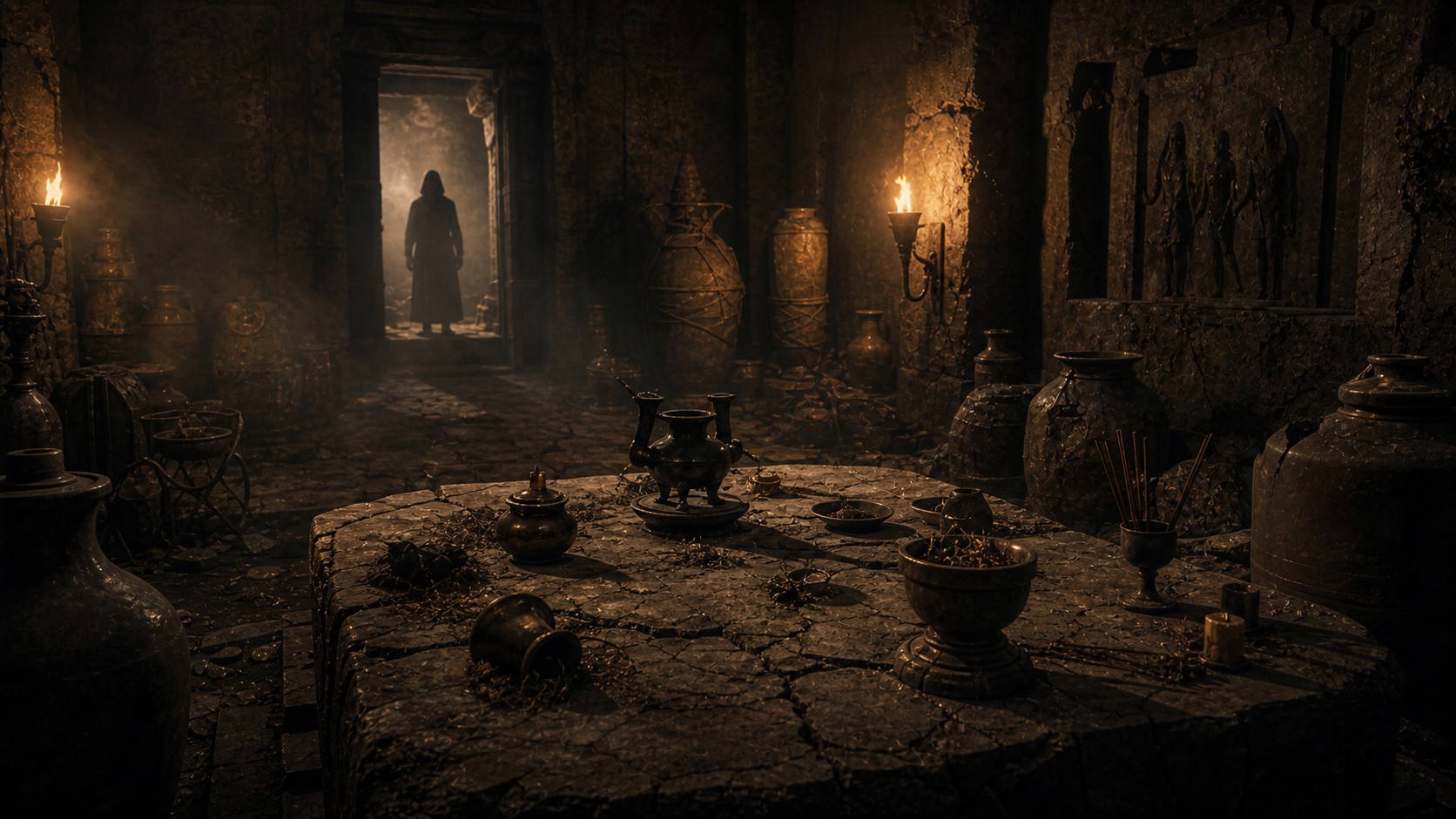
Many frightening rituals began with movement across a boundary. A person entered a tomb, temple, grove, cave, courtyard, island, chamber, or marked circle and became subject to a different kind of order. The boundary did not need walls to feel real. Repetition, warning, and shared belief could make a space feel watched.
That sense of crossing mattered because sacred space often carried rules that ordinary space did not. A mistake could be interpreted as disrespect, pollution, theft, or insult to powers beyond the community. The fear was not only that something supernatural would happen. It was that everyone present understood the person had stepped into a place where actions counted differently.
Secrecy as a Source of Power
Ritual secrecy made ordinary acts feel heavier. When only certain people knew the words, objects, timing, or meanings, the hidden knowledge became part of the rite's authority. Outsiders could see smoke, vessels, gestures, masks, or processions, but they could not always decode the full pattern.
That partial visibility created mystery. It also protected hierarchy. Priests, elders, initiates, rulers, or specialized practitioners could claim access to meanings that others lacked. The ritual therefore inspired fear not simply through darkness, but through controlled knowledge.
Secrecy also shaped memory. A person who was allowed to witness something forbidden might carry the experience as a mark of belonging. A person excluded from it might imagine the hidden parts as more dangerous than they were. In both cases, secrecy made the ritual larger than its visible actions.
Offerings, Exchange, and Obligation
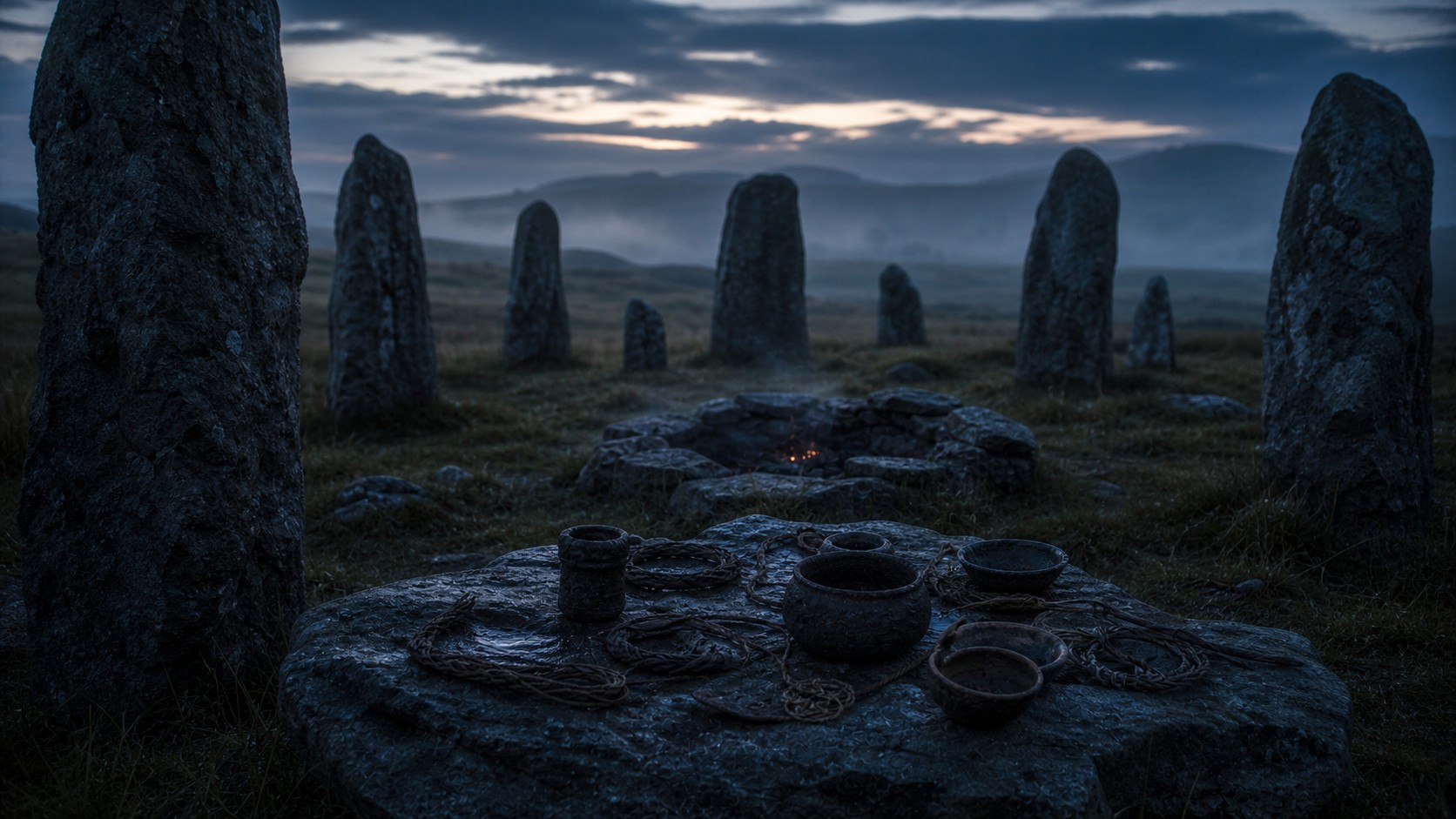
Offerings could feel unsettling because they treated the unseen world as a partner in exchange. Food, blood, incense, precious objects, hair, vessels, animals, or symbolic substitutes might be given so that protection, fertility, victory, healing, or forgiveness could be requested. The offering implied relationship.
Relationship implied obligation. If a community believed that powers could be honored, then those powers could also be neglected. Fear grew from the thought that failure to give, remember, or perform correctly might invite hunger, illness, drought, defeat, or social disorder.
Initiation and Controlled Terror
Some ancient rituals frightened people deliberately. Initiation could involve darkness, isolation, masks, ordeals, strange sounds, symbolic death, or sudden revelation. The terror was not always random cruelty. It could mark the passage from one social state into another by making the initiate feel that ordinary identity had been broken and remade.
This controlled fear gave the community a dramatic way to teach seriousness. A child, novice, warrior, ruler, or religious participant learned that the new role carried weight. The rite said that transformation was not casual. It required crossing through uncertainty.
The problem is that controlled terror can be difficult to separate from domination. A ritual may have taught endurance and belonging, but it could also reinforce obedience. The same experience that created meaning for one participant might feel coercive or traumatic for another.
Ritual Objects That Seemed Alive With Meaning
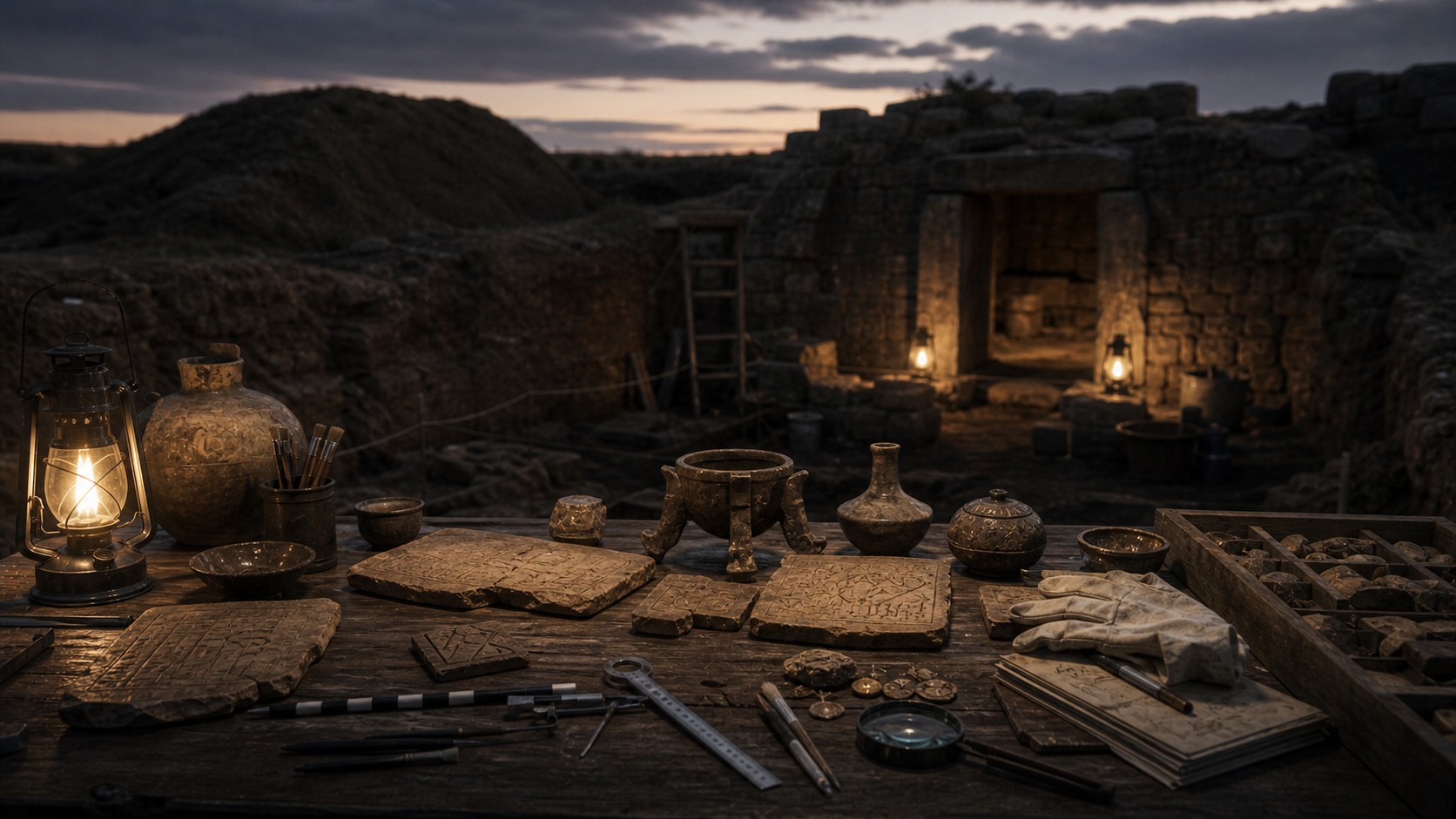
Objects made ritual fear visible. A cord, blade, cup, mask, tablet, figurine, bone, bell, stone, seal, or vessel could become more than a tool when it appeared inside a sacred sequence. It carried memory from earlier performances and expectation for future ones.
People often feared such objects because they seemed to concentrate intention. A plain vessel might be harmless on a shelf, yet alarming when buried, sealed, dedicated, or placed near a body. Ritual context changed the object into evidence that someone had tried to affect the world.
Performance, Witnesses, and Social Pressure
Rituals were public even when they contained secret meanings. Bodies gathered, watched, repeated, responded, and remembered. That shared attention made ritual socially powerful. A person could be honored, purified, accused, bound, or separated in front of witnesses who understood the implications.
Fear came from the fact that ritual consequences were not only private. If a community saw a rite performed, the social meaning became difficult to escape. An oath, curse, initiation, dedication, or public purification could follow a person through reputation.
This is one reason ritual mystery should be read alongside social power. The invisible world mattered, but so did the visible crowd. Ancient ritual could terrify because it joined supernatural consequence with human memory.
Why These Rites Still Fascinate Us
Ancient rituals still fascinate people because they show how seriously earlier societies treated uncertainty. They did not assume that grief, danger, fertility, leadership, illness, or death could be managed by explanation alone. They used performance to make invisible concerns tangible.
That tangibility is what makes the rites mysterious and disturbing. Modern readers may not share the beliefs, but they can recognize the need for structure when life feels unstable. The fear remains legible because the human problems remain familiar: how to protect what matters, how to face loss, and how to act when ordinary control ends.