How Ritual and Curse Stories Become Misunderstood
The truth behind ancient rituals and curses is usually more complex than the dramatic versions suggest. Modern retellings often separate ritual from daily life, as if ancient people performed frightening ceremonies only because they loved mystery. In reality, rituals and curses were often practical responses to pressure. They helped communities manage death, illness, land, inheritance, oath keeping, grief, leadership, conflict, and fear of unseen consequence. A curse could protect a tomb, reinforce a promise, accuse a wrongdoer, or give language to someone who lacked ordinary power. A ritual could mark a transition, restore order after danger, honor the dead, or make a community feel prepared for uncertainty. None of this means every story about ancient magic should be accepted literally. It means the stories should be read as evidence of what people needed their words and actions to do. Misunderstanding begins when modern audiences treat every ritual object as sinister and every curse as proof of irrational terror. The real picture is stranger and more human. Ancient people could be skeptical, practical, devout, political, poetic, anxious, and strategic at the same time. Their rituals and curses sat at the intersection of those impulses. They were not merely spooky decorations from the past. They were ways of turning social fear into visible form, and that is why they still attract serious attention. Another important truth is that ritual and curse traditions were rarely separate from ordinary institutions. They could overlap with law, property, medicine, politics, family duty, and public memory. A curse on a boundary stone might look supernatural, but it also protected land. A funerary rite might look mysterious, but it also maintained family identity. A purification practice might look symbolic, but it could help a community mark the end of danger and return to ordinary life. The modern habit of dividing religion, law, psychology, and politics into separate categories does not always fit older evidence. Ancient practices often did several kinds of work at once. This is why sensational explanations are usually too thin. If a ritual object is found buried near a doorway, it may be tempting to call it dark magic and stop there. A better explanation asks what doorways meant, who used the building, what else was found nearby, whether similar objects appear elsewhere, and whether later stories have changed the interpretation. If a curse text names a rival, it may express hatred, but it may also reveal competition, legal frustration, romantic conflict, economic pressure, or the hope that unseen justice could answer a visible imbalance. The truth is not less interesting than the legend. It is more layered. Ancient rituals and curses also show how people thought about agency. Did words act? Could objects carry intention? Could the dead be protected by memory? Could a promise bind a person when no human witness remained? These questions may sound distant, but modern life still depends on symbolic force. Signatures, ceremonies, memorials, court oaths, uniforms, flags, passwords, and contracts all show that people still use formal actions to create social reality. The difference is not that ancient people were symbolic and modern people are not. The difference lies in the systems of belief and authority that gave those symbols power. Understanding that continuity helps prevent condescension. It also makes the fear easier to understand. Ancient curses and rituals were not random eruptions of irrationality. They were structured attempts to manage consequence. They became frightening when the imagined consequence was severe, hidden, or beyond appeal. They became mysterious when the full meaning belonged only to insiders or to a worldview partly lost to us now. The truth behind them is therefore not a simple debunking. It is an explanation of how communities used action, language, objects, and fear to make the world feel governed. The truth also depends on distinguishing belief from uniform belief. Ancient communities were not made of identical minds. Some participants may have believed intensely, others may have followed custom, others may have doubted privately, and others may have valued the social effect more than the supernatural claim. A ritual could remain powerful even when individuals understood it differently, because the shared performance still produced public meaning. The same is true of curses. One person might fear divine punishment, another might see the curse as legal pressure, and another might use the formula because it was the accepted way to defend a boundary or grievance. This variety matters because it keeps modern interpretation honest. We should not imagine ancient people as either naive believers or secret skeptics. They lived inside systems where words, objects, gods, ancestors, laws, and reputations interacted. Their choices made sense within those systems, even when the assumptions differ from ours. A curse tablet, burial rite, or initiation ceremony should therefore be read as a human document, not just a supernatural claim. It records what people feared, what they valued, what they could not control, and how they tried to make consequence visible. That is the deeper truth behind ancient rituals and curses: they show communities negotiating with uncertainty through forms that were emotionally persuasive and socially binding. This also means that modern readers should be careful with certainty. It is easy to call a practice primitive when the surrounding worldview is unfamiliar, and just as easy to romanticize it because it feels mysterious. Both reactions flatten the past. A better approach treats rituals and curses as evidence of people thinking seriously with the concepts available to them. They used sacred language, inherited forms, public performance, and material objects to address problems that were real: betrayal, death, disease, danger, property, grief, injustice, and fear of disorder. The supernatural frame may not be ours, but the pressures underneath it are recognizable. That recognition is what makes the truth more powerful than a simple scare story. The truth is also shaped by survival. We often know ancient practices through what endured: stone, metal, clay, bone, architecture, and texts copied by later hands. What vanished may have been just as important: tone of voice, music, scent, gesture, emotion, doubt, and the ordinary explanations people gave one another afterward. Because the evidence is partial, humility is part of good interpretation. Ritual and curse traditions should be reconstructed carefully, with attention to context and limits. That caution does not weaken the subject. It protects it from becoming a fantasy made out of fragments. This is why the best explanations avoid both mockery and blind belief. They treat ancient ritual and curse evidence as records of people trying to make consequence, memory, and obligation visible in a world that often felt unstable. Their truth is not only in whether every supernatural claim was believed, but in how communities used those claims to shape behavior, authority, and memory under pressure when certainty was impossible and social order felt fragile for everyone involved over time.
Ritual Was Often Practical
Rituals helped people act when ordinary explanation was not enough. A community facing drought, death, disease, war, childbirth, harvest, or political transition needed more than private emotion. Ritual gave people shared steps to follow, which could reduce panic even when the outcome remained uncertain.
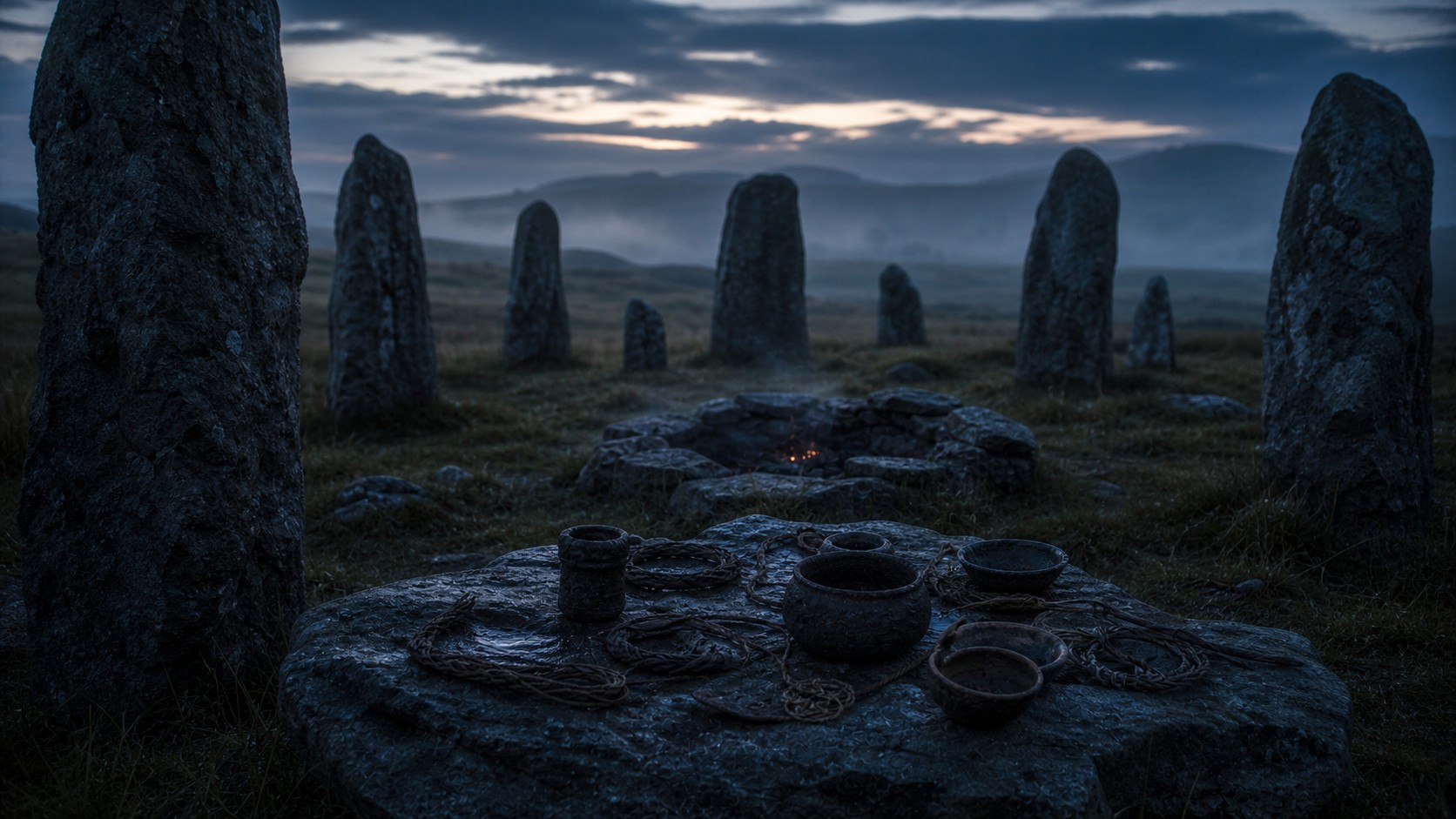
This practical side is easy to miss because the objects and gestures can look mysterious now. A bowl, cord, flame, mask, stone, tablet, or procession may seem theatrical, but within its original setting it could organize responsibility, memory, and expectation.
Curses Were More Than Superstition
Ancient curses were often tied to enforcement. A person might curse a tomb robber, oath breaker, boundary mover, thief, rival, false witness, or violator of sacred property because ordinary systems could fail. The curse imagined consequence where guards, courts, or witnesses might be absent.
That does not make every curse fair or harmless. Curses could intensify suspicion and turn misfortune into accusation. Yet they also show that people were trying to solve social problems with the tools available to them.
The truth is that curses belonged to a world where speech could be treated as action. Words did not merely describe anger. They could dedicate, bind, threaten, protect, and demand response from powers beyond the immediate human audience.
Evidence Can Be Uneven
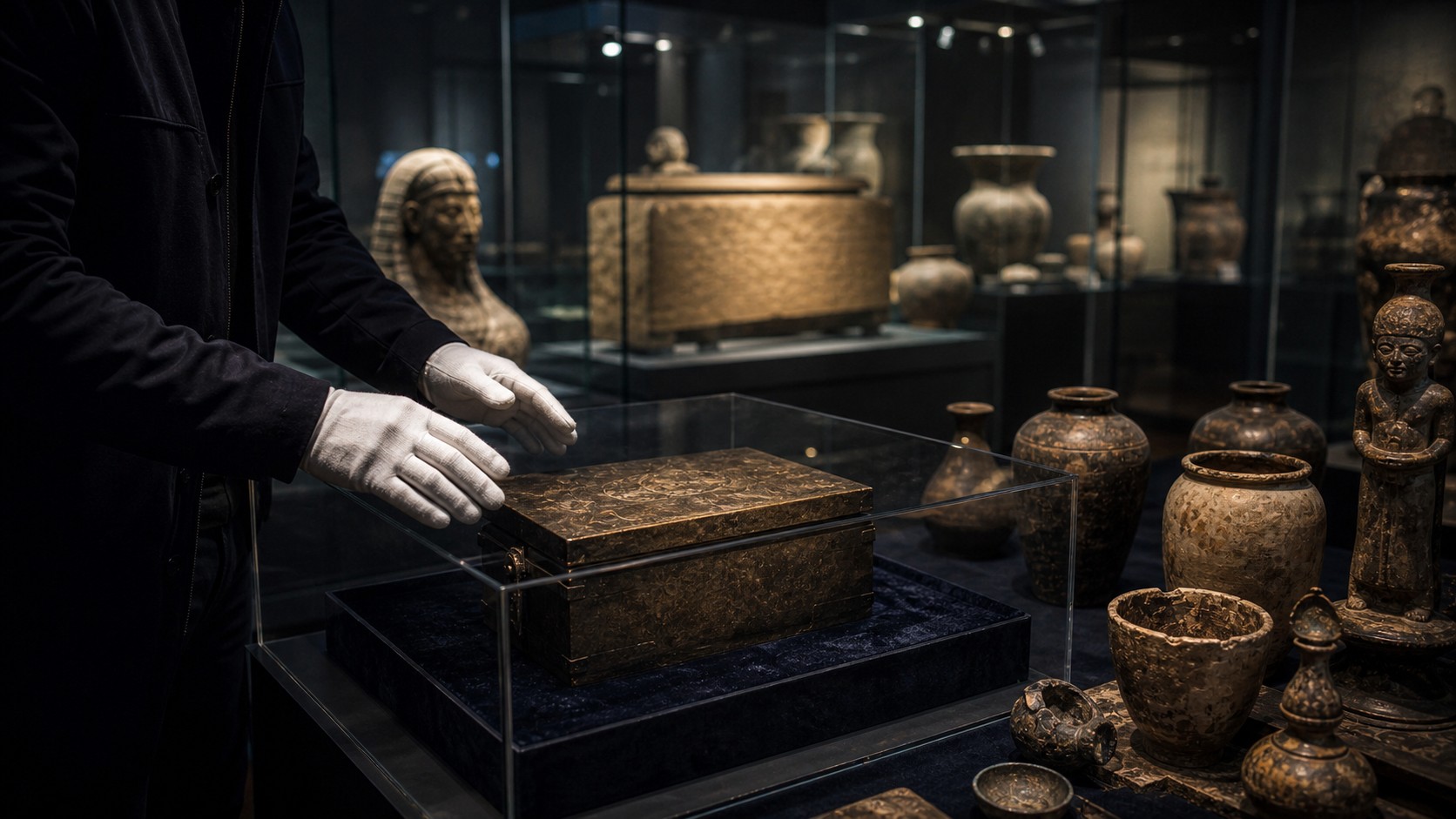
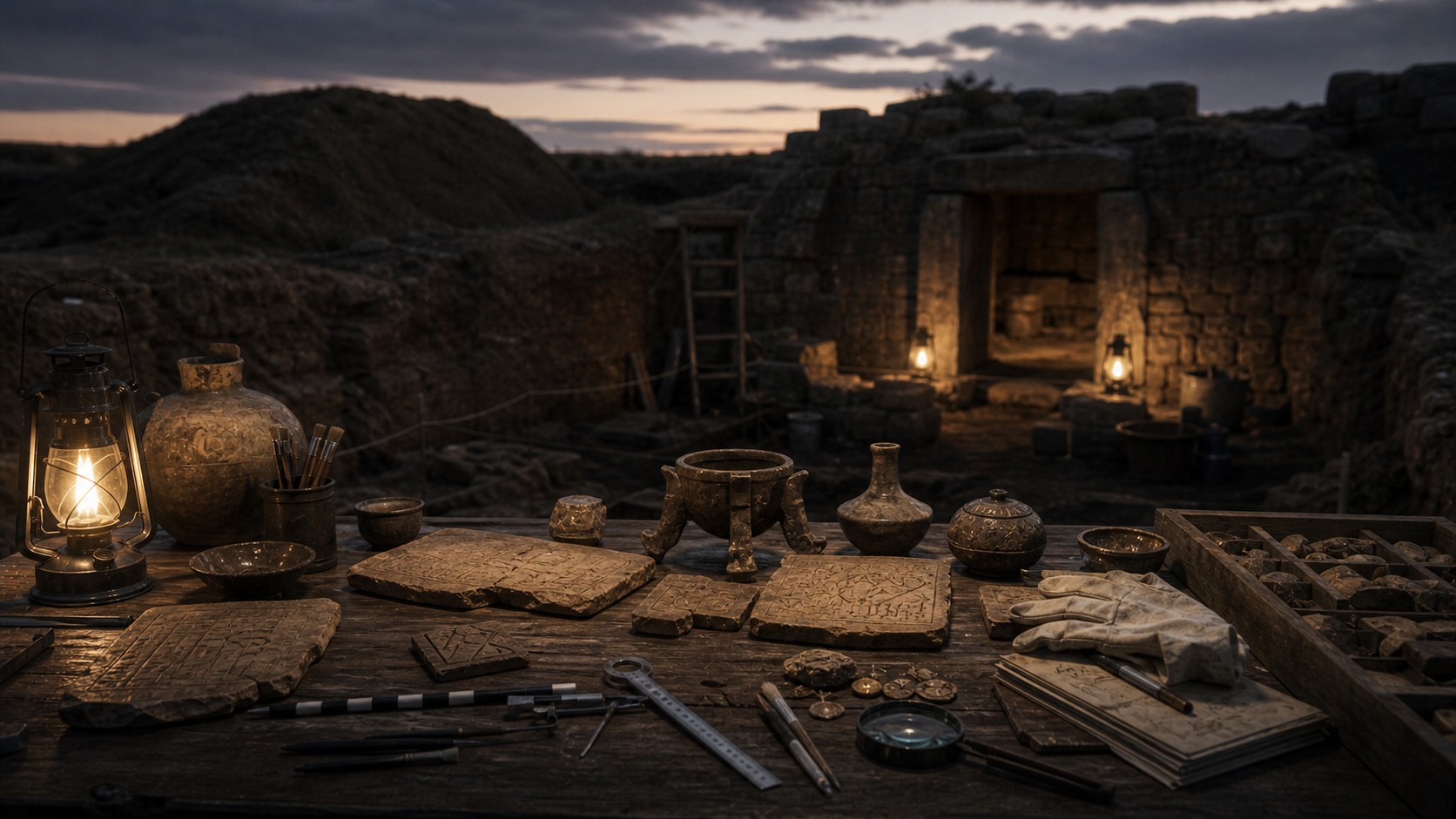
The evidence behind ritual and curse traditions is often fragmentary. Archaeologists may find tablets, vessels, burials, figurines, inscriptions, offerings, architectural patterns, or later written descriptions. Each source shows part of the picture, not the whole performance.
This is why confident modern claims should be handled carefully. A dramatic object may not prove the dramatic story attached to it. A later legend may preserve a memory, but it may also reshape the past for entertainment, politics, tourism, or moral instruction.
Fear Had Social Uses
Fear was not always a failure of understanding. It could be used to protect graves, discourage theft, preserve sacred rules, strengthen promises, or make leaders appear accountable to more than personal ambition. Fear gave fragile boundaries emotional force.
The danger is that fear can serve power too well. If a ritual class, ruler, family, or institution controls the meaning of danger, it can also control behavior. Ancient rituals and curses therefore need to be studied as social instruments, not only as beliefs.
That social use helps explain why some practices inspired both trust and dread. The same rite that reassured insiders might intimidate outsiders. The same curse that protected a vulnerable tomb might frighten people who feared being blamed for ordinary misfortune.
Legends Add Their Own Layers
Many famous stories about ancient rituals and curses were reshaped long after the practices themselves. Later writers, travelers, collectors, newspapers, films, and online retellings often added sharper danger, clearer villains, and more dramatic consequences.
Those later layers can be fascinating, but they should not be mistaken for the original context. A real inscription may become a curse legend. A burial rite may become a horror scene. An ambiguous object may become proof of forbidden ritual.
How to Read the Past Carefully
A careful reading asks several questions before accepting a dramatic explanation. What is the source? Who recorded it? What was found physically? What belongs to later legend? What social need might the ritual or curse have addressed? Which people gained authority from it?
This approach does not drain the subject of mystery. It makes the mystery more precise. Instead of asking only whether ancient people believed frightening things, the better question is how belief, law, memory, and power worked together.
The result is a richer kind of truth. Ancient rituals and curses can be historically real, emotionally powerful, socially useful, and frequently exaggerated in later storytelling all at once.
Why the Truth Still Feels Mysterious
The truth still feels mysterious because ritual and curse traditions were designed to operate at the edge of ordinary certainty. They addressed death, unseen consequence, divine attention, social betrayal, and the limits of human control. Those subjects have not stopped being difficult.
Modern readers may explain more with science and law, but they still understand why people want promises to matter, graves to be respected, wrongs to be answered, and dangerous transitions to be marked. That continuity keeps ancient rituals and curses from becoming merely old curiosities.