Why the Scariest Urban Myths Feel So Immediate
The scariest modern urban myths ever told work because they make ordinary routines feel suddenly breakable. They do not need distant castles or impossible creatures. They use parking lots, gas stations, apartments, rideshares, hotels, convenience stores, late-night sidewalks, and phones that ring at the wrong time. Their fear comes from the sense that one unnoticed detail can change everything. A person leaves a door open, accepts help too quickly, ignores a warning, or walks through a place that felt safe in daylight. The myth becomes scary because it feels like it could begin before anyone realizes the story has started. What separates the scariest modern myths from ordinary rumors is their ability to make the listener replay personal routines. After hearing one, people may picture the exact store where they park late at night, the apartment corridor outside their door, the rideshare pickup zone, the stairwell at work, or the moment when they glance at an unknown number on a phone. The myth personalizes fear by borrowing locations the listener has already used. It does not need to prove that the story happened; it only needs to make a familiar place feel newly available to danger. These myths also rely on the fear of delayed recognition. The victim often sees the clue too late. The open door, the repeated call, the silent figure, the abandoned object, or the helpful stranger becomes meaningful only after the danger has already formed. That delayed understanding is terrifying because it suggests that safety depends on interpretation, not just strength. A person must read the scene correctly before the scene changes. Modern urban life is full of ambiguous scenes, which gives these myths endless material. Most ambiguous moments are harmless, but the myth teaches the imagination to treat ambiguity as a warning. That can create useful caution in some cases and needless panic in others. The scariest myths spread because they feel like emotional drills. They let listeners practice fear in advance and imagine themselves surviving by noticing more. The danger is that repeated fictional drills can train suspicion too broadly. Not every stranger is a threat, not every object is a trap, and not every silence hides a villain. The best way to understand these stories is to see both sides: they dramatize real vulnerability, but they often turn vulnerability into certainty without enough evidence. The most frightening versions also draw strength from moral uncertainty. A person in the story may have to decide whether to help a stranger, trust an employee, open a door, answer a voice, or stay in a place that suddenly feels wrong. These are not abstract choices. Modern life asks people to make small trust decisions constantly, often with incomplete information. The myth exaggerates the danger of choosing wrongly, but the underlying tension is real. That is why these stories can feel unfairly persuasive. They speak to moments when politeness, compassion, self-protection, and suspicion collide. The listener imagines not only being harmed, but being tricked through a decent impulse. This gives the myth a lingering sting. It can make people wonder whether kindness itself is risky. That is where careful interpretation matters. A scary urban myth can remind people to stay aware without teaching them to treat everyone as a threat. The best response is neither gullibility nor cynicism. It is grounded caution: verify warnings, trust specific evidence more than dramatic retellings, and notice when a story is using fear to turn ordinary people into imagined villains. Another reason these myths feel so powerful is that they rarely give the listener a comfortable distance. Older tales may be set in remote forests, ruined castles, or long-ago villages, but modern urban myths unfold in places people visited last week. The story asks the listener to imagine danger entering through ordinary access points: a parking receipt, a text message, a hotel key, a ride request, a side door, a security camera, a hallway light that flickers at the wrong time. That closeness makes the fear portable. The listener can carry it into the next errand without consciously deciding to do so. These myths also exploit the pressure to make quick decisions. Modern life often demands fast judgment: whether to answer, open, stop, help, leave, report, ignore, or trust. The scary myth punishes hesitation in one version and punishes trust in another. That contradiction is part of the terror. There is no perfectly safe choice inside the story, only the possibility of noticing the clue early enough. The result is a kind of anxious training. People repeat the myth to feel prepared, but the preparation may be vague. It may teach a useful habit, such as checking surroundings, or it may teach a broad suspicion that makes public life feel more hostile than it is. A careful reading keeps the practical caution while refusing the myth's demand that every ambiguous person or place be treated as evidence of hidden danger. The scariest versions also reveal how much fear depends on aftermath. The listener does not only imagine the dangerous moment; they imagine explaining afterward why they did not notice sooner. That imagined regret is one of the myth's sharpest tools. It makes every overlooked detail feel morally important. A noise, a glance, a door, a stranger's wording, or a delayed message becomes the thing someone should have understood. This is why these stories often linger longer than more spectacular horror. They do not simply ask what could attack us. They ask whether ordinary attention is enough to keep us safe. That question is unsettling because no one can be perfectly alert all the time. The myth turns ordinary limits into suspense. This is also why the stories can feel different depending on who hears them. A late-shift worker, a teenager walking home, a traveler in an unfamiliar city, or someone who has already experienced danger may read the same myth with different intensity. The story borrows from real vulnerability even when its plot is invented. That does not make the myth evidence, but it explains its grip. It touches fears that are unevenly distributed across daily life, then presents them as a single unforgettable warning. The strongest scary myths leave people with a double awareness: the plot may be unreliable, but the feeling of exposure is recognizable. That is why they should be interpreted as warnings about fear itself as much as warnings about danger. They show how quickly uncertainty can become certainty when a story is frightening enough. They also explain why dramatic warnings should be handled with care. A frightening story can sharpen attention, but it can also make people misread ordinary situations. The useful lesson is awareness, not automatic suspicion.
Fear Built From Routine
Scary urban myths often begin with a normal task. Someone buys gas, returns to a car, answers a call, checks into a room, takes an elevator, or walks through a hallway. The ordinary opening matters because it lets the listener step into the story easily. Nothing looks mythic at first.
Then the routine bends. A shadow appears where no one should be, a stranger knows too much, a noise repeats from inside the room, or a helpful warning begins to sound like a trap. The myth turns a familiar action into a point of no return.
This is why these stories can feel more immediate than supernatural folklore. The listener does not need to imagine belief in a monster. They only need to imagine making an errand at the wrong hour.
The Stranger Problem
Many frightening modern myths focus on strangers because urban life requires constant trust among people who do not know one another. A stranger may be harmless, helpful, desperate, confused, or dangerous, and the listener has little time to decide. Urban myths exaggerate that uncertainty until every encounter feels loaded.
The scariest versions avoid making the danger obvious too early. The stranger may seem polite, ordinary, wounded, attractive, elderly, or professional. The fear comes from realizing too late that the first impression was incomplete.
Empty Spaces After Dark
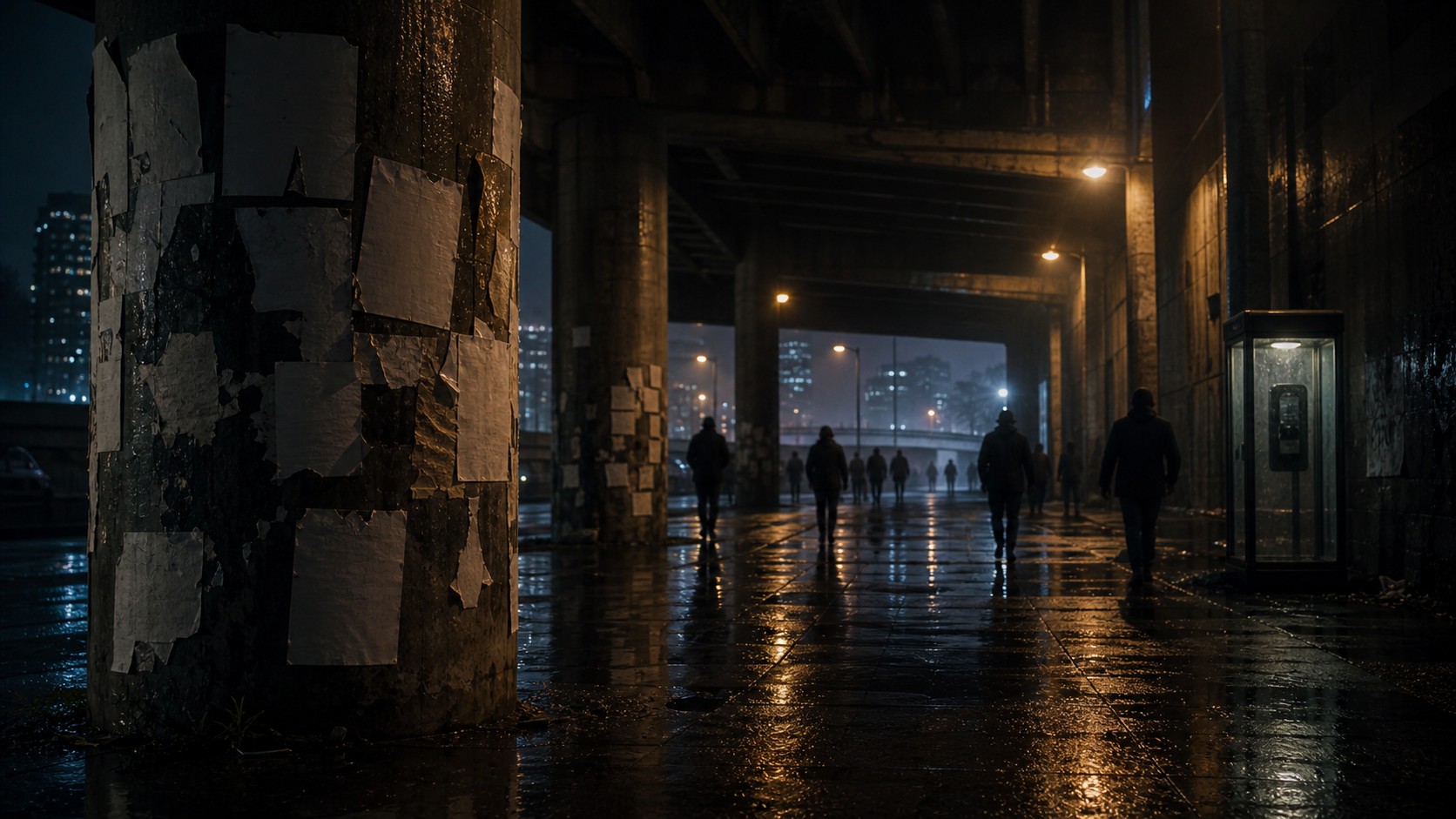
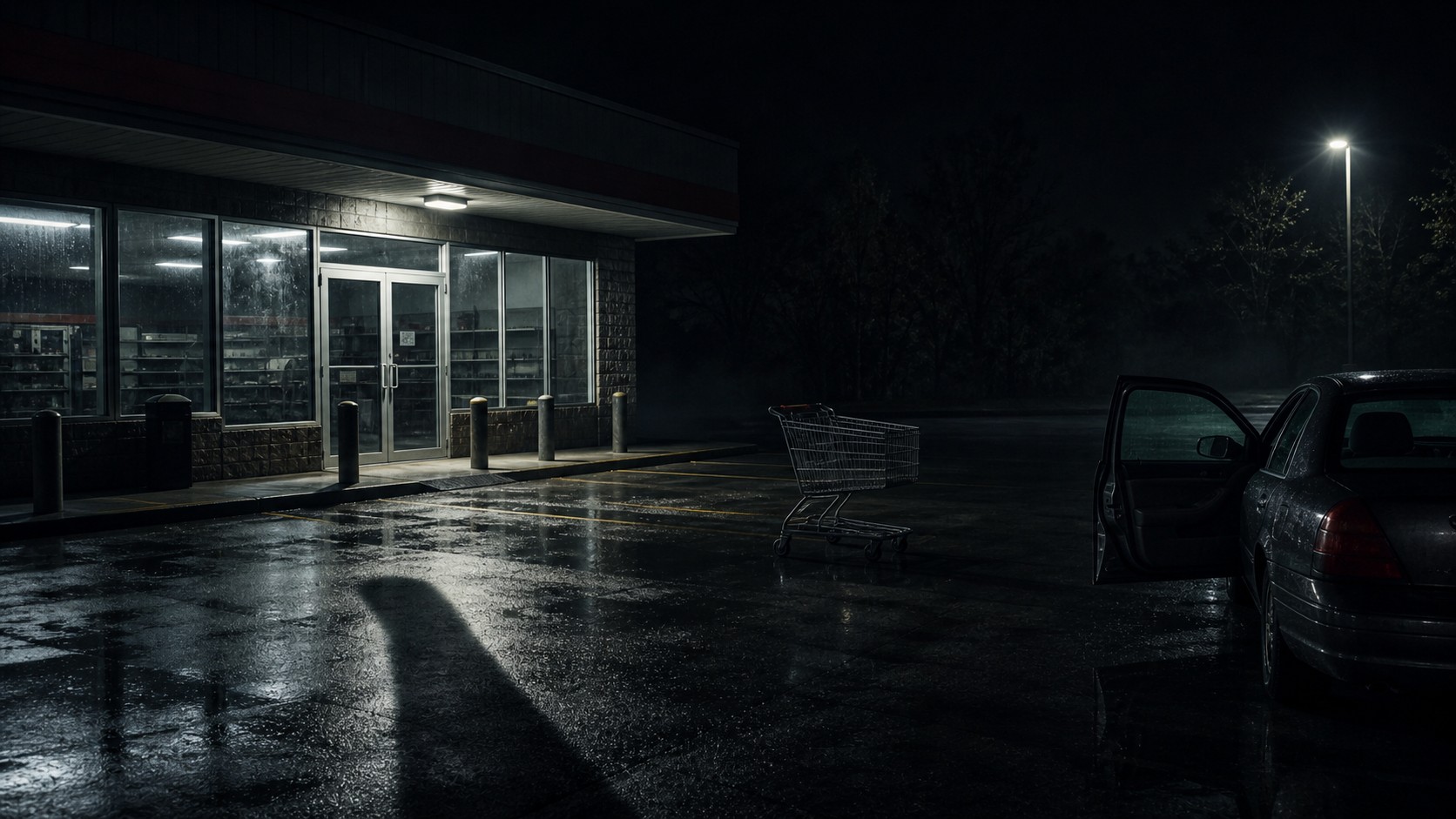
Modern settings become frightening when they are public but empty. A parking lot, hallway, underpass, or convenience-store forecourt has lights, pavement, doors, and cameras, yet still feels exposed. These places promise civilization without always providing comfort.
Urban myths use that contradiction well. The scene is not wilderness, but help still feels far away. The listener imagines being visible enough to be watched and isolated enough not to be rescued quickly.
Night sharpens the effect. Familiar places lose social warmth after business hours. Fluorescent light, wet asphalt, humming machines, and locked doors can make modern convenience feel indifferent rather than safe.
The Twist That Freezes the Listener
The scariest urban myths often rely on a twist that changes the meaning of earlier details. The call came from inside. The warning was real but misunderstood. The harmless object was a marker. The quiet passenger was not alone. The person offering help created the danger.
This twist gives the story its aftershock. Listeners mentally replay the beginning and notice clues they missed. That replay makes the myth sticky. The audience learns to scan ordinary situations for hidden second meanings.
Technology as Witness and Threat
Modern scary myths often include technology as both protection and danger. Cameras record but do not prevent. Phones connect but also expose. Apps guide travelers while making them dependent on systems they cannot see. A device can be a witness, a lure, or a source of false confidence.
This double role makes technology ideal for urban fear. People want devices to make them safer, yet they also know devices fail, distort, track, or mislead. The myth turns that ambivalence into suspense.
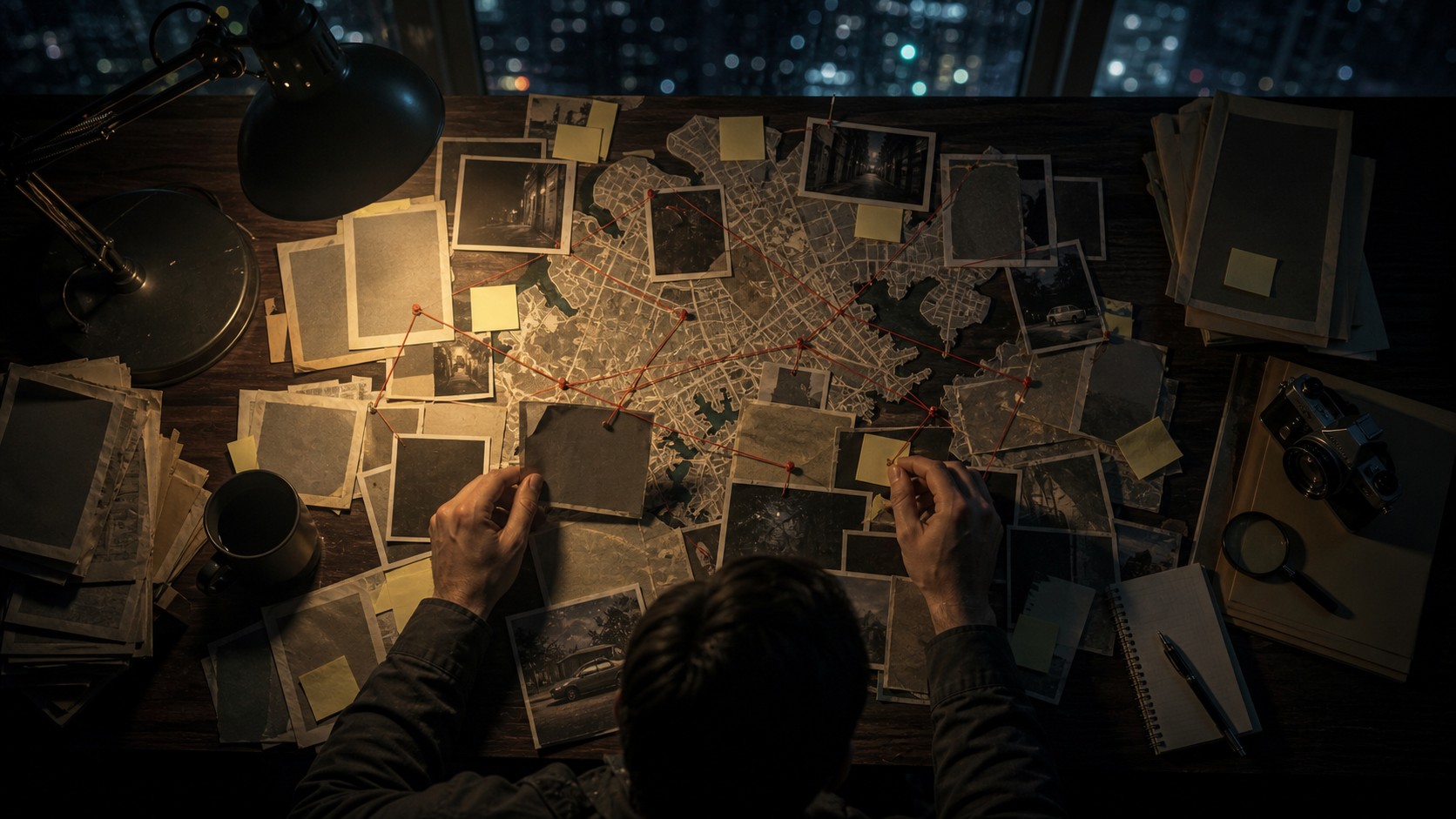
A blurry clip or distorted audio can make the story feel documented without settling what happened. Uncertainty remains, and uncertainty is where scary myths breathe.
Why These Myths Spread So Quickly
Scary urban myths spread quickly because they feel like urgent safety advice. The teller does not have to prove every detail if the story seems to protect someone. Sharing becomes an act of care, and care travels faster than verification.
The fear is also easy to localize. A story about a parking lot can be moved to any store. A hallway myth can belong to any apartment building. A rideshare warning can be retold in any city. The myth becomes portable because its setting is everywhere.
What the Fear Reveals
The scariest modern urban myths reveal how much ordinary life depends on fragile trust. People trust strangers, lighting, locks, vehicles, businesses, devices, and timing. The myth asks what happens when one of those supports fails.
These stories can create unnecessary panic, but they also show where people feel exposed. They point to anxieties about gendered safety, urban isolation, institutional indifference, and the limits of surveillance. Their details may be invented, but the vulnerability they exploit is often real.
That is why the best response is careful rather than dismissive. The story may not be true, but the fear deserves to be understood and redirected toward realistic caution. A scary urban myth is most dangerous when it makes fiction feel like evidence.