Among the most haunting figures in classic horror, the Mummy stands apart as a creature born not from imagination alone, but from the real rituals, beliefs, and mysteries of ancient history. Wrapped in decaying linen, rising from sealed tombs, and driven by curses that transcend time, the Mummy embodies a unique kind of fear—the fear of disturbing what was meant to remain undisturbed. Unlike other monsters, the Mummy is deeply tied to the past, carrying with it the weight of ancient civilizations, forgotten gods, and eternal consequences. Its origins blend archaeology, mythology, and early 20th-century fascination with Egypt into a story that continues to captivate audiences.
A: An ancient preserved body brought back through curses, ritual, or supernatural forces.
A: Sometimes, but many stories portray him as a priest, nobleman, or cursed guardian tied to royal history.
A: Usually for revenge, lost love, unfinished duty, or punishment for disturbing a tomb.
A: Ancient Egyptian burial traditions, tomb discoveries, and popular fears about curses and resurrection.
A: His terror comes from inevitability and atmosphere rather than speed.
A: Not exactly. The mummy is usually tied to ancient ritual, identity, and purpose rather than mindless undead behavior.
A: Many versions portray him as a figure driven by grief, lost love, or punishment carried across centuries.
A: They reflect the fear of violating sacred spaces and awakening consequences from the distant past.
A: He combines ancient mystery, supernatural fear, and unforgettable atmosphere.
A: A blend of undead resurrection, tomb-born dread, and the haunting return of buried history.
Ancient Egypt and the Promise of Eternal Life
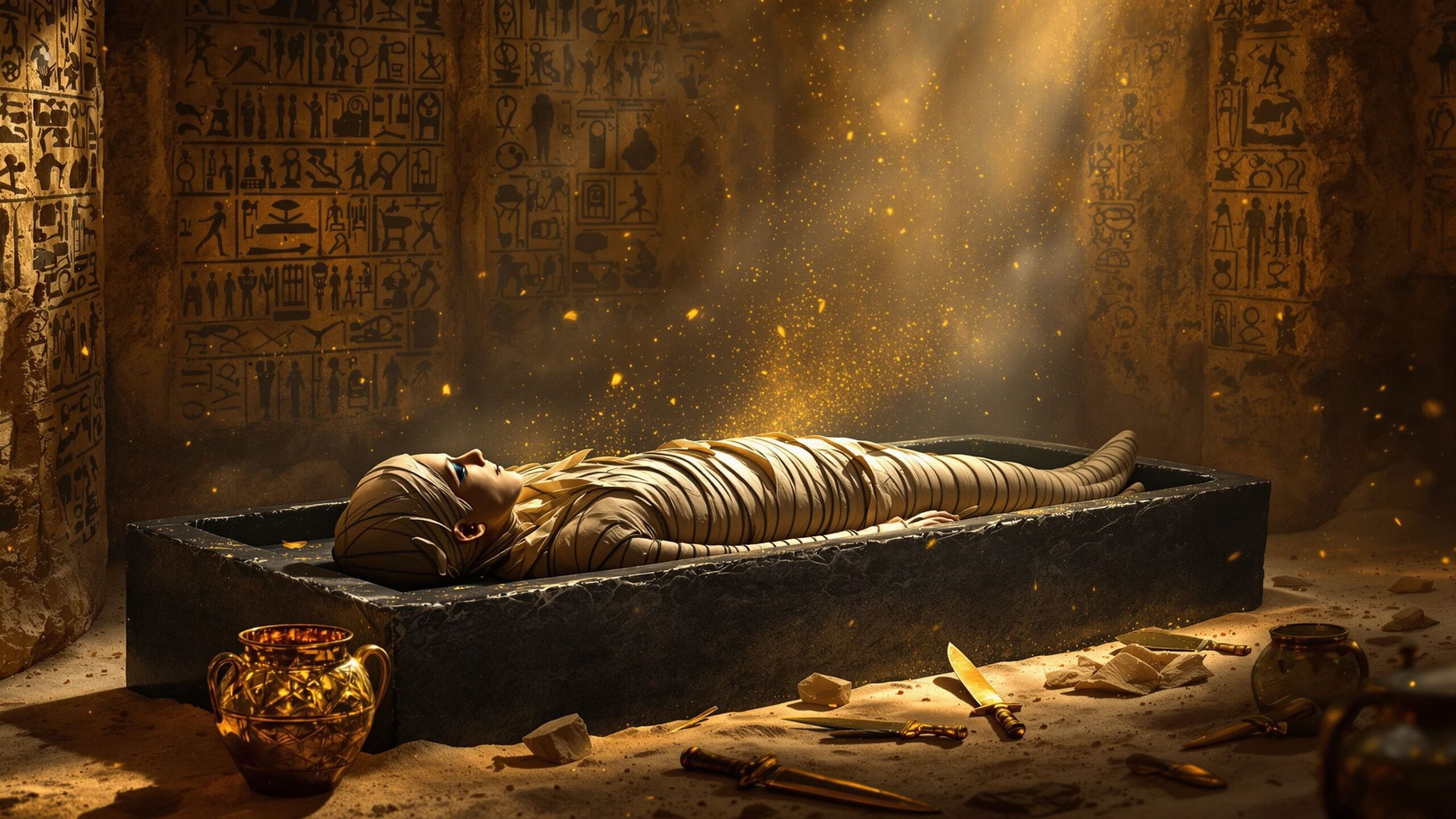
To understand the Mummy, one must begin with the beliefs of ancient Egypt, where death was not seen as an end, but as a transition into the afterlife. The preservation of the body was essential to this journey. Through the process of mummification, the deceased were carefully prepared for eternity, their organs removed, bodies treated with oils and resins, and wrapped in layers of linen.
These rituals were rooted in a complex spiritual system involving gods such as Osiris, the ruler of the afterlife, and Anubis, the guardian of mummification. The goal was to ensure that the soul could recognize and return to the body, allowing the individual to live on in the next world.
Tombs were filled with treasures, tools, and inscriptions designed to guide and protect the deceased. These burial sites were considered sacred spaces, meant to remain untouched. The idea of a mummy rising from its tomb, therefore, represents a profound violation of this sacred order—a disruption of the balance between life and death.
The Curse of the Pharaohs
The concept of a “curse” associated with mummies gained widespread attention in the early 20th century, particularly after the discovery of Tutankhamun’s tomb in 1922. Led by archaeologist Howard Carter, the excavation revealed an astonishing collection of artifacts, capturing the imagination of the world.
Soon after the discovery, reports began to circulate about mysterious illnesses and deaths among those involved in the expedition. While many of these claims were exaggerated or coincidental, they fueled the idea of a “curse of the pharaohs”—a supernatural punishment for those who disturbed ancient tombs.
This narrative became a powerful foundation for horror storytelling. The curse transformed the mummy from a preserved body into a vengeful force, capable of rising from the dead to exact justice. It introduced a moral dimension to the legend, warning against greed, intrusion, and disrespect for the past.
The Mummy Enters Cinema
The transition from historical fascination to cinematic horror occurred with The Mummy, starring Boris Karloff. This film established many of the tropes that define the Mummy in popular culture.
Unlike the slow, shambling creatures often depicted in later adaptations, Karloff’s Mummy, Imhotep, is intelligent, calculating, and driven by a powerful emotional motive—love. Revived through forbidden rituals, he seeks to reunite with a lost love across centuries, blending horror with tragic romance.
The film’s atmosphere—filled with ancient scrolls, shadowy tombs, and supernatural incantations—created a sense of timeless dread. It emphasized the idea that some forces are not meant to be awakened, and that the past can reach into the present with devastating consequences.
The Mummy as a Symbol of the Past
What sets the Mummy apart from other classic monsters is its deep connection to history. While vampires and werewolves are rooted in folklore, the Mummy is tied to a real civilization, making its story feel grounded in reality.
This connection gives the Mummy a unique symbolic power. It represents the past refusing to stay buried, the idea that history can return to confront the present. In many ways, the Mummy is a reminder that actions have consequences, and that the pursuit of knowledge or wealth can come at a cost.
During the early 20th century, this theme resonated strongly with audiences. Western exploration and colonial expansion had led to the excavation and removal of artifacts from ancient cultures. The Mummy’s curse can be seen as a reflection of these practices, raising questions about ownership, respect, and the ethical implications of uncovering the past.
Horror, Romance, and Immortality
Another defining aspect of the Mummy is its blend of horror and romance. Unlike many monsters driven purely by destruction, the Mummy is often motivated by love. This emotional depth adds complexity to the character, transforming it from a simple threat into a tragic figure.
Imhotep’s desire to reunite with his lost love introduces themes of immortality and obsession. His actions are driven by a longing that transcends time, highlighting the human desire to overcome death and preserve connection.
This combination of fear and emotion makes the Mummy a uniquely compelling figure. It challenges audiences to see beyond the horror and consider the motivations behind the monster’s actions.
The Evolution of the Mummy in Popular Culture
Over the decades, the Mummy has been reimagined in various ways, reflecting changing tastes and storytelling styles. While the original portrayal emphasized mystery and atmosphere, later versions often leaned into action and adventure.
Despite these changes, the core elements remain consistent: the ancient curse, the resurrection, and the connection to a forgotten past. These themes continue to resonate, ensuring that the Mummy remains a staple of the horror genre.
Modern interpretations have expanded the character’s role, exploring new settings and narratives while maintaining its essential identity. Whether depicted as a terrifying force or a tragic antihero, the Mummy continues to evolve.
The Fear of Disturbing the Unknown
At its core, the Mummy represents a fundamental human fear—the fear of disturbing something that should remain untouched. This fear is not limited to ancient tombs; it extends to any situation where curiosity leads to unintended consequences.
The idea that the past can hold hidden dangers is both fascinating and unsettling. It reminds us that not everything is meant to be uncovered, and that some mysteries are better left alone.
This theme is particularly relevant in a world driven by discovery and exploration. As humanity continues to push boundaries, the Mummy serves as a cautionary tale about the risks of going too far.
Why the Mummy Still Haunts Us
The enduring appeal of the Mummy lies in its ability to combine history, myth, and emotion into a single narrative. It is a monster that feels both ancient and immediate, connecting us to a distant past while reflecting present-day concerns.
Its story invites us to explore questions about mortality, legacy, and the consequences of our actions. It challenges us to consider how we interact with history and what responsibilities come with uncovering it.
In a genre filled with creatures of darkness, the Mummy stands out as a reminder that sometimes the most powerful horrors come not from imagination, but from the echoes of reality.
The Eternal Return of the Past
The Mummy is more than a figure wrapped in linen—it is a symbol of time, memory, and consequence. Its origins in ancient Egyptian beliefs, combined with modern storytelling, have created a character that transcends generations. By blending historical fascination with supernatural horror, the Mummy continues to captivate audiences, offering a story that is both thrilling and thought-provoking. It reminds us that the past is never truly gone, and that some forces, once awakened, cannot be contained. As long as humanity remains curious about what lies buried beneath the sands of time, the legend of the Mummy will continue to rise, bringing with it the enduring power of ancient curses and eternal mysteries.