Why Ancient Monster Legends Still Feel So Dangerous
Ancient monster legends still terrify the world because they do more than describe strange creatures. They preserve the emotional pressure of people trying to survive storms, darkness, disease, war, wilderness, and moral uncertainty without modern explanations. A sea serpent was not only a beast in the water; it was the fear of a voyage that might not return. A guardian at a tomb was not only a carved figure; it was a warning that the dead, the sacred, and the forbidden still had power. These legends remain unsettling because they connect danger to place, memory, and consequence, making old fears feel close even when the cultures that first told the stories are long gone.
Fear Older Than History
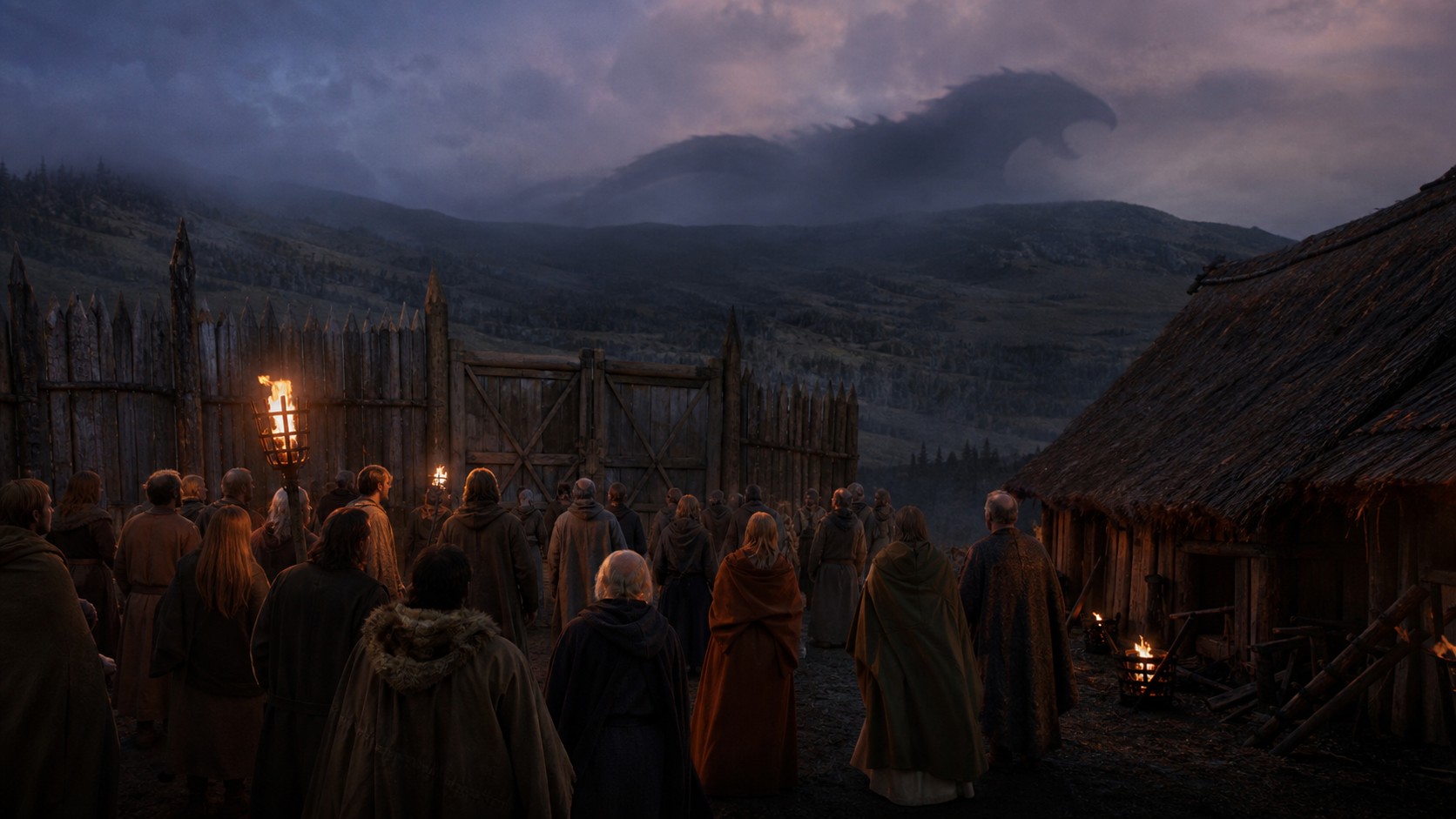
The oldest monster stories grew out of a world where the unknown was never abstract. A dark river, a mountain pass, a ruined temple, or a stretch of open sea could decide whether a family survived. When people described those places through monstrous figures, they were giving fear a body and a behavior. The monster made the threat easier to remember, easier to warn children about, and easier to discuss around a fire.
That is why ancient legends rarely feel random. Their creatures often live exactly where human control weakens: at borders, in caves, beneath waves, outside city walls, or near the dead. The setting matters as much as the creature because the legend teaches listeners where ordinary confidence should end.
The terror also comes from how little distance there is between the ancient world and the body. People still flinch at a sudden sound in darkness, still imagine movement under water, and still feel exposed in places where help is far away. Ancient monster legends survive by speaking to those instincts before reason has time to calm them. The costumes of the stories may be old, but the nervous system reading them is not.
That bodily response explains why these stories do not need modern plausibility to work. A reader can know that a carved guardian will not step down from a ruin and still feel the old warning in the scene. The imagination treats ancient monsters as emotional evidence. They reveal what a culture feared losing: safety, honor, divine favor, family continuity, or the fragile confidence that familiar places would remain familiar.
Creatures That Guarded Boundaries
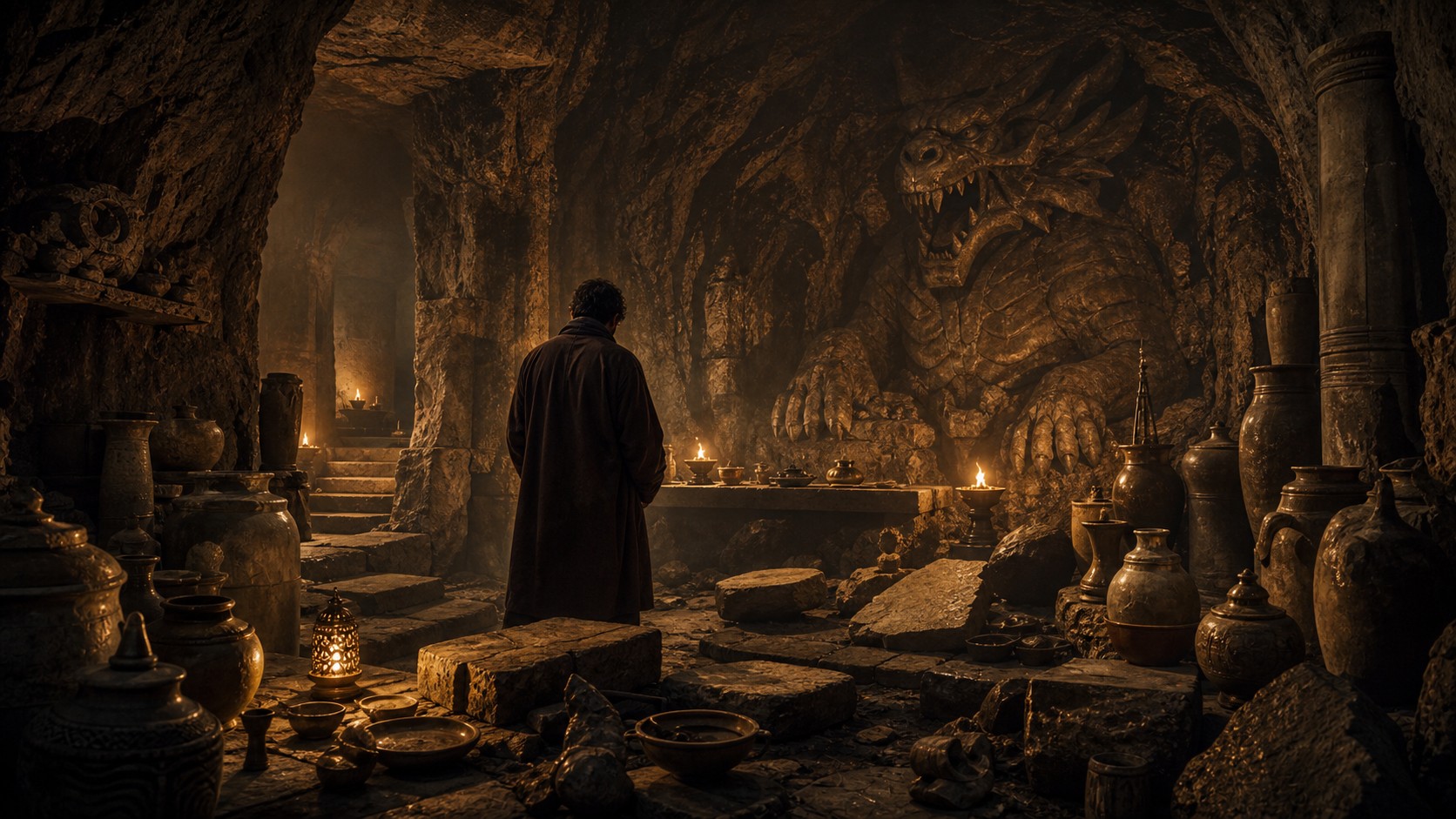
Many ancient monsters served as boundary keepers. Sphinxes, dragons, serpent guardians, hybrid beasts, and underworld watchers often appeared where one realm met another. They stood between life and death, land and sea, city and wilderness, human law and divine power. A person who crossed that line without wisdom or permission entered a story where danger was expected.
This boundary role made the creatures frightening in a lasting way. They did not simply attack; they judged, tested, watched, or punished. Their presence suggested that the world had invisible rules and that breaking those rules could awaken something older than any king.
Boundary monsters also made fear feel fairer, even when the stories were brutal. The creature usually appeared after someone approached a forbidden place, ignored a warning, or tried to take what was protected. That structure gave listeners a sense that danger could be understood, if not controlled. The terror came with a map: know the limits, respect the signs, and do not assume the world is yours to open.
Why Hybrid Bodies Disturb Us
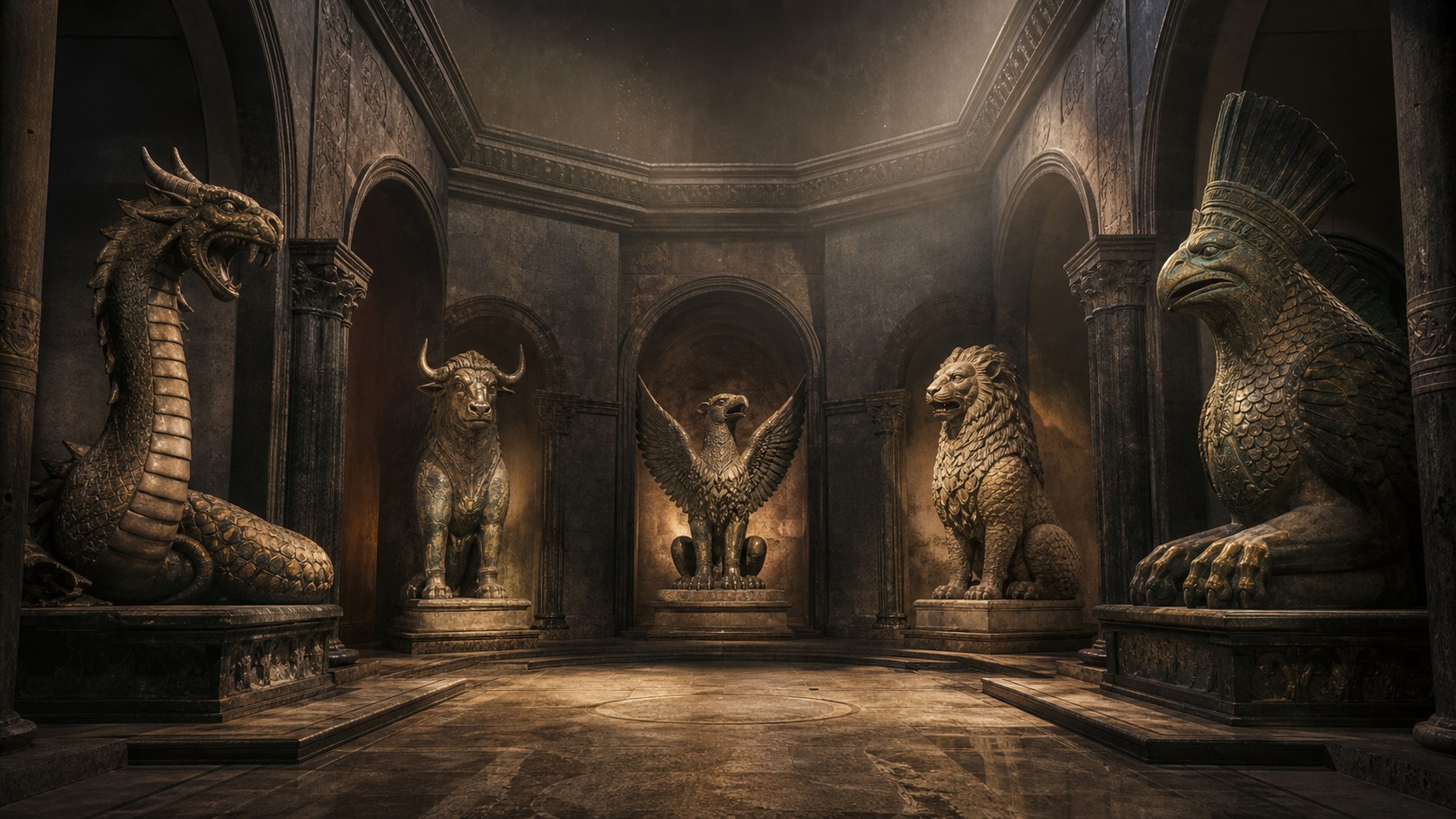
Ancient monsters were often assembled from parts of familiar animals: claws, wings, horns, scales, human faces, lion bodies, bull strength, bird talons, and snake tails. The combination mattered because it unsettled the categories people used to understand nature. A creature that was partly human and partly animal could seem intelligent enough to scheme, wild enough to kill, and sacred enough to resist ordinary weapons.
Hybrid monsters also allowed storytellers to compress several fears into one image. A lion's power, a serpent's stealth, and a human gaze could become a single warning. Even now, such figures feel disturbing because the mind recognizes the parts before it rejects the whole.
A hybrid body can also express a fear of broken order. Ancient societies often organized the world through categories: human and animal, city and wild, sacred and ordinary, living and dead. A monster that crosses those categories feels like a warning that boundaries can fail. It does not merely look strange; it suggests that the rules holding the world together may be thinner than people want to believe.
That category-breaking quality is one reason old monster art can still feel potent in museums. Even behind glass, the creature refuses to settle into a single meaning. It may be guardian, predator, omen, memory, and sacred symbol at once. The viewer is left with the same uncertainty that made the legend useful in the first place.
The most disturbing hybrids also resist easy sympathy. A monster with a human face may seem capable of grief or speech, while its claws and body promise violence. That mixture creates a moral hesitation. The audience cannot decide whether the creature should be pitied, feared, revered, or destroyed, and that uncertainty keeps the legend from becoming a simple animal tale.
The Terror of Divine Punishment
Some of the most persistent ancient monster legends are tied to punishment. A ruler becomes arrogant, a community breaks a taboo, a traveler ignores a warning, or a family offense brings a curse into the open. The monster arrives as proof that the violation was not private. It turns hidden guilt into public danger.
This pattern made the stories useful as moral instruction, but it also made them frightening. A monster linked to punishment does not behave like an animal looking for food. It feels purposeful. It comes because something has gone wrong in the moral order, which means escape requires more than speed or strength.
Punishment legends were especially effective because they turned invisible offenses into visible scenes. Pride, greed, betrayal, and disrespect are difficult to point at after the moment has passed. A monster gives the community an image of consequence. It says that a hidden wrong has entered the physical world and must now be faced by everyone, not only by the person who caused it.
This is why punishment monsters often outlast the exact moral codes that produced them. Modern readers may not share the ancient rule, but they recognize the drama of consequence. The creature embodies the moment when denial ends. It is the returning cost, the thing that steps into the road when a person hoped the offense had disappeared behind them.
Monsters in Water, Stone, and Night
The locations of ancient monsters reveal the fears that carried them. Water monsters speak to drowning, storms, deep currents, and the terrifying fact that the surface of the sea hides almost everything below it. Mountain and cave creatures express the danger of unstable ground, hidden predators, and journeys into places where a shout might not bring help. Night creatures belong to the hours when shapes blur and ordinary paths become uncertain.
These settings still work on modern readers because the senses have not changed much. Darkness still reduces confidence. Deep water still hides scale. An empty ruin still feels as if it is keeping a memory. Ancient legends survive because they chose environments that remain emotionally powerful.
Water gave ancient storytellers a particularly strong stage because it hides cause and body at the same time. A person can vanish in a river without leaving an attacker, a weapon, or a clear explanation. The monster fills that absence with intention. It makes the disappearance narratable, which is both comforting and frightening.
Stone worked differently. Ruins and mountains do not move, but they create the impression of age watching the present. A monster associated with stone seems less like a passing predator than a memory that has hardened into place. That is why ancient carved beasts can feel active even when they are completely still.
Night added a final layer because it made every known place unstable. A road walked safely in daylight could become a corridor of imagined pursuit after sunset. Ancient legends used night not as an empty backdrop but as a force that changed perception. Monsters belonged there because night made people aware of how much safety depends on sight.
How Old Monsters Became Modern Fear
Ancient monster legends continue to influence horror, fantasy, games, films, and haunted attractions because they offer more than creature designs. They offer a grammar of fear. The guarded door, the cursed place, the beast beneath the city, the winged watcher above the gate, and the serpent that coils around treasure all descend from old narrative instincts.
Modern audiences may not believe in the literal creatures, yet the structure still works. We understand the feeling of being warned away from a place and wanting to look anyway. We understand the dread of discovering that a story dismissed as superstition may have protected people for a reason.
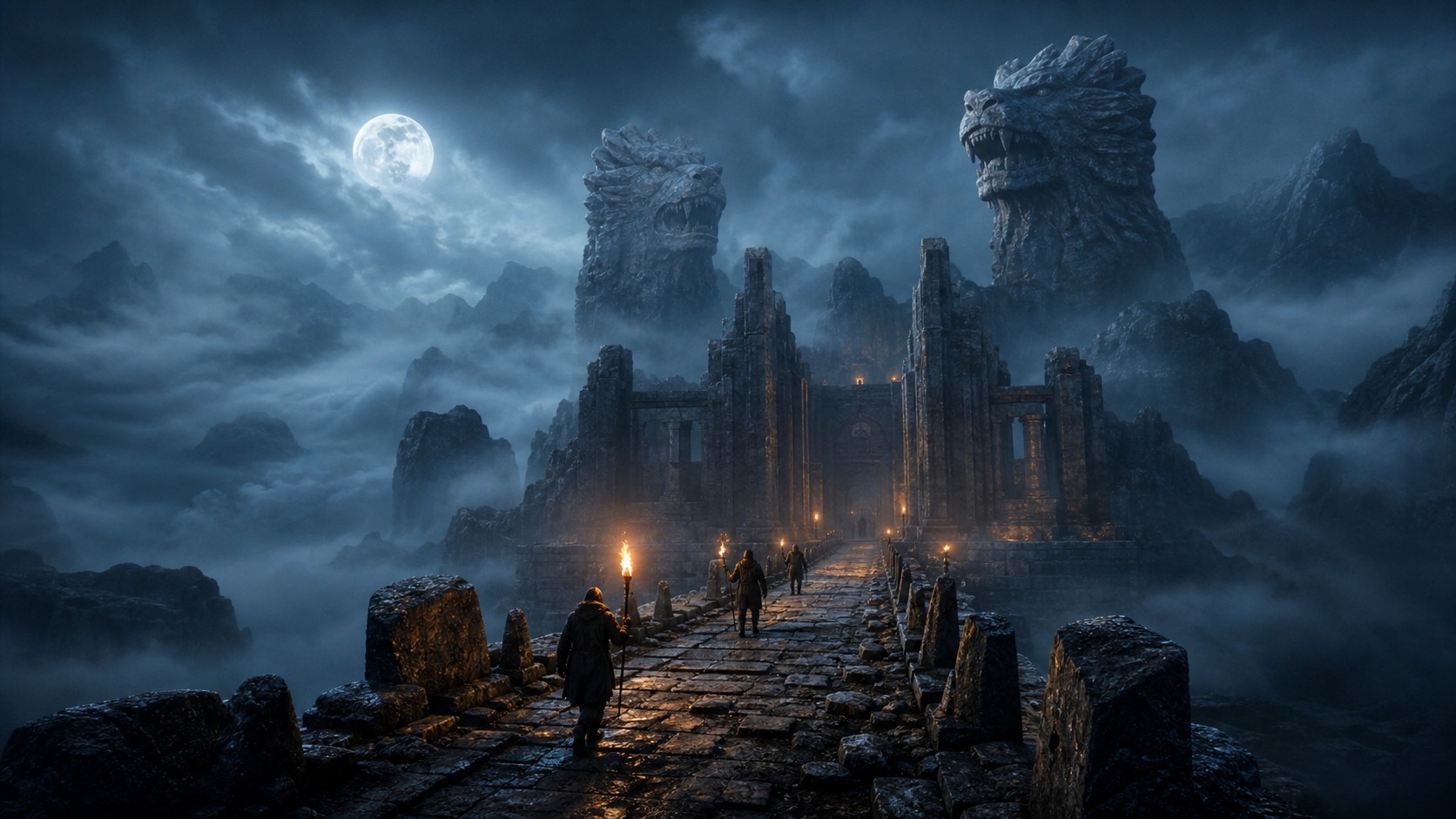
This inheritance is clearest when modern stories place a monster near an old threshold. The doorway, vault, bridge, or sealed chamber does much of the emotional work before the creature appears. Audiences already know that certain places in stories should not be crossed lightly. Ancient legends taught that rhythm so well that modern horror can rely on it almost silently.
Why They Refuse to Fade
Ancient monster legends last because they are flexible without becoming empty. Each generation can attach new anxieties to them: technology, climate, war, isolation, contamination, or the fear of losing control. The old creature remains recognizable, but the reason it frightens people shifts with the age.
Their endurance also comes from beauty. Many ancient monsters are terrifying and magnificent at the same time. They stand in temples, manuscripts, ruins, epics, carvings, and oral traditions as reminders that fear has always had an artistic life. The world is less mysterious than it once was, but these legends still create the sensation that some doors should stay closed.
They also refuse to fade because they do not depend on a single doctrine. A listener can approach them as religion, folklore, literature, psychology, art history, or entertainment and still find something alive inside them. That flexibility protects the legends from becoming museum labels only. They can be studied in daylight and still become frightening again at night.
The best ancient monster legends leave behind a double feeling: the relief of knowing the creature is a story and the unease that the story understands something real. That balance keeps them active. They terrify not because people mistake them for ordinary animals, but because they make fear feel ancient, intelligent, and waiting in familiar places.
In the end, the terror of ancient monster legends is not only fear of being attacked. It is fear of discovering that the world has rules older than human plans. The traveler, thief, ruler, child, sailor, and hero all meet monsters when confidence outruns wisdom. That pattern remains powerful because every age produces new forms of confidence and new reasons to doubt it.
Their staying power is strongest when they are allowed to remain strange. Explaining them too neatly can flatten them into symbols, while treating them only as literal beasts misses their cultural depth. The legends terrify because they hold both possibilities together. They are stories about creatures, but also stories about why humans create creatures when fear becomes too large to leave unnamed.