Where Ancient Monster Legends Really Began
The dark origins of ancient monster legends usually lie closer to human experience than to pure fantasy. People built terrifying creatures from memories of famine, burial customs, dangerous animals, ruined cities, storms, political cruelty, and sacred prohibitions. A monster could explain why a child vanished near water, why a king's pride seemed to invite ruin, or why a forbidden cave should not be entered. These stories were not idle decorations around belief; they were tools for making dread memorable, placing blame, protecting boundaries, and giving communities a language for forces they could not fully control.
Disaster Before Explanation
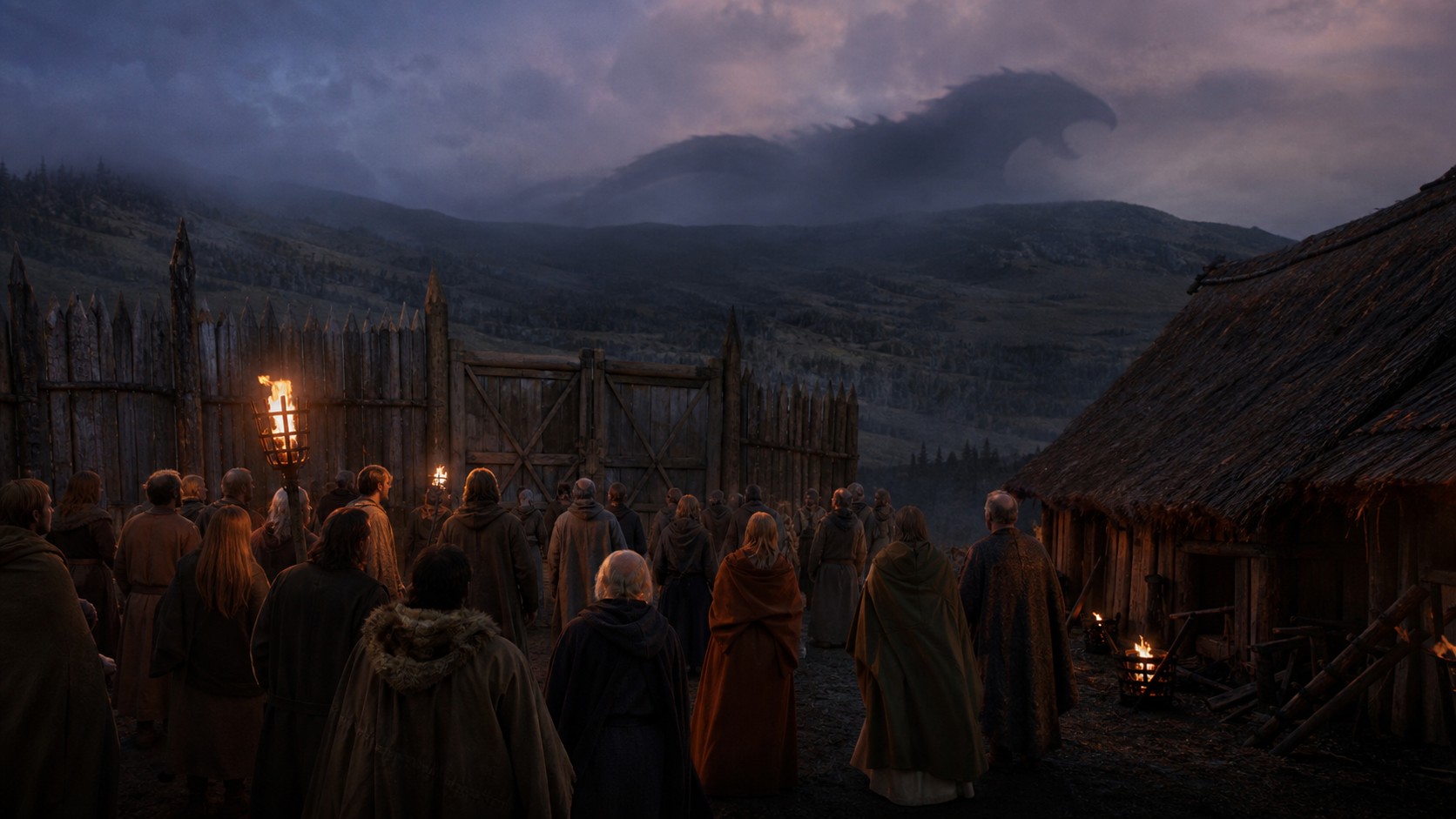
Before earthquakes, epidemics, eclipses, and violent storms could be described through modern science, they still demanded interpretation. Ancient communities watched ordinary life become unstable and searched for causes that fit their moral and religious worlds. A monstrous being offered a way to imagine catastrophe as action rather than accident.
That origin matters because it gave disaster a face. If a flood could be linked to a serpent, a devouring giant, or an offended guardian, then survivors could tell a story about what happened and why. The explanation might frighten them, but it was less shapeless than silence.
Dark origins also reflect the human need to connect suffering with meaning. A village that lost people to sickness, drought, or invasion could not undo the damage, but it could place the damage inside a story that warned future listeners. The monster became a container for what had been endured. In that sense, many terrifying legends are also records of survival, even when they sound like nightmares.
Those survival records often kept a sharp emotional edge because they were not written from comfort. A drought legend could remember hunger in the body, not as an abstract shortage. A curse story could preserve the shame of a community that believed it had failed. A beast at the border could retain the pressure of raids, exile, or migration. Dark origins are dark because they begin where ordinary explanations were not enough to settle fear.
The origin story often matters because it tells us what a community could not afford to forget. A monster born from disaster, shame, or forbidden contact carried memory with sharper teeth than ordinary history.
That memory still speaks.
Taboos Made Visible
Many ancient monster legends began as warnings about forbidden acts. Do not enter the burial chamber. Do not insult the gods. Do not break hospitality. Do not approach the sacred grove carelessly. The monster made the rule unforgettable because the consequence became dramatic and specific.
Taboo stories also protected practical knowledge. A forbidden marsh might be full of disease. A cursed cliff path might be unstable. A haunted ruin might attract thieves or collapse underfoot. By placing a monster there, a community could preserve caution even when the original reason faded.
A taboo backed by a monster could travel farther than a technical explanation. People might forget that a spring was contaminated, that a cliff shelf crumbled in winter, or that a grove marked contested land. They would remember the creature. Fear preserved the instruction after practical details eroded, which made the legend useful even when its supernatural explanation was debated.
Memory of Predators
Some monster origins likely grew from encounters with real animals. Crocodiles, lions, snakes, wolves, bears, sharks, and large birds could become larger in retelling, especially when witnesses saw only fragments during moments of panic. A flash of teeth in water or a body dragged into reeds can become a legend when grief has to speak.
The transformation from animal to monster does not make the story foolish. It shows how fear magnifies experience. Ancient storytellers were not only describing biology; they were describing what danger felt like when the victim could not be saved.
Predator memories could also merge with moral fear. If a child vanished near a river, the story might become not only about the animal in the water but about obedience, supervision, and the danger of wandering beyond the known path. The creature then carried both the physical danger and the social lesson. It helped the community repeat grief in a form that could prevent another loss.
This process explains why some ancient monsters feel emotionally precise even when their anatomy is impossible. Their bodies may be exaggerated, but the situation around them is recognizable. Someone went too far, ignored a warning, entered the wrong place, or met a force they could not overpower. The origin is dark because it begins with vulnerability.
The same process could transform unfamiliar animals into legendary creatures when trade or conquest brought reports from far away. A community hearing of crocodiles, great apes, enormous snakes, or large desert predators might receive the description without the context needed to measure it. Distance widened the creature. By the time the report returned through several tellers, a real animal could become a monster suited to local fears.
Political Fear and Public Order
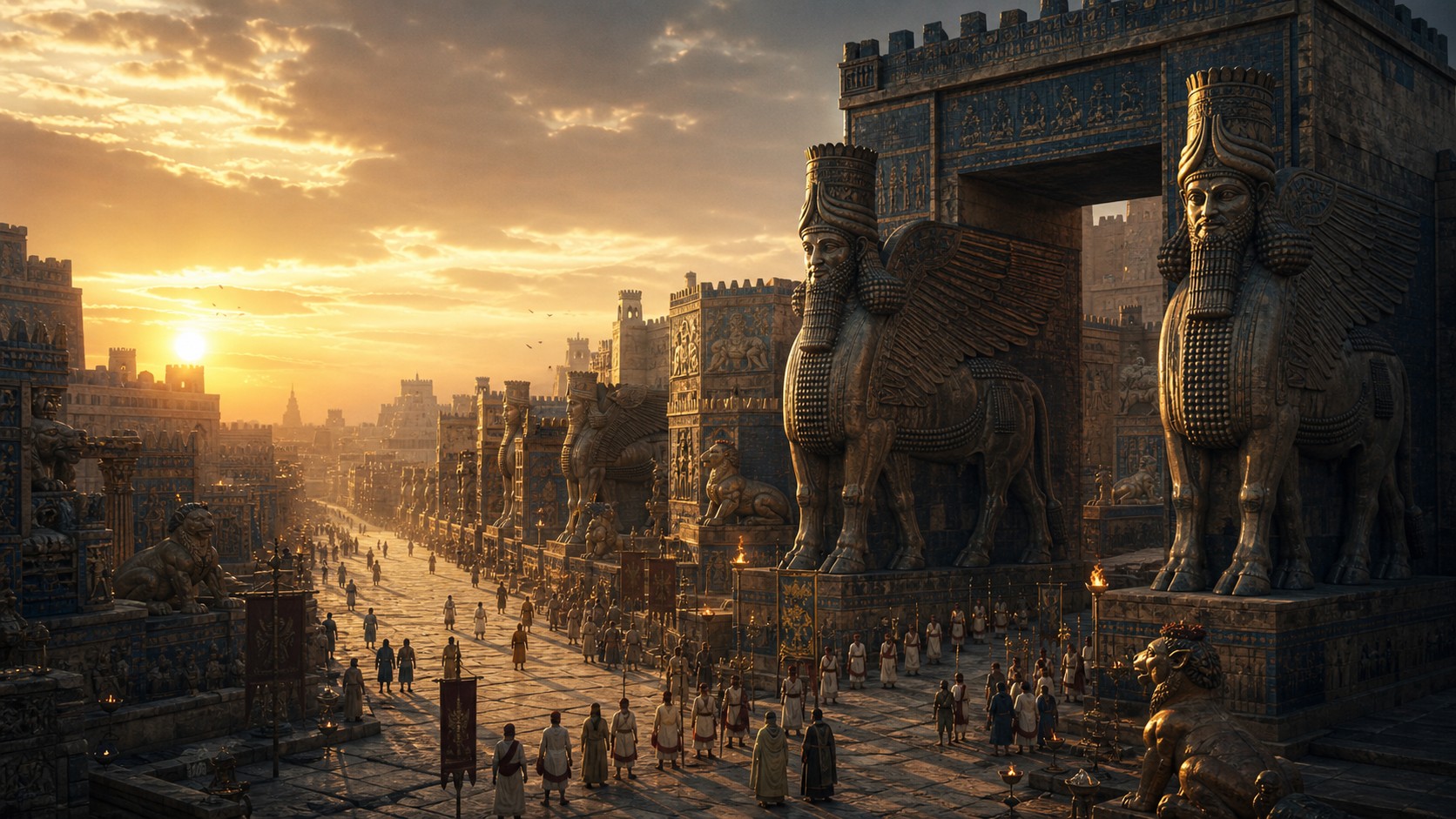
Monsters also helped explain power. Ancient rulers and priesthoods sometimes used frightening imagery to reinforce obedience, divine protection, or the danger of rebellion. A monster defeated by a hero could support the idea that order had triumphed over chaos. A guardian creature at a temple or palace could imply that authority was backed by forces beyond human law.
At the same time, monster legends could criticize power. A tyrant might be described as beastlike, a greedy ruler might bring a curse, and an unjust city might be imagined as feeding something inhuman. The monster became a language for political anxiety when direct accusation was dangerous.
Public order also benefited from fear that could be pictured. A law written on a tablet might command respect among the literate and powerful, but a monstrous image could reach everyone. Children, travelers, servants, merchants, and foreign visitors could all understand a guardian's claws or a chaos beast under a ruler's weapon. The image compressed authority into a scene.
Political imagery also created monsters out of outsiders. Enemy peoples, rival cities, and unfamiliar customs could be described through beastly language that made conflict feel cosmic. That habit reveals one of the darker functions of monster legends: they could protect a community's identity while also making opponents seem less human. The monster was not always a warning about danger; sometimes it was a tool for defining who belonged.
Burial, Ancestors, and the Unquiet Dead
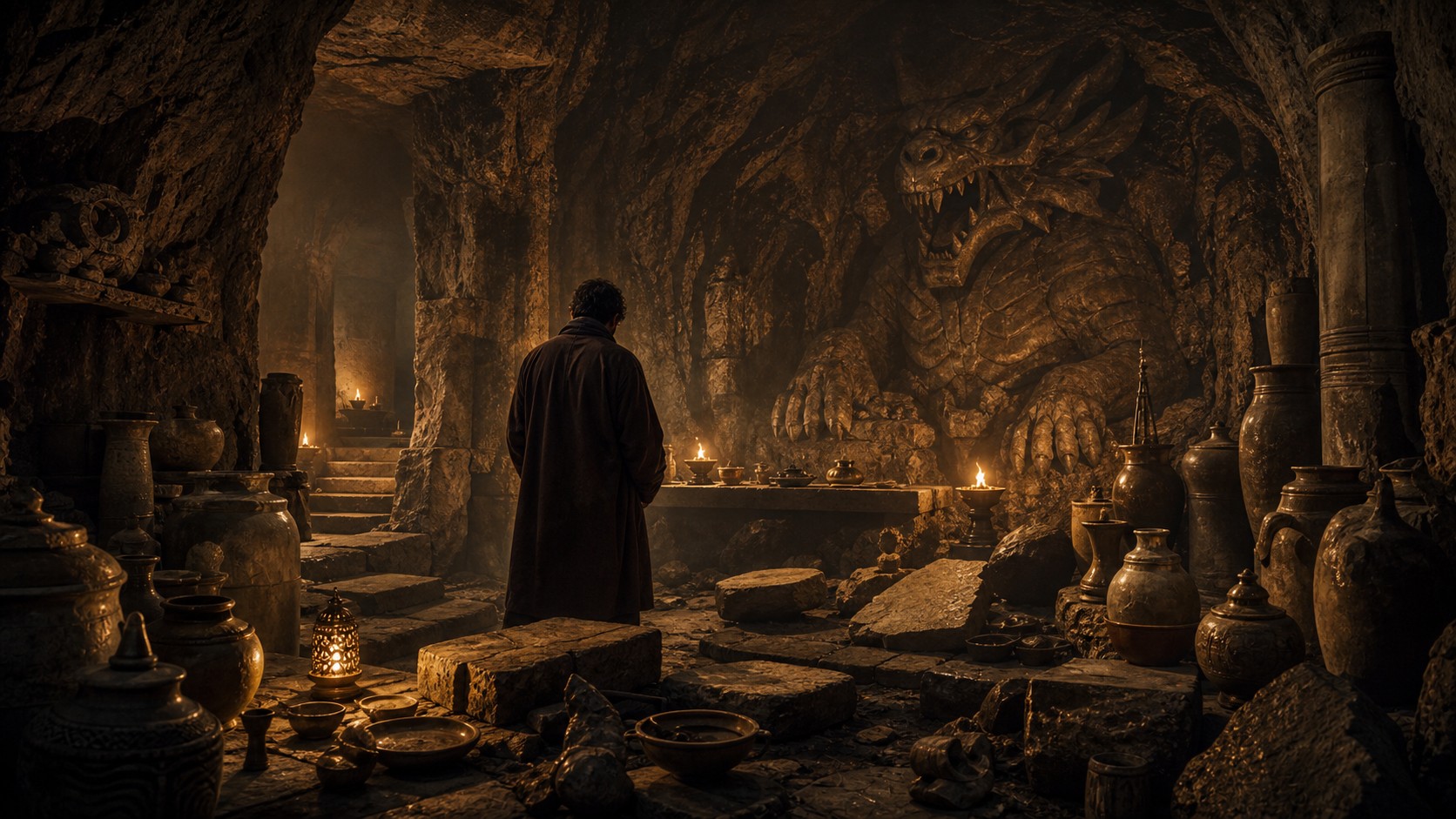
Funeral customs gave rise to especially dark stories because the dead occupied a powerful emotional space. Ancient people cared for ancestors, feared improper burial, and imagined consequences when the boundary between living and dead was disturbed. Tomb guardians, corpse-eating beings, underworld beasts, and night visitors emerged from that pressure.
These legends were not only about fear of death. They were about fear of disorder after death. A body left unburied, a grave robbed, or a ritual neglected could suggest that the community had failed in its duties. The monster represented the cost of that failure.
Burial stories also held families accountable to the past. The dead were not simply gone; they remained part of the moral structure of the household and city. A monster tied to improper burial expressed anxiety that neglect would not stay hidden. It suggested that failure toward the dead could return through dreams, disease, misfortune, or a guardian that no ordinary defense could stop.
That fear gave tomb legends practical force. It discouraged theft, protected sacred objects, and reminded descendants that memory required action. The monster was frightening, but it also defended obligations that helped a society maintain continuity across generations.
The unquiet dead gave ancient storytellers a way to talk about unfinished obligations. A person who died violently, far from home, without rites, or under a curse could become part of a story that demanded repair. The monster at the grave or road did not simply scare listeners. It pointed toward a broken relationship between the living, the dead, and the customs meant to hold them together.
Landscape as a Story Engine
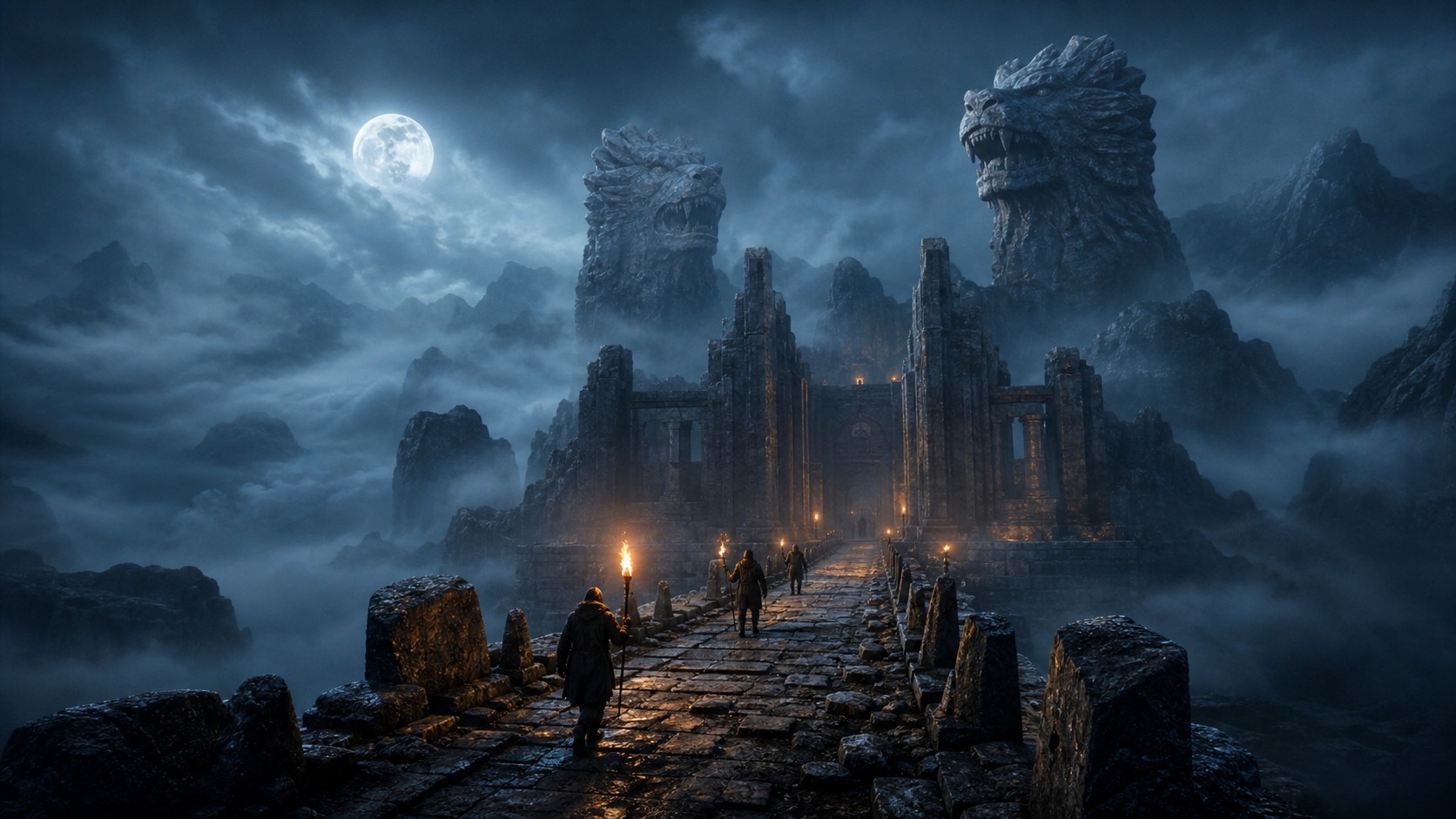
The land itself shaped monster origins. Volcanic regions encouraged stories of fiery beings and subterranean anger. River valleys produced serpents, flood creatures, and boundary spirits. Deserts created demons of thirst, mirage, and isolation. Dense forests invited tales of watchers who knew paths better than humans did.
Because these legends came from specific landscapes, they often feel more convincing than invented monsters with no home. A creature attached to a recognizable danger gains weight. The audience may doubt the beast, but they rarely doubt the cliff, the current, or the dark.
Landscape origins made legends difficult to remove because the land kept reenacting the fear. A marsh still swallowed careless steps. A mountain still changed weather without warning. A cave still returned echoes that sounded almost responsive. Even if belief weakened, the environment continued to make the old story feel emotionally plausible.
Place, memory, and fear worked together so closely that a monster could become inseparable from its setting. Remove the creature from the cave, river, tomb, or borderland and the legend loses much of its pressure. The dark origin is not only what happened, but where people believed it continued to matter.
Why Dark Origins Survive
The origins of ancient monster legends survive because they answer emotional questions that facts alone do not always settle. People still want to know why certain places feel wrong, why some warnings become family memory, and why guilt can seem to gather around objects or rooms. Ancient monsters give those feelings shape.
Their darkness also makes them durable. A cheerful invention can be forgotten, but a story tied to death, hunger, punishment, or sacred trespass becomes harder to dismiss. The monster remains because it carries an old wound in a form the imagination can still touch.
The darkness is therefore not merely a taste for frightening entertainment. It comes from the way ancient people confronted limits: the limit of knowledge, the limit of safety, the limit of law, and the limit between life and death. Monsters gathered at those edges because edges are where explanations strain.
Modern readers often separate symbol from reality, but ancient legends did not always need that division. A creature could be a sacred warning, a memory of a real danger, a political image, and a ritual presence all at once. The dark origin of the monster is the pressure of all those meanings fused into one unforgettable form.
The darkest origins often became the most adaptable because they began with emotions that never disappeared. People still fear disaster without warning, guilt without repair, places associated with death, and authorities that use fear to shape behavior. Ancient monster legends endure when those pressures remain recognizable beneath the old names and settings.
That fused meaning is why the origin of a monster can be more frightening than the monster itself. A creature invented only to shock may fade quickly, but a creature born from famine, burial fear, political pressure, or sacred trespass carries an entire world of anxiety behind it. The legend's darkness is not decoration. It is the evidence of what a culture needed the story to hold.