Why Ancient People Could Believe Monster Myths
Ancient monster myths that people once believed were real did not exist in a world of easy verification. Travelers returned with partial sightings, bones surfaced without clear explanations, predators killed quickly, and dangerous places developed reputations that seemed confirmed by every disappearance. Belief often grew from a mixture of testimony, fear, ritual authority, and environmental clues. To modern readers, a monster may look symbolic, but to the people who inherited the warning, repeated the story, and lived near the danger, the creature could feel like a practical fact.
A World Without Instant Proof
Ancient belief worked differently because information traveled slowly and unevenly. A story from a sailor, soldier, herder, or trader might be the only account a community received about a distant region. If that witness described a huge beast, a haunted pass, or a creature near a river mouth, listeners had little way to test the report directly.
That does not mean people believed everything without question. Skepticism existed in the ancient world too. But when a story came from a trusted person and matched known dangers, belief became reasonable within the limits of the time.
Belief also depended on the social cost of dismissal. If elders, rituals, and repeated accidents all pointed toward caution, openly rejecting the monster could look careless rather than enlightened. In a dangerous world, disbelief had to prove itself useful. Respecting the myth, even partially, was often the safer and more socially intelligent choice.
The social cost of disbelief could become even stronger when the myth protected a vulnerable group. A warning about a riverbank might keep children away from currents. A tale about a haunted ruin might keep scavengers from unstable stone. If rejecting the monster increased danger for others, then disbelief could appear selfish, not courageous. Belief, caution, and care became tangled together.
For many communities, belief was reinforced by repetition across ordinary life. The same creature might appear in a warning from a parent, a story from a traveler, a carving near a shrine, and a rumor after a disappearance. Each encounter made the next one feel less isolated and more credible.
Belief could also be strengthened by humility before the unknown. When the world contained unmapped regions, unfamiliar animals, and sudden disasters, dismissing every frightening report was not automatically wiser than caution. Monster myths occupied that uncertain space where experience ended and possibility began.
Caution, in that world, could look very much like belief.
That caution could outlive the original sighting.
And memory hardened there.
Partial Sightings and Panic
Many monster beliefs could begin with incomplete perception. A shape seen at dusk, a roar heard through trees, a fin glimpsed beside a boat, or a large body moving behind reeds can become terrifying before the mind identifies it. Panic fills gaps quickly, especially when someone is already in danger.
Retelling then sharpens the image. The uncertain shape becomes taller, the sound becomes deliberate, and the distance between witness and creature shrinks. The story may change, but it begins with a human experience that felt real to the person who survived it.
The absence of instant proof also gave testimony more weight. A community had to decide whom to trust, and trust often came from age, status, kinship, or survival. If the witness had endured a dangerous journey, their account carried the authority of experience. The monster entered belief through social relationships as much as through evidence.
Bones, Skulls, and Misread Remains
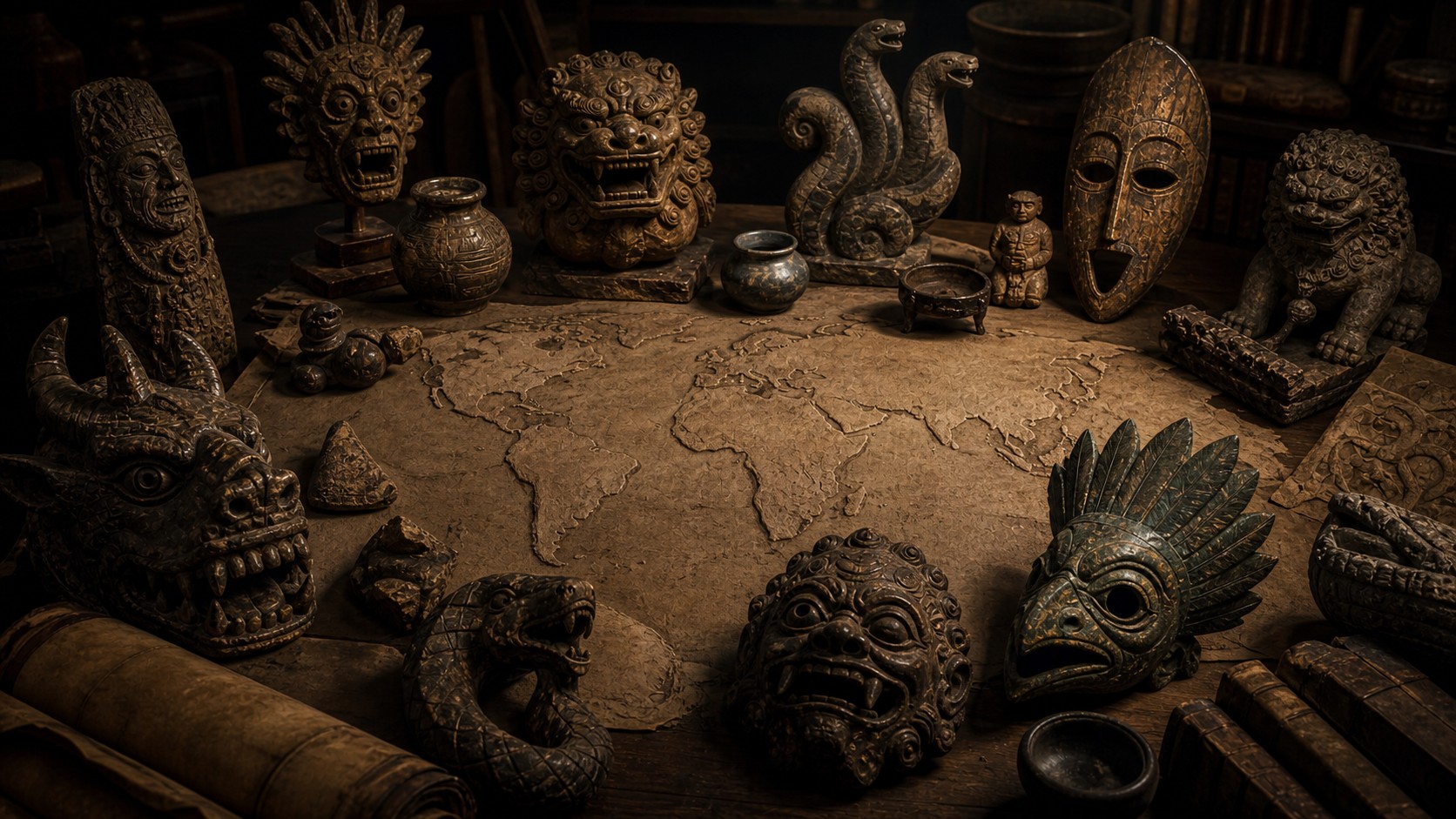
Unusual remains also helped ancient monster myths feel credible. Large bones, fossil fragments, weathered skulls, and unfamiliar animal parts could seem like proof that giants, dragons, or hybrid beasts had once existed. Without modern paleontology, people explained strange remains through the stories they already knew.
This kind of evidence could be persuasive because it was tangible. A bone in the hand carries a different weight than a rumor. Even if the interpretation was wrong, the object gave belief something solid to gather around.
The emotional state of the witness mattered as much as the visual details. Fear narrows attention, memory preserves impact more strongly than proportion, and later questions can reshape what the witness thinks they saw. An ancient listener might not have used modern language for perception and trauma, but they understood that a survivor's terror deserved attention.
Once a partial sighting entered communal memory, it could gather supporting details from other events. A later sound in the same forest or another disappearance near the same waterway would seem connected. The myth became a pattern that organized separate incidents into one explanation.
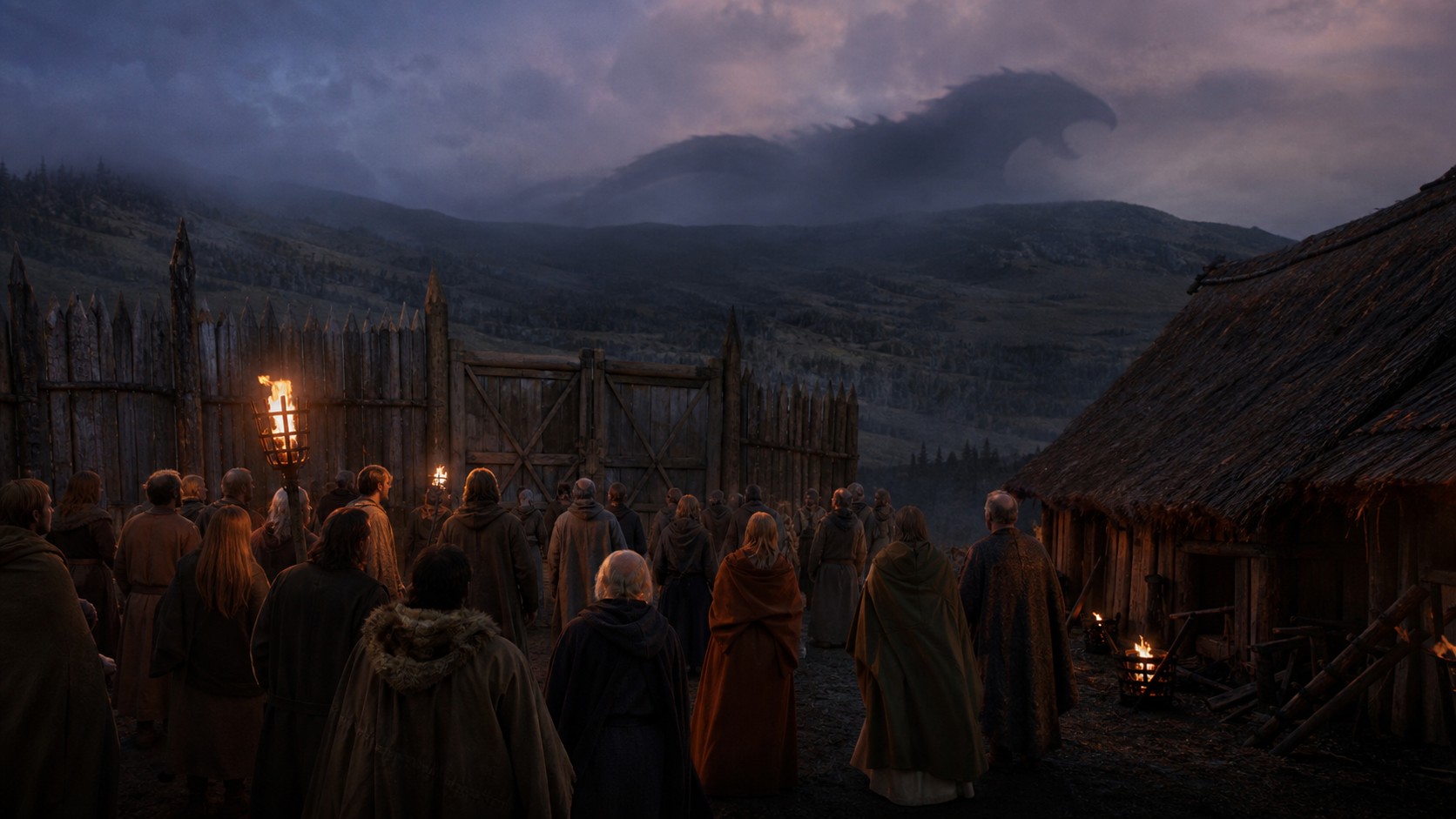
Panic also affected groups, not only individuals. A village waiting for missing travelers could interpret every sound through dread. Once people gathered with the expectation of danger, small clues became meaningful: a broken branch, an animal cry, a disturbed bank, a light in the distance. The monster myth organized the group's attention and gave their anxiety a shared vocabulary.
Dangerous Places Confirmed the Story
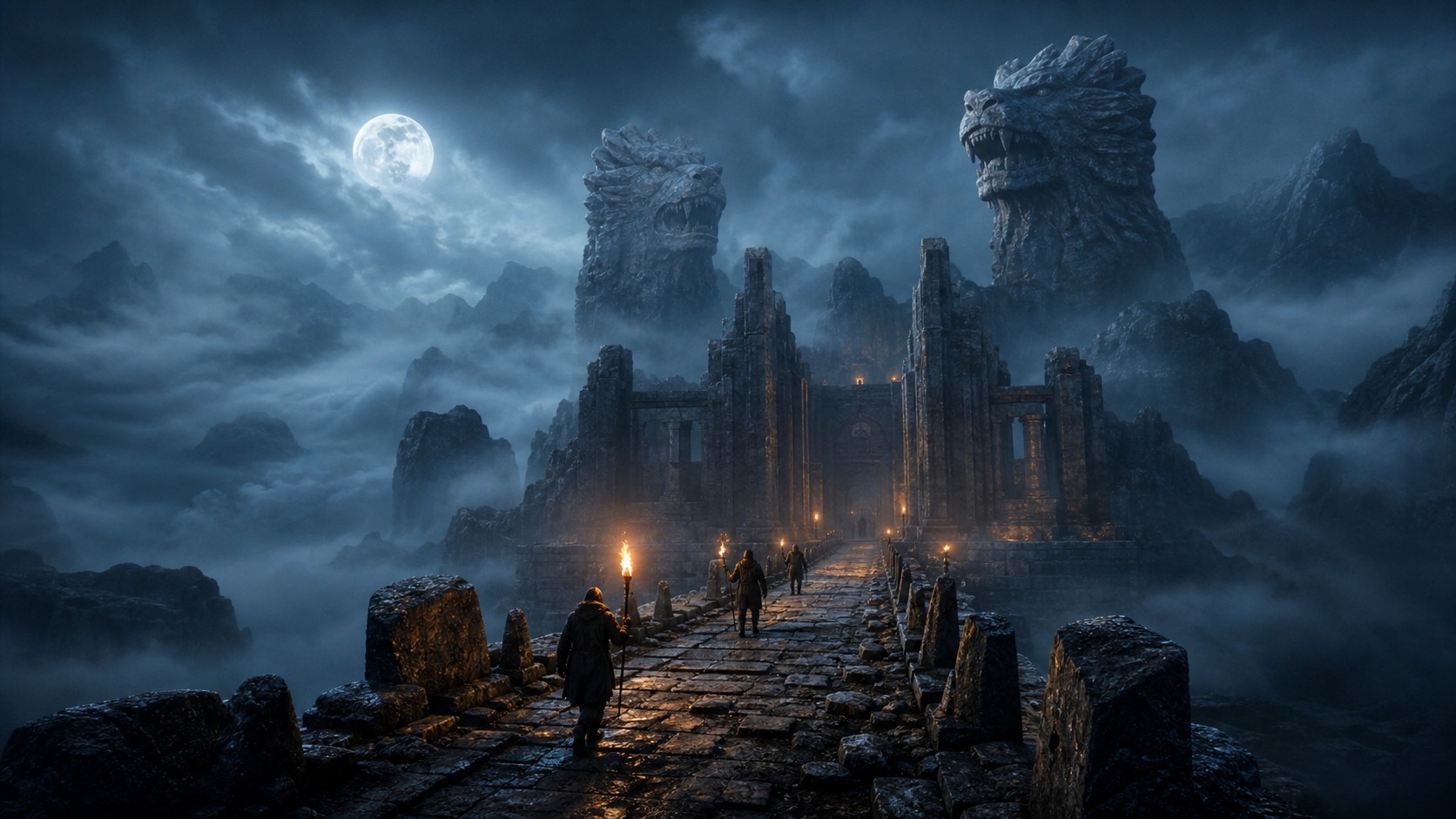
A monster myth becomes more believable when the place attached to it is genuinely dangerous. If a river has strong currents, if a marsh spreads sickness, if a cave collapses, or if a forest contains predators, then warnings about a creature seem confirmed by experience. People who ignore the warning may suffer, and the legend gains authority.
The practical and supernatural layers reinforce each other. The monster explains the danger, and the danger protects the monster from easy dismissal. Even after belief fades, the old story may still preserve useful caution.
Misread remains were especially powerful when they appeared in places already associated with legend. A strange bone found near a shrine, cliff, or cave did not arrive as neutral evidence. It entered a field of expectation. People interpreted it through stories they had inherited, and the story in turn gained the authority of an object.
The same object could also invite several explanations at once. A large bone might be proof of a giant to one listener, a sacred remnant to another, and a curiosity to a more skeptical observer. Ancient belief was not always uniform. What mattered was that the object kept the story active and gave people a reason to keep discussing the creature.
Authority and Ritual Belief
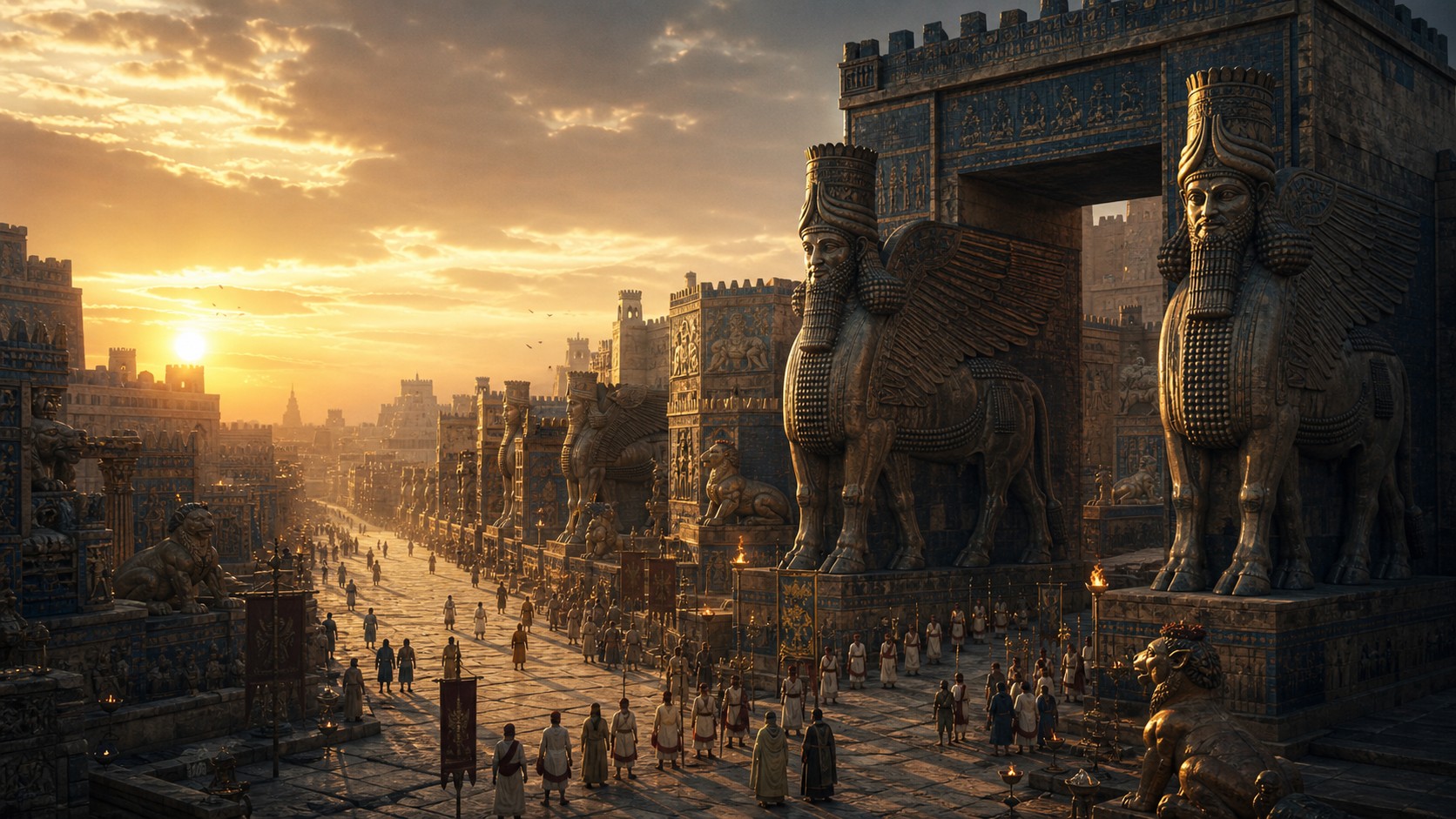
Priests, elders, rulers, and professional storytellers could make monster myths feel official. When a creature appeared in ritual speech, temple art, burial practice, or civic memory, it gained more authority than a campfire rumor. The community encountered the monster through institutions as well as entertainment.
This does not mean every listener imagined the creature in exactly the same way. Belief can range from literal expectation to sacred respect. A person might not expect to see the guardian, yet still behave as if the guardian's boundary mattered.
Dangerous places did more than confirm belief; they trained it. A child raised near a treacherous marsh learned early that certain ground could betray the eye. When elders attached a creature to that marsh, the child did not experience the story as decorative. The warning matched the body memory of caution, mud, insects, fog, and stories of people who had not returned.
That training made monster myths resilient. Outsiders could laugh at the creature and still misunderstand the place. Local belief often rested on lived contact with hazards that visitors saw only briefly.
These local dangers made myths practical. A community did not need to settle every theological question before acting cautiously. If the monster story kept people from drowning, poisoning, collapse, or attack, it had value. Over time, the success of the warning could be mistaken for proof of the creature, because those who obeyed it survived to repeat it.
Travel, Distance, and the Edge of Maps
The farther a place was from ordinary experience, the easier it was for monsters to live there in the imagination. Distant deserts, foreign mountains, unexplored coasts, and deep forests could absorb strange reports. Maps had edges, and those edges invited creatures.
Travelers also had incentives to make journeys sound dramatic. A merchant who survived a hard route might describe the dangers vividly. Over time, practical travel warnings and dramatic exaggeration could merge until a region became famous for a beast few listeners could personally disprove.
The edge of the map also protected wonder. A listener did not need to imagine monsters in the market square if they could place them beyond the last familiar road. Distance allowed belief and doubt to coexist. The creature might be questioned in ordinary life and still accepted as possible somewhere far enough away.
Distance also made reports harder to rank. A traveler might mix direct observation, hearsay, pride, fear, and misunderstanding in one account, but listeners had to decide what part mattered. If the report warned of real hardship, the monstrous details could remain attached even when no one could separate them cleanly from exaggeration.
Belief After Literal Belief
Even when people stopped believing a monster was physically real, the myth could remain socially real. It still shaped where children were told not to go, how ruins were described, which rituals felt necessary, and how communities remembered disaster. Literal belief is only one form of power.
That is why ancient monster myths are worth taking seriously. They reveal how people used stories to manage uncertainty. The creature may not have existed as described, but the fear, evidence, authority, and environment that sustained the belief were very real.
Belief in ancient monster myths should therefore be understood as layered rather than simple. Some people may have expected literal encounters, while others treated the creature as a sacred symbol, inherited warning, or explanation for a dangerous place. Those positions could coexist within one community without requiring everyone to define belief identically.
The myths feel real in history because they had real effects. They shaped travel, ritual, parenting, art, and local reputation. Whether the monster existed as described is a different question from whether the monster mattered. For many ancient communities, it mattered enough to influence behavior, and that is a kind of reality no serious reading should ignore.
Because belief was layered, the same myth could survive changes in knowledge. A community might stop expecting a literal beast and continue to honor the boundary, repeat the story, or use the creature as a symbol of local identity. The myth did not collapse when one form of belief weakened. It shifted into memory, ritual, metaphor, and caution.
That flexibility is easy to underestimate. Modern debates often ask whether a monster was believed or not believed, but ancient communities could hold more fluid positions. A creature might be literally expected by some, ritually honored by others, and used as a cautionary metaphor by still others. The myth remained strong because it did not require every mind to treat it in exactly the same way.
This is why belief should be read as a practical system, not only a claim about creatures. Ancient people used monster myths to decide where to walk, what to avoid, whom to trust, and how to explain losses that resisted simple answers. The myth's reality was measured partly by how it organized life.