How Monsters Helped Build Ancient Worlds
Legendary monsters shaped ancient civilizations because they were built into the way people imagined order. They stood at gates, guarded temples, appeared in royal art, explained dangerous landscapes, and gave moral force to stories about pride, obedience, courage, and divine protection. A monster carved into a palace wall was not only decoration. It announced that the city understood chaos, had defeated it, or had placed a powerful guardian between the community and everything outside its walls. Through architecture, ritual, and memory, legendary monsters became part of how civilizations described themselves.
Guardians at the Gate
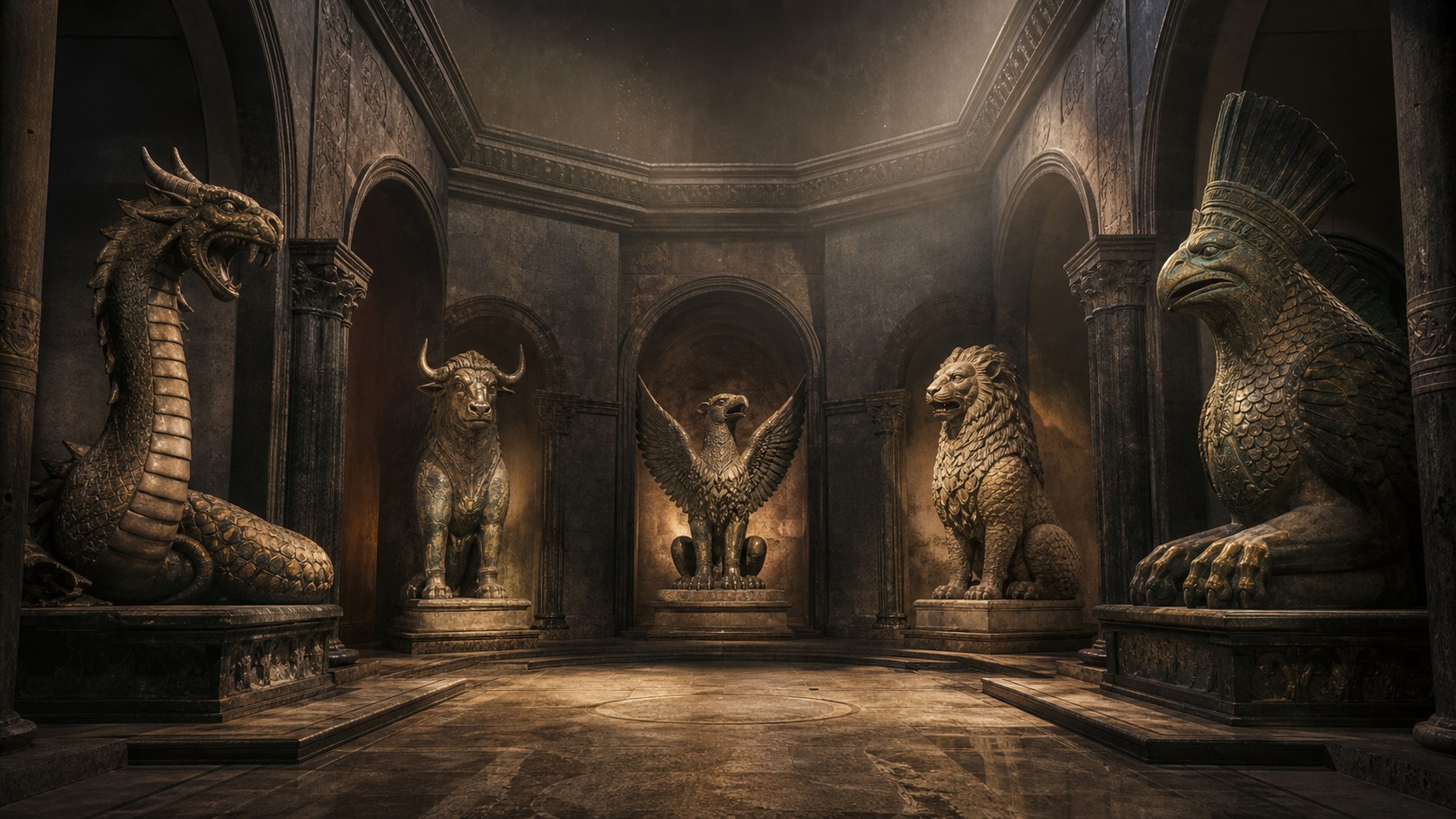
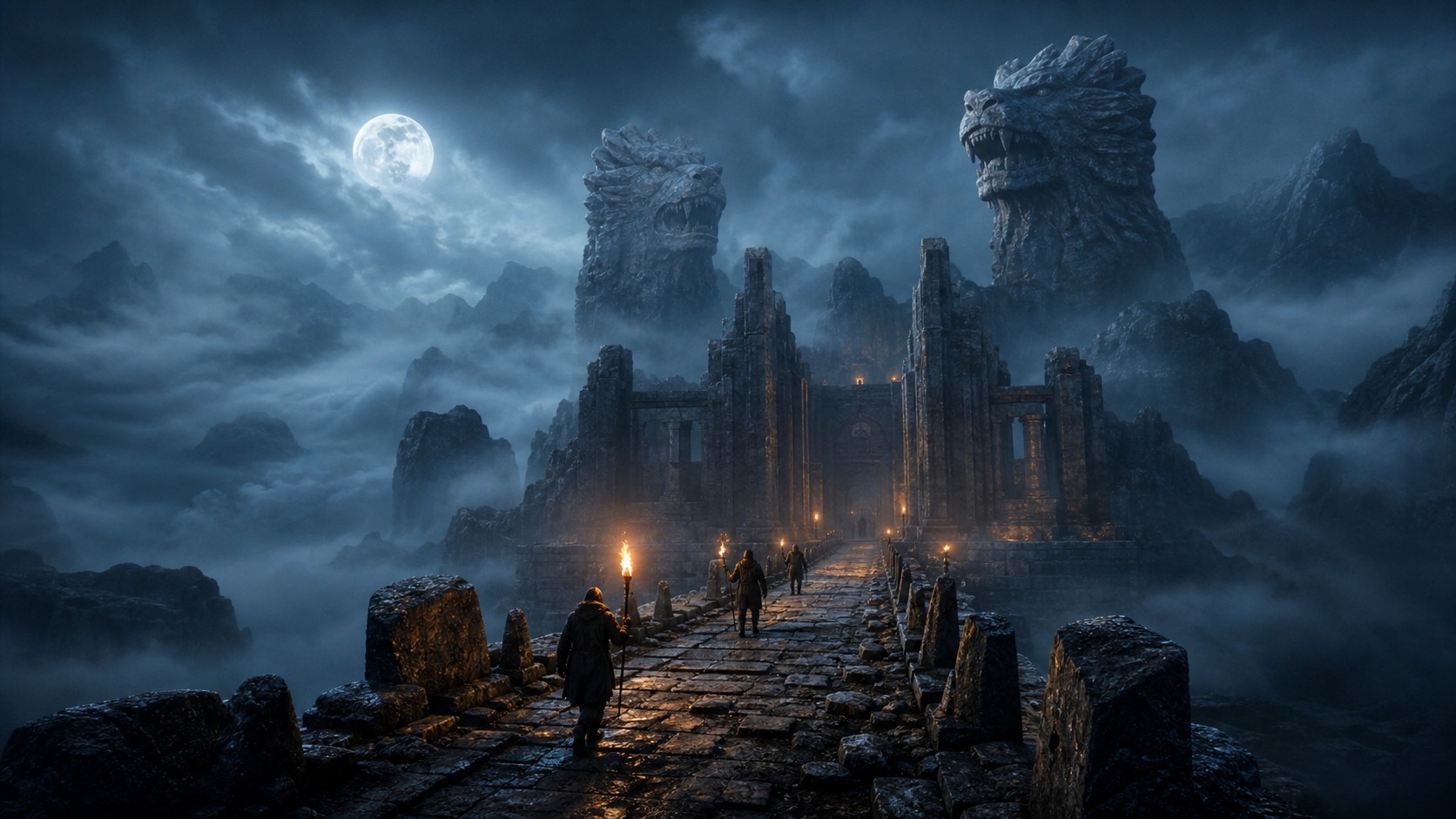
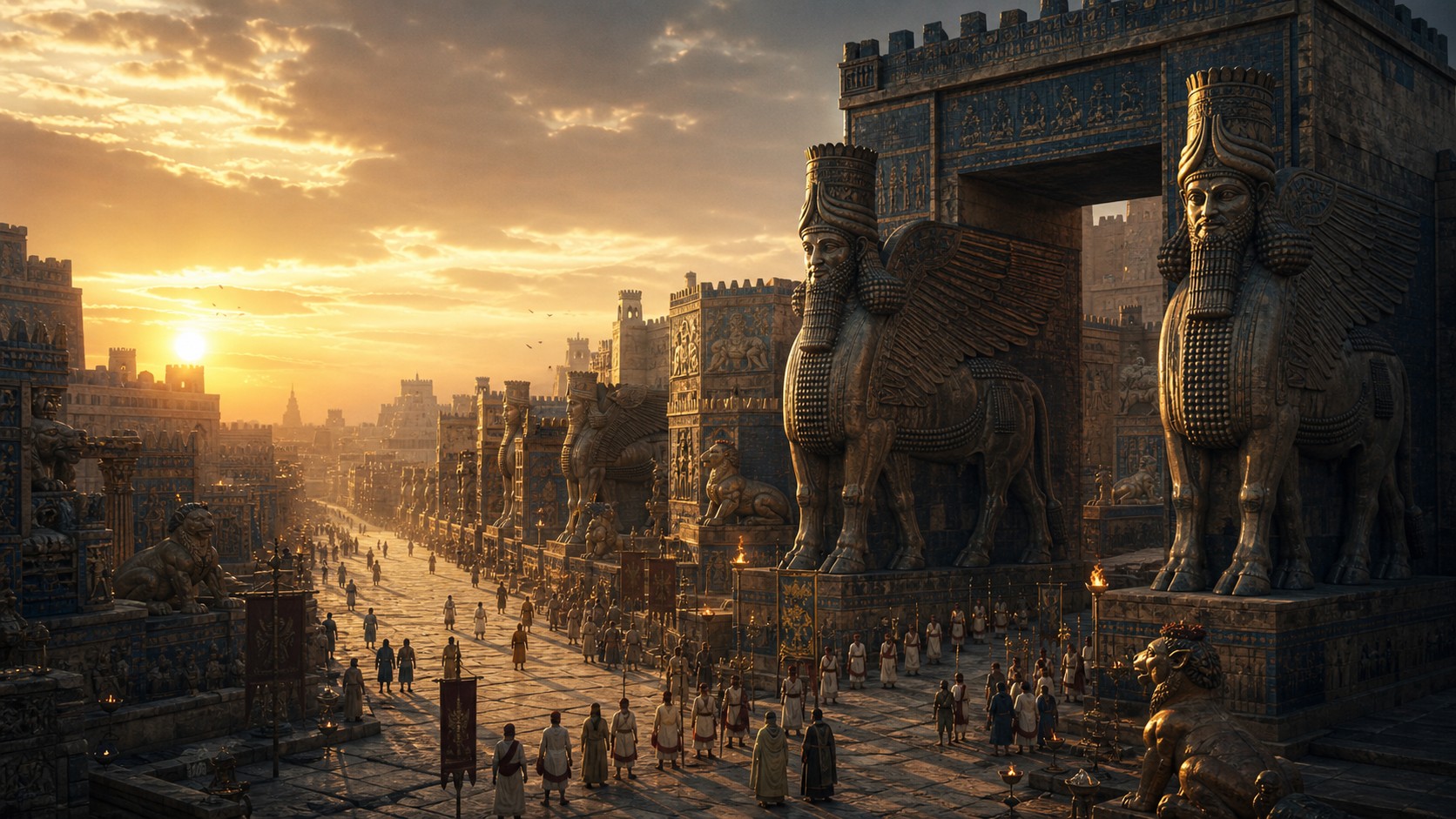
Ancient cities often used monstrous or hybrid figures near entrances because gates were psychologically charged places. A gate welcomed trade, armies, messengers, pilgrims, and strangers, but it also exposed the city to danger. Placing a powerful creature there made the threshold feel watched.
These guardians could be protective rather than hostile. Their fearsome appearance warned enemies while reassuring residents that the city had supernatural strength on its side. The monster helped transform architecture into a statement of safety and authority.
The gate also made the monster public. Unlike a creature hidden in a private tale, a guardian at an entrance confronted residents and foreigners every day. Its repeated visibility trained the eye to associate civic life with protective terror. The city did not merely contain monster stories; it displayed them as part of its face to the world.
Daily visibility made these figures part of civic education. A resident passing the same guardian for years absorbed the idea that the city was protected, watched, and connected to powers beyond ordinary life. The creature's meaning did not have to be explained each time. Repetition let the image become part of the city's emotional weather.
Civilizations did not use legendary monsters only because they were frightening. They used them because fear, beauty, authority, and memory could be combined in a single figure. A guardian beast could impress visitors, teach children, honor gods, strengthen rulers, and make architecture feel alive with inherited meaning.
That combination made monsters unusually efficient cultural tools. They could stand in one place and speak to several audiences at once: the worshiper seeking protection, the outsider measuring power, the child learning boundaries, and the ruler claiming continuity with sacred order.
No single official meaning exhausted the figure, which is why the same creature could remain persuasive across centuries of changing politics, worship, and artistic taste.
The result was cultural memory with teeth, wings, claws, and public scale.
That public scale mattered because civilization is partly a matter of shared attention and repeated signs.
Temples and Sacred Protection
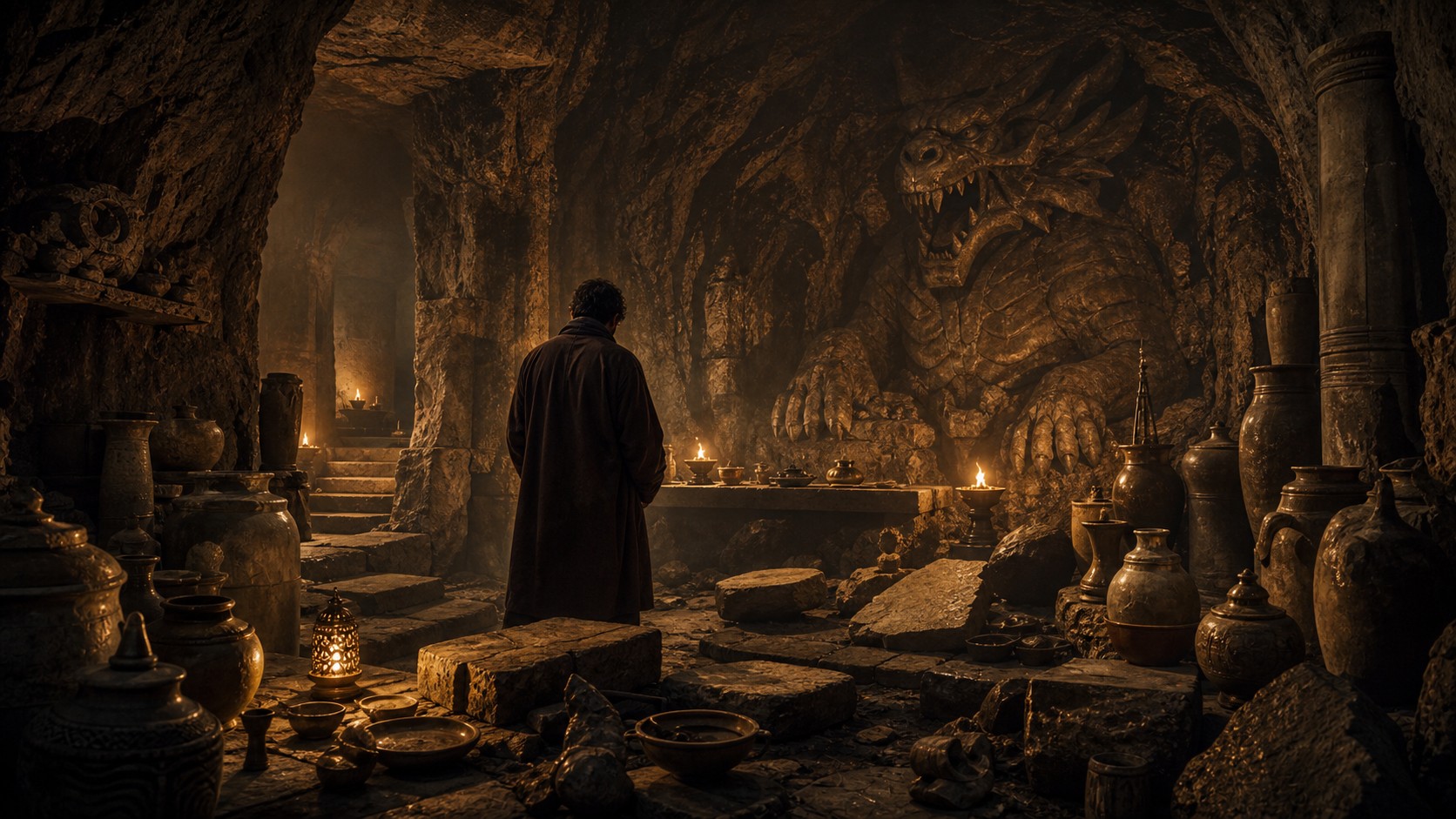
Temples gave legendary monsters a role beyond storytelling. Creature forms placed near sacred spaces suggested that holiness required protection and that ordinary behavior had to change near divine presence. A visitor entering such a space encountered stone, ritual, and fear together.
This shaped civilization by making religious boundaries visible. The monster taught people how to approach, where to stop, and why the sacred was not casual. Its body became a lesson in reverence before a priest ever spoke.
The gate monster also framed encounters with strangers. A merchant, envoy, or visitor entering the city passed beneath images that announced local power before any official conversation began. The creature spoke in the language of scale, teeth, wings, and stone. It made diplomacy and commerce happen under the gaze of the city's chosen symbols.
Kingship and the Defeat of Chaos
Rulers used monster imagery to connect political authority with cosmic order. A king shown defeating a beast could be understood as more than a warrior; he became the force that held chaos back. The monster made the ruler's power appear necessary, not merely personal.
This symbolism had practical value. Cities needed stories that justified hierarchy, law, taxation, defense, and ritual obligation. A defeated monster offered a dramatic image of why order mattered. Without the ruler, the image implied, the beast might return.
Sacred protection also shaped movement. A worshiper approaching a temple might pass through courts, gates, statues, and ritual pauses before reaching the most important area. Monster imagery contributed to that choreography. It slowed the visitor down and turned architecture into an experience of increasing seriousness.
In this way, legendary monsters helped teach religious behavior without constant explanation. Their posture, placement, and scale communicated that the sacred world had rules. A person did not need to read a text to understand that a snarling guardian beside a temple doorway was asking for reverence.
Temple monsters also gave shape to the idea that sacred power could be dangerous. Ancient religion was not always comforting in the modern sense. Divine presence could bless, judge, punish, heal, or overwhelm. A fierce guardian prepared the visitor for that seriousness. It made reverence feel like a necessary posture rather than a polite option.
Monsters in Civic Memory
Some legendary monsters shaped how communities remembered their own origins. A city might trace its founding to a hero's victory, a divine warning, a sacred animal, or a creature overcome at a dangerous site. These stories turned geography into identity.
Civic memory is powerful because it makes place meaningful. A hill becomes the hill of the beast. A spring becomes the water once guarded by a serpent. A road becomes the path where a hero returned. The monster helps residents feel that their city belongs inside a larger, older drama.
The political use of monsters was not limited to victory scenes. Protective beasts could also suggest that the ruler served as caretaker of boundaries, mediator with divine forces, and defender of the community's order. The monster's presence made kingship feel embedded in a larger cosmic arrangement rather than resting only on human ambition.
Kingship imagery could become especially persuasive when paired with public architecture. A carved victory over a beast on a palace wall did not remain a private claim. It became part of the route people walked, the ceremonies they witnessed, and the stories they told about who protected the city. The monster gave political order a dramatic opponent.
Art, Craft, and Public Imagination
Monster imagery also shaped ancient civilizations through art and craft. Carvings, seals, vessels, jewelry, murals, masks, and ceremonial objects carried creature forms into public and private life. People encountered monsters not only during festivals or temple visits, but in the visual language of daily culture.
The repeated image mattered. A creature carved again and again becomes part of a society's shared imagination. It teaches children what power looks like, reminds adults of inherited stories, and gives artisans a way to express fear, protection, prestige, and mystery.
Civic memory could also turn monsters into markers of belonging. People who knew the local creature story knew something about the city that strangers did not. The legend became a password into shared identity, even when retold in festivals, family instruction, or casual references to landmarks.
This kind of memory helped civilizations connect generations. A person could stand before the same gate or shrine as ancestors and recognize the same beast. The monster made continuity visible, giving the present a dramatic link to the remembered past.
Civic memory also depended on selective forgetting. A monster story could simplify messy origins, migrations, conflicts, or disasters into a narrative people could share. That simplification did not make it meaningless. It allowed a community to speak about itself through a memorable scene rather than a disputed archive.
Law, Morality, and Social Boundaries
Legendary monsters reinforced moral boundaries by dramatizing what happened when people crossed them. A story about a cursed ruler, a devouring beast, or a guardian of forbidden ground could teach restraint more memorably than a plain rule. The monster made consequence vivid.
Civilizations depend on more than written law. They rely on shared expectations, shame, awe, and inherited caution. Monster legends helped carry those expectations across generations, especially where formal instruction could not reach every household.
Artistic repetition also created continuity between generations. A child who saw a guardian creature on a gate, a vessel, and a festival object learned that the image belonged to the shared world. Later, as an adult, that person could recognize the same form as an inheritance. Monster imagery helped civilization remember itself visually.
Public imagination gave these creatures a civic life beyond official meanings. A sculptor might emphasize majesty, a priest might stress protection, a parent might use the same beast as a warning, and a ruler might see it as a symbol of order. The monster could hold all those functions because its image was powerful enough to invite different uses without disappearing into confusion.
Why Civilization Needed Monsters
It may seem strange to say that civilization needed monsters, but ancient societies used them to define what civilization meant. The city was safe because something dangerous was outside. The temple was holy because something guarded it. The king was legitimate because chaos had to be restrained. The hero mattered because the beast was real within the story-world.
Legendary monsters shaped ancient civilizations by giving invisible ideas a visible form. Protection, danger, authority, memory, and taboo became easier to understand when carved in stone or told through a creature. That is why ancient monster imagery still feels monumental: it was designed to carry the emotional weight of entire communities.
Monsters also allowed civilizations to imagine danger without surrendering to it. By carving a terrifying figure into a controlled architectural space, a society could symbolically contain the threat. The beast was present, but it was placed, named, shaped, and made to serve a civic or sacred purpose.
That transformation is one of the most important ways legendary monsters shaped ancient worlds. They turned fear into structure. They helped cities say where order began, where holiness intensified, where rulers stood, and where memory should gather. The monster was not outside civilization only; it was one of the tools civilization used to define itself.
Civilization used monsters because fear can organize attention quickly. A law may be debated, a doctrine may be complex, and a border may be politically contested, but a guardian beast communicates immediately. It says that this place matters, that passage has meaning, and that power is present. Ancient societies understood that images could govern feeling as effectively as words.
That immediate communication gave monster imagery unusual durability. Even when languages changed or rituals faded, the creature's posture could still be read emotionally. A raised claw, watchful face, coiled body, or winged silhouette continued to signal protection, threat, and authority. Ancient civilizations shaped monsters, but the monsters also shaped how those civilizations remained visible to later eyes.
That range helped ancient civilizations keep abstract values visible. Protection could be carved as claws. Authority could be given wings. Sacred danger could be placed at a doorway. Memory could be shaped into a body that watched the city generation after generation.
When modern viewers look at ancient monster imagery, they often see fantasy first. Yet for the civilizations that made these figures, the monster could be infrastructure for meaning. It helped organize movement, ceremony, identity, and authority. Its body was imaginary, but its cultural work was concrete.