How Ancient Monsters Reflected the Worlds That Made Them
Ancient monsters from around the world are easiest to understand when they are treated as cultural answers rather than isolated inventions. Every region shaped its creatures from the dangers people knew, the animals they watched, the landscapes they crossed, and the sacred rules they believed held life together. A monster from a river valley often behaves differently from one born in a desert, a forest, a mountain pass, or a palace court. When these beings are compared carefully, they reveal not one universal fear, but many local ways of giving fear a body, a dwelling place, and a purpose. Seen this way, each monster becomes a clue to how a culture organized danger, memory, and respect. That clue is often more revealing than the creature's most dramatic feature.
Landscape Came First
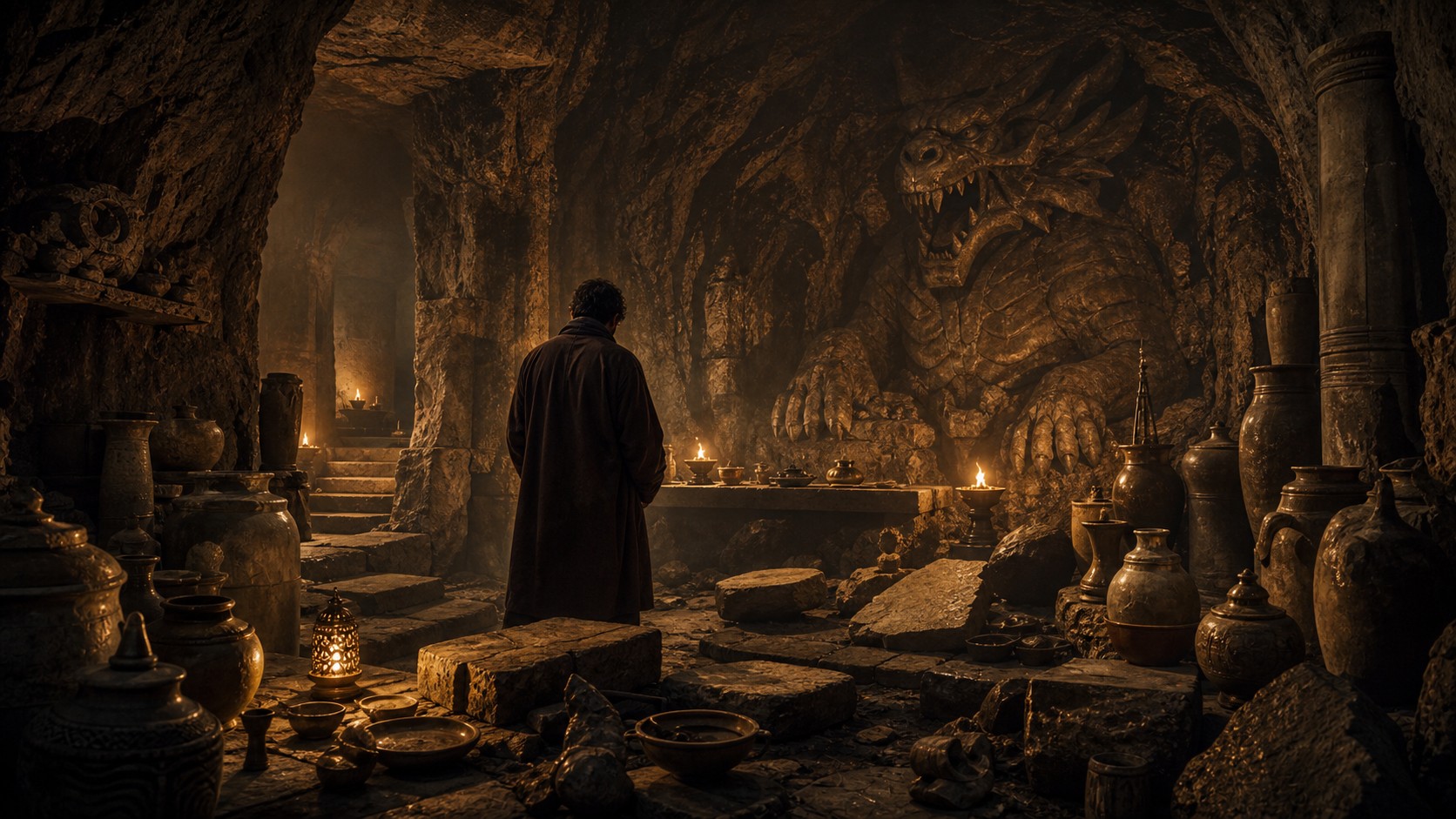
Ancient monsters usually belonged to places before they belonged to categories. A sea creature made sense to sailors who trusted boats with their lives, while a cave guardian made sense to people who knew darkness, echoes, unstable stone, and burial customs. Forest beings emerged where paths disappeared into trees and visibility failed. Desert spirits carried the fear of distance, thirst, mirage, and exposure.
This is why global comparison works best when it begins with geography. The monster is not only a design; it is a response to terrain. A creature with scales, wings, horns, or a human face becomes more meaningful when its home is understood. The setting explains why the legend was useful, why people remembered it, and why it could survive after literal belief weakened.
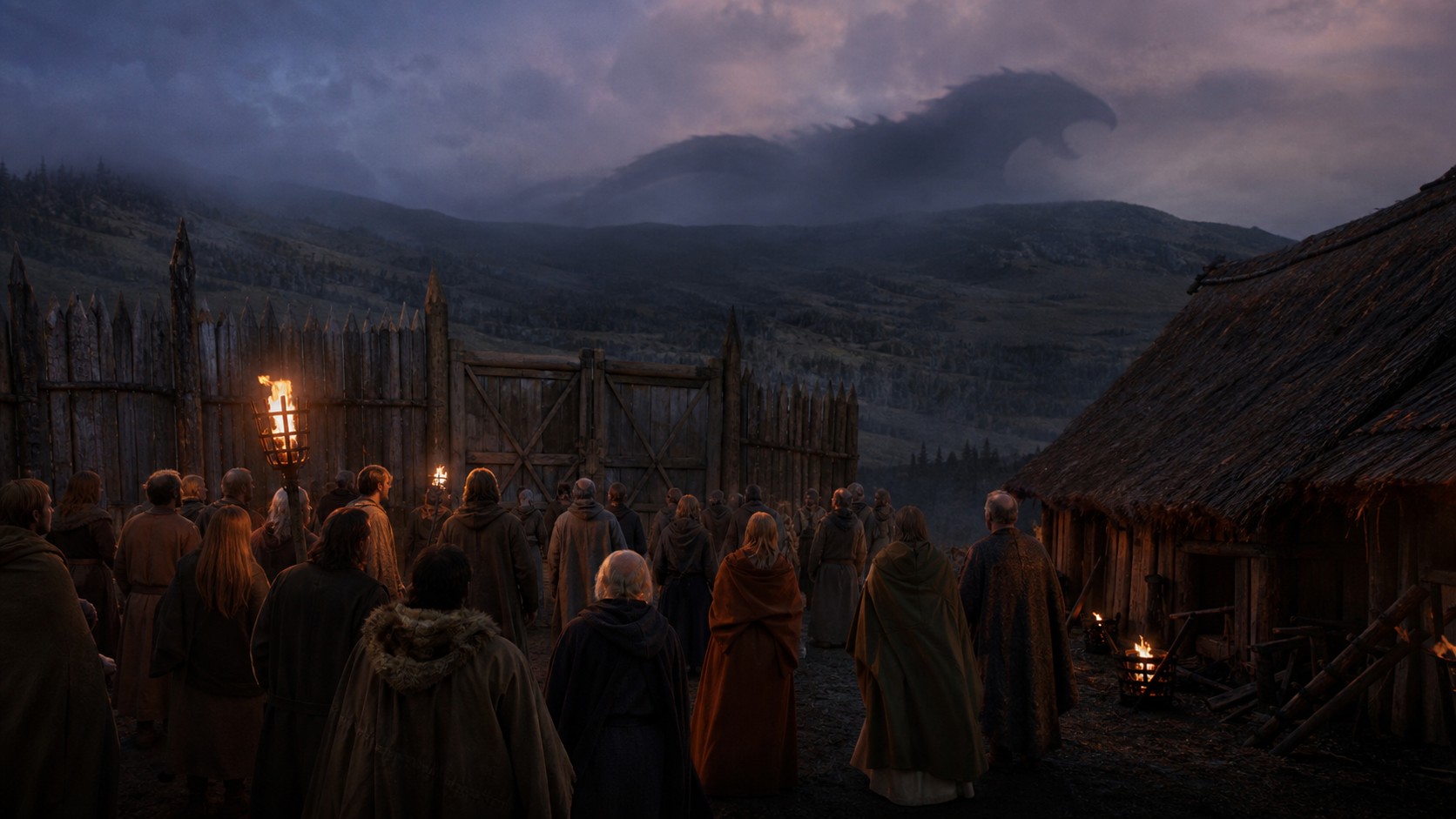
The landscape also gave each monster a different rhythm. Water monsters appear suddenly and vanish below the surface. Mountain creatures wait at passes and peaks. Grave creatures linger. Roadside beings interrupt travel. These behaviors are not random. They match the way people experienced danger in those places.
A place-based reading also prevents the monsters from becoming interchangeable. A serpent in one tradition may represent water, a serpent in another may mark renewal, and a serpent elsewhere may guard treasure, ancestors, or forbidden knowledge. The body alone cannot carry the whole meaning. The story's region, ritual setting, and audience explain why that form mattered. When ancient monsters are pulled away from those conditions, they may still look dramatic, but they lose the reasons people once treated them with fear or respect.
Sacred Order and Forbidden Places
Many ancient cultures imagined monsters near sacred boundaries. Temples, tombs, city gates, springs, groves, and royal precincts were not ordinary spaces, so they attracted figures that warned, guarded, tested, or punished. A frightening creature could announce that a place required a different kind of behavior. The monster made reverence visible before anyone explained the rule.
This sacred role separates many ancient monsters from simple villains. Some protected a boundary rather than destroying everything around them. Others punished trespass, greed, arrogance, or ritual neglect. Their terrifying appearance did not always mean evil; it often meant seriousness. The creature represented a force that ordinary people were expected to respect.
Forbidden places also helped communities manage uncertainty without needing every person to understand every reason behind a rule. A spring might be ritually restricted, a tomb might be dangerous to disturb, or a grove might mark social memory. The monster made that restriction unforgettable. It gave the boundary a face that could be feared by children, travelers, and outsiders alike.
Animals Enlarged by Fear
Real animals helped shape ancient monster traditions across the world. Snakes, crocodiles, big cats, wolves, bears, birds of prey, bulls, and ocean creatures already inspired caution, and storytelling could enlarge their traits into supernatural forms. Venom became curse. Teeth became divine punishment. Stealth became sorcery. Strength became a sign that the creature belonged to an older or more powerful order.
These transformations did not make the stories childish. They show how human communities converted real experience into memorable warning. A person attacked in reeds may not have seen the whole animal, but the terror of the event could become larger in communal memory. A dangerous animal became a legend when its fear outgrew ordinary description.
Different regions emphasized different traits because different animals mattered. A river culture might fear jaws below the surface. A pastoral culture might fear night predators near livestock. A coastal culture might imagine enormous beings beyond the last visible wave. The monster preserved local attention.
This enlargement of animals also depended on storytelling distance. A creature seen briefly in panic, described by a traveler, or remembered after a death could become more symbolic with each retelling. What began as a crocodile, wolf, bull, snake, or large bird might gather features from dreams, omens, and social warning. The monster became a record of how danger felt, not a field guide to what the animal was.
Because animals occupied different roles in different societies, their monstrous versions carried different meanings. A bull might suggest fertility and strength in one place, royal power in another, and destructive force somewhere else. A bird might be a messenger, an omen, or a predator. Ancient monsters used animal traits as a language, but each culture gave that language its grammar.
The animal root also gave listeners a bridge between belief and observation. People did not have to see the full supernatural creature to feel that the story belonged to their world. They had seen the snake, the predator, the claw mark, the storm bird, or the shape in water. Folklore enlarged what people already respected, which made the monster feel less like invention and more like intensified reality.
Hybrid Bodies and Mixed Meanings
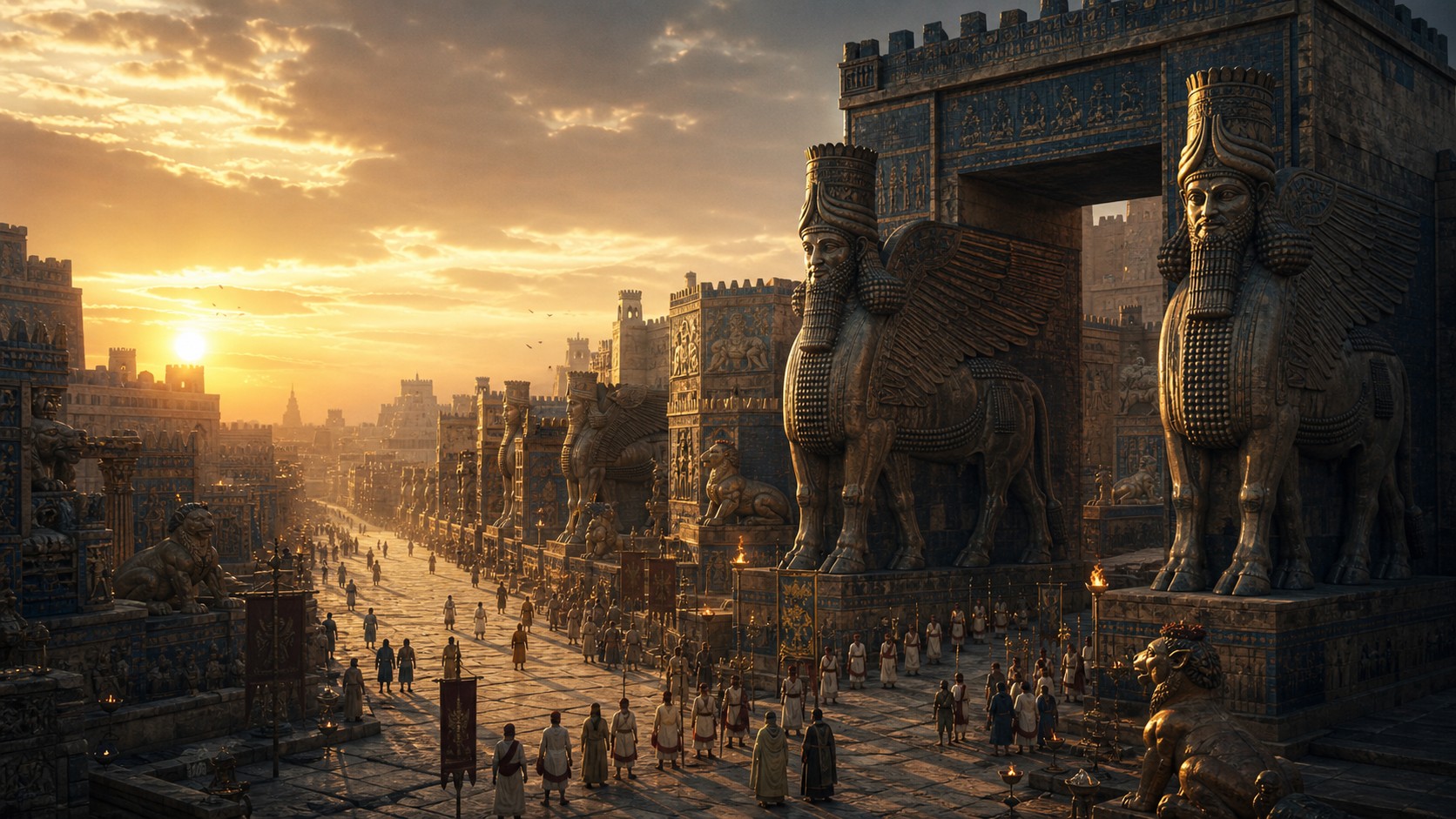
Hybrid monsters appear in many ancient traditions because they compress several meanings at once. A human face can suggest intelligence, speech, judgment, or deception. Animal limbs bring speed, violence, or instinct. Wings add reach and sacred elevation. Serpent bodies suggest hidden movement, renewal, poison, and the underworld. The combined body becomes a visual argument about power.
Hybrids also disturb people because they cross categories that cultures depend on. Human and animal, living and dead, sacred and wild, ruler and predator: these divisions organize everyday thought. A monster that mixes them makes the world feel unstable. It asks the viewer to imagine what happens when boundaries no longer hold cleanly.
Mixed bodies were also useful because they could hold contradiction. A guardian might be frightening and protective, beautiful and lethal, human-eyed and animal-bodied. This complexity made the creature suitable for temples, gates, stories, and ritual objects. It could warn outsiders while reassuring insiders. It could represent danger while also defending order. A simple beast rarely carries that much social work.
The same mixed body could also make a monster suitable for art. A creature combining several recognizable traits could be carved, painted, carried, or repeated across objects without needing a full story every time. Its body became shorthand for the larger warning. That visual efficiency helped ancient monster forms survive in fragments even when the full tale was lost.
Monsters as Social Memory
Ancient monsters often stored collective memory. They remembered disasters, invasions, famines, dangerous roads, failed rituals, and places where people vanished. A community could repeat the creature story when direct history became too complicated, painful, or distant. The monster simplified memory without making it meaningless.
This memory function explains why similar-looking creatures can serve different purposes. One serpent might guard water, another might threaten cosmic order, and another might protect a tomb. Their bodies resemble each other, but their social work differs. To explain ancient monsters well, the question is not only what the creature looked like. It is what the creature helped people remember.
Memory monsters also changed when communities changed. A creature once tied to a specific disaster might later become a general warning about pride, travel, or sacred disrespect. That shift did not erase its origin; it showed how folklore keeps old material useful. The monster remained because new listeners could still find a reason to fear it.
Why Similar Forms Appear Far Apart
Ancient cultures often created similar monster forms without needing a single source. People everywhere encountered darkness, death, storms, predators, illness, travel danger, and political power. Similar fears can produce similar shapes. Serpents, giants, guardians, winged beasts, and underworld watchers appear widely because they solve recurring storytelling problems.
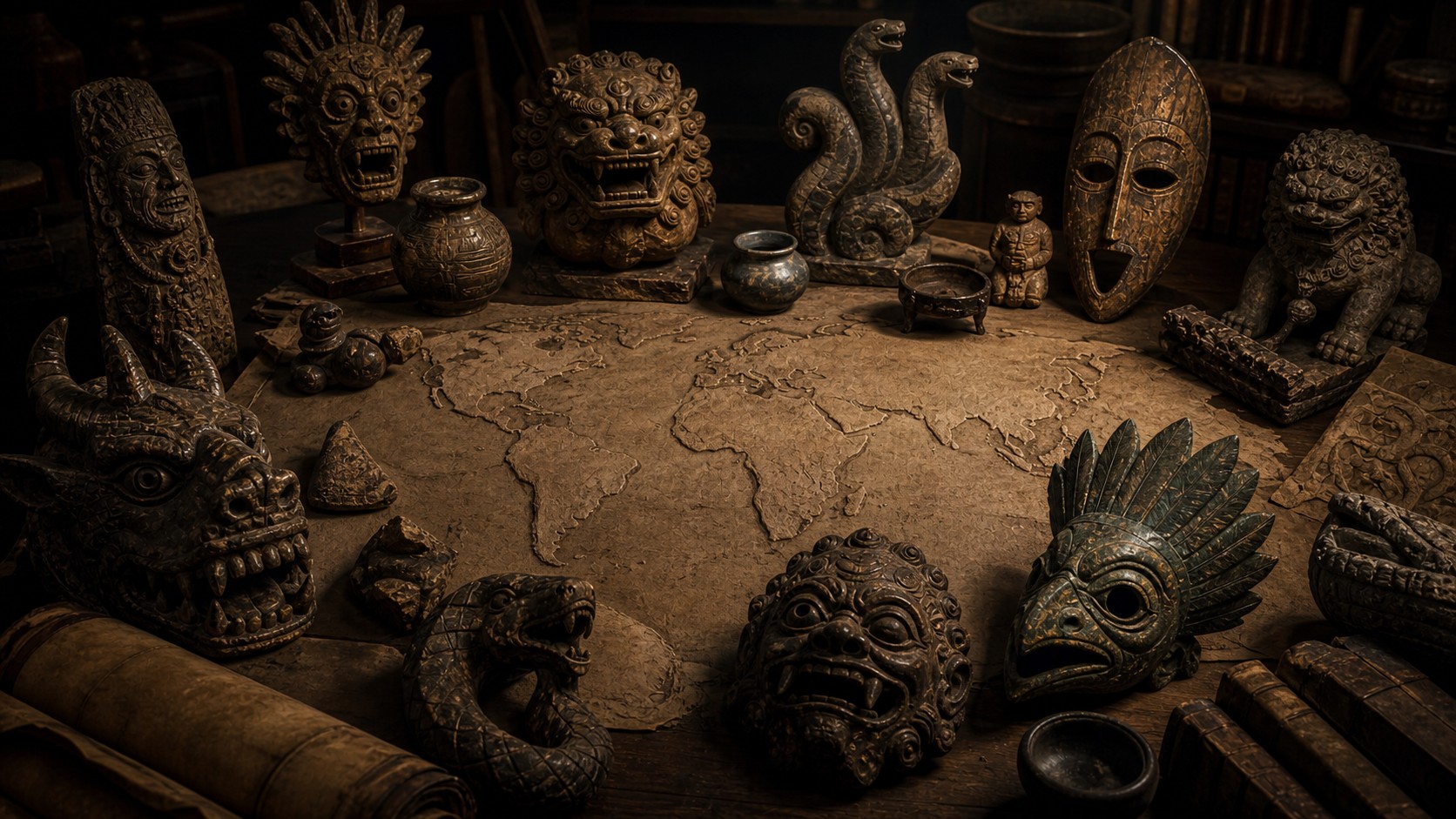
Trade, migration, conquest, and religious exchange also moved monster imagery between regions. A creature could travel with merchants, soldiers, pilgrims, or artists, then change to fit a new landscape. That movement makes ancient monster history complex. Some resemblances come from shared human experience, while others come from actual contact between cultures.
The most interesting comparisons allow both possibilities. They do not flatten every creature into one global myth, and they do not pretend each culture existed in isolation. Ancient monsters moved through a world of roads, ports, borders, and borrowed symbols.
Contact between cultures did not erase local meaning. A borrowed image could be reinterpreted through a new language, climate, religion, or political need. A winged guardian might become part of royal art far from its earlier context. A water creature might gain new associations when its story moved from coast to river valley. Ancient monster traditions were therefore both rooted and mobile, shaped by place but never trapped completely in one place.
This is why ancient monster exchange should be read as conversation rather than copying alone. Cultures borrowed, translated, resisted, and reshaped one another's images. A creature could become more local after traveling, not less. It gained new meanings from the people who adopted it.
This movement of images also explains why ancient monster traditions can feel familiar across great distances without becoming identical. A winged beast near a gate, a serpent near water, or a giant at the edge of settlement may answer similar fears, but each culture assigns different duties, names, and moral meanings. Similarity opens comparison; difference keeps the comparison honest.
Reading Global Monsters With Care
Explaining ancient monsters from around the world requires respect for local meaning. It is tempting to sort every creature into simple types: dragon, giant, demon, guardian, water beast, or hybrid. Those labels can help at first, but they become misleading if they erase the specific culture, ritual, landscape, and story that made the being powerful.
A careful reading lets the monster remain strange. It asks why this creature appeared here, why it behaved this way, and what listeners were expected to feel or do after hearing the story. The answer may involve fear, but it may also involve protection, ancestry, sacred law, political order, or ecological caution.
That is why ancient monsters still reward comparison. They show that fear is universal, but never generic. Each culture gave fear its own costume, posture, dwelling, and voice. Around the world, ancient monsters became maps of what people loved, protected, avoided, and could not fully explain.
In global perspective, ancient monsters become a record of attention. They show what people watched closely: rivers, caves, animals, graves, rulers, strangers, storms, and thresholds. Explaining them well means listening to that attention instead of rushing past it toward a simple list of famous beasts.