Among all the figures that define horror, few are as misunderstood—or as deeply human—as Frankenstein’s monster. Often mistakenly called “Frankenstein” himself, the creature is not the scientist, but the result of his ambition. Born from lightning, stitched together from the dead, and rejected by the world that brought him into existence, Frankenstein’s monster stands as one of the most powerful and tragic figures in the history of storytelling. His origins are rooted not only in gothic imagination but also in real scientific curiosity, philosophical debate, and a timeless fear of what happens when humanity reaches beyond its limits.
A: No, Frankenstein is the scientist; the creature is often unnamed.
A: He seeks love and acceptance but is rejected because of his appearance.
A: No, he becomes violent only after experiencing cruelty and isolation.
A: Through experimental science using assembled body parts, though details vary by version.
A: He feels abandoned and betrayed by his creator.
A: It explores responsibility, identity, and the consequences of unchecked ambition.
A: Films popularized it as a visual way to represent life-giving energy.
A: Yes, he experiences deep emotions like loneliness, anger, and compassion.
A: Yes, he possesses great physical strength due to his unnatural construction.
A: It raises timeless questions about science, ethics, and what it means to be human.
The Night That Sparked a Legend
The story of Frankenstein’s monster began with a challenge. In the summer of 1816, a group of writers gathered at Lake Geneva, including Mary Shelley, Lord Byron, and Percy Bysshe Shelley. Confined indoors by relentless storms, they competed to create the most terrifying ghost story. From this moment of creativity and imagination emerged Frankenstein, a novel that would forever change horror.
Mary Shelley was inspired by contemporary scientific discussions about life and electricity. Experiments in galvanism suggested that electrical currents could stimulate muscle movement in dead tissue. This idea—that life might be artificially created—became the foundation of her story. But Shelley’s vision extended far beyond science. She explored the emotional and ethical consequences of creation, crafting a narrative that was as philosophical as it was frightening.
Victor Frankenstein and the Dangers of Ambition
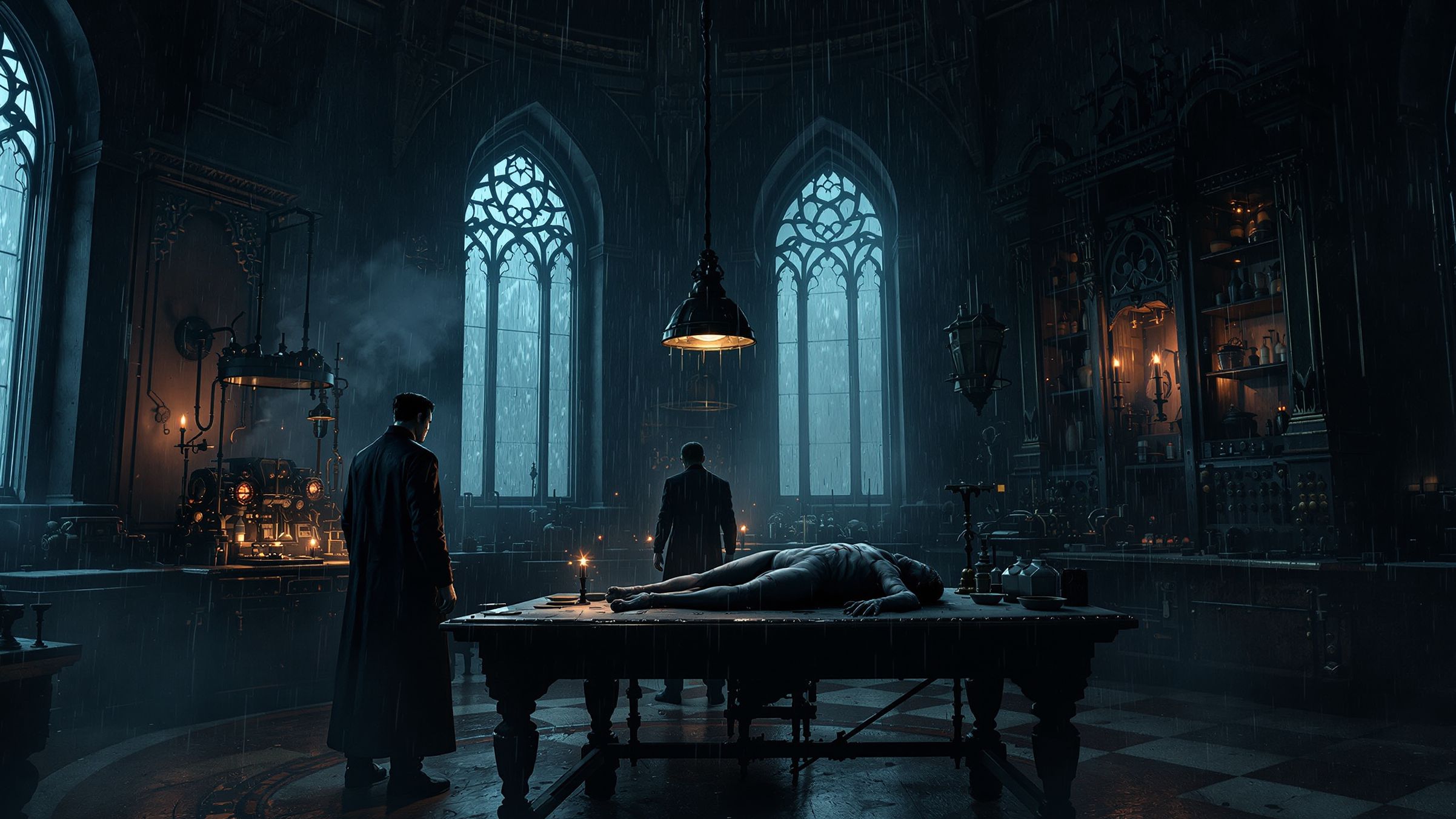
At the heart of the story is Victor Frankenstein, a brilliant but obsessive scientist driven by a desire to conquer death. His ambition leads him to assemble a creature from human remains and bring it to life through unknown scientific means. In that moment, Victor achieves what was once thought impossible—but instead of triumph, he feels horror and regret.
Victor’s reaction defines the tragedy of the story. Rather than nurturing his creation, he abandons it, leaving the creature to navigate a world that fears and rejects him. This act of neglect transforms the monster’s existence into one of loneliness and suffering. The story becomes less about the horror of creation and more about the consequences of irresponsibility.
Frankenstein’s ambition reflects broader fears of the time. The early 19th century was marked by rapid scientific advancement and shifting philosophical ideas. Shelley’s novel questions whether humanity is ready to wield such power—and what moral responsibilities come with it.
The Creature: A Monster or a Victim?
What makes Frankenstein’s monster so unique is that he is not inherently evil. In Shelley’s novel, the creature begins as a blank slate, capable of learning, feeling, and longing for connection. He observes human society from a distance, teaching himself language and developing an understanding of kindness and compassion.
However, every attempt to integrate into society is met with fear and violence. Rejected by everyone he encounters, including his own creator, the creature becomes consumed by anger and despair. His transformation into a figure of terror is not the result of his nature, but of his experiences.
This portrayal challenges traditional ideas of monstrosity. The creature is not a villain in the conventional sense—he is a victim of circumstance. His story forces audiences to confront uncomfortable questions about prejudice, empathy, and what it truly means to be human.
From Page to Screen: A New Icon Is Born
Frankenstein’s monster achieved global recognition through cinema, particularly with Frankenstein. Portrayed by Boris Karloff, the creature’s appearance was reimagined into the now-iconic image: flat head, heavy eyelids, neck bolts, and a lumbering gait.
While the film simplified some of the novel’s complexities, it introduced a powerful visual identity that defined the character for generations. Karloff’s performance captured both the terror and the sadness of the creature, emphasizing his vulnerability beneath the frightening exterior.
This cinematic version shifted the public perception of Frankenstein’s monster. He became not just a literary figure, but a cultural icon—instantly recognizable and endlessly referenced across media.
The Science Behind the Fear
Frankenstein’s monster represents one of the earliest examples of science-based horror. Unlike supernatural creatures rooted in folklore, the monster is the result of human ingenuity. This distinction makes his story particularly unsettling, as it suggests that the source of fear lies within humanity itself.
The novel reflects real scientific debates of Shelley’s time, including questions about the nature of life and the limits of experimentation. Today, these themes remain relevant. Advances in genetic engineering, artificial intelligence, and biotechnology continue to raise ethical concerns similar to those explored in Frankenstein.
The story serves as a cautionary tale, reminding us that progress without responsibility can lead to unintended consequences. It is not the act of creation that is inherently dangerous, but the failure to consider its impact.
Themes of Isolation and Identity
One of the most enduring aspects of Frankenstein’s monster is his struggle with identity. He is neither fully human nor entirely separate from humanity. His existence challenges the boundaries between creator and creation, self and other.
Isolation is central to his experience. Denied companionship and understanding, the creature is forced to exist alone in a world that fears him. This loneliness drives much of his behavior, highlighting the importance of connection and acceptance.
These themes resonate deeply with audiences, as they reflect universal human experiences. The monster’s journey is not just about survival—it is about the search for belonging and the pain of rejection.
The Monster’s Lasting Influence on Horror
Frankenstein’s monster has had a profound impact on the horror genre. He introduced the idea that monsters can be sympathetic, blurring the line between hero and villain. This complexity has influenced countless stories, from classic films to modern reinterpretations.
The character also helped establish key elements of horror storytelling, including the use of science as a source of fear and the exploration of moral dilemmas. These themes continue to shape the genre, ensuring that Frankenstein’s legacy endures.
Why Frankenstein’s Monster Still Matters
More than two centuries after his creation, Frankenstein’s monster remains a powerful symbol of humanity’s potential and its limits. His story speaks to the dangers of unchecked ambition, the importance of empathy, and the consequences of isolation.
In many ways, the monster reflects our own fears and desires. He is a reminder that what we create—whether through science, technology, or relationships—carries responsibility. His tragedy lies not in his existence, but in how he is treated.
As horror continues to evolve, Frankenstein’s monster stands as a timeless figure, proving that the most enduring stories are those that explore the complexities of the human condition.
The Humanity Within the Monster
Frankenstein’s monster is more than a figure of fear—he is a reflection of humanity itself. His origins in science and imagination have created a character that transcends genre, offering insight into the nature of creation, identity, and compassion. He challenges us to look beyond appearances and consider the deeper truths that define us. In doing so, he transforms horror into something more profound: a story not just about monsters, but about what it means to be human.