Why Terrifying Folklore Stories Outlive Their First Listeners
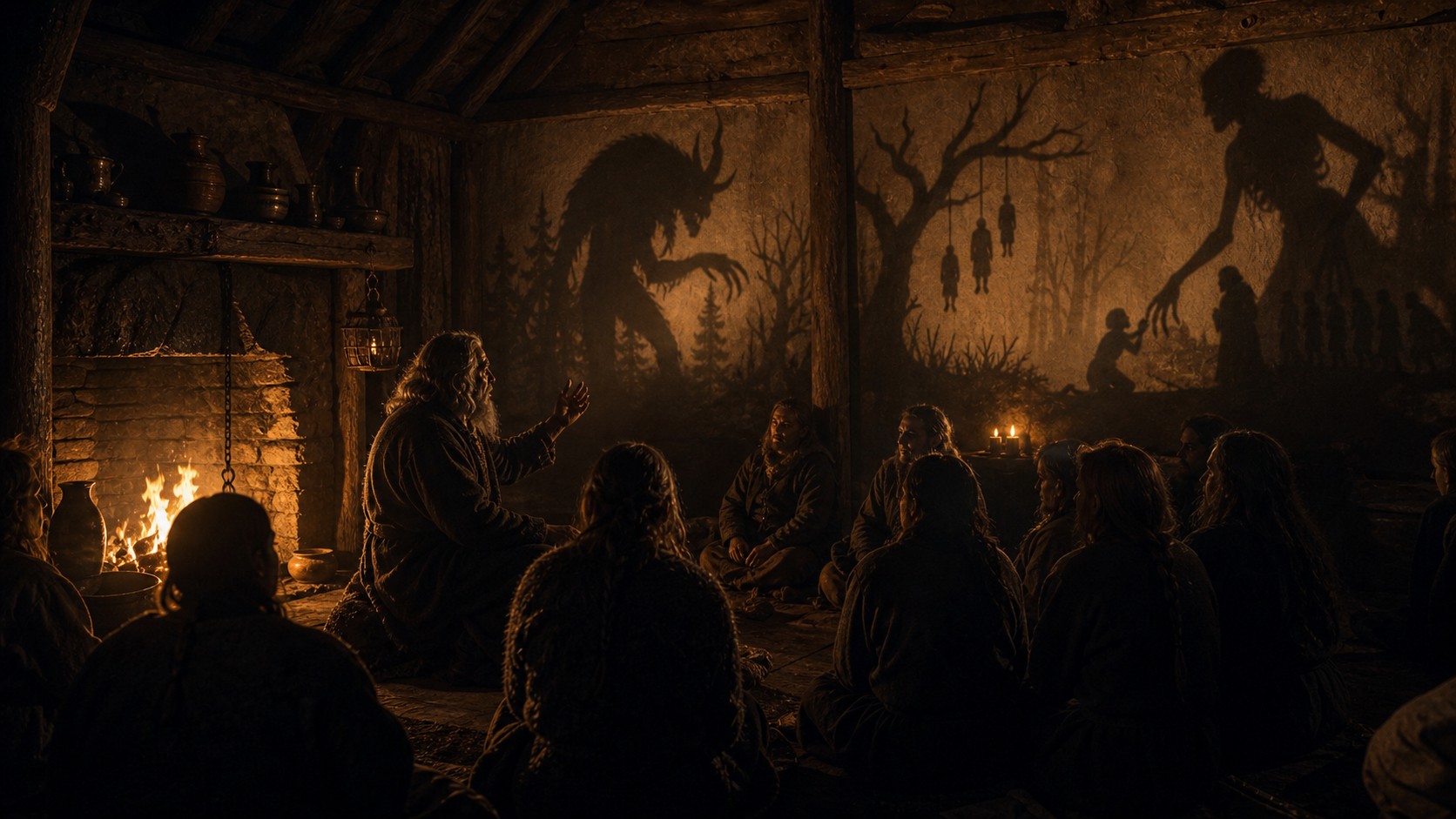
The most terrifying folklore stories in history are not always the loudest or bloodiest tales. They are the stories that make ordinary life feel unstable: a road that should not be walked after dark, a stranger who should not be invited in, a song that should not be followed, a room where grief has not finished speaking. Their terror comes from how closely they attach fear to behavior. A listener does not simply hear about a monster; they learn how a mistake begins. That is why these stories survive. They carry local knowledge, social pressure, and emotional memory in a form sharp enough to be remembered long after the original danger has faded. These tales also endure because they preserve fear as a social inheritance. A terrifying story can cross generations without requiring every listener to believe it in the same way. One person hears a supernatural warning, another hears a family memory, and another hears a psychological truth about guilt, hunger, grief, or loneliness. The story survives because all of those readings can coexist. Its terror does not come from one fixed interpretation, but from the way it keeps finding a sensitive place in each new audience. The oldest frightening stories also tend to be economical. They do not explain every rule of the supernatural world. They give listeners a pattern and let imagination do the remaining work. That economy makes them easy to carry, but it also leaves them open enough to attach to new fears. A story first told beside one river can become meaningful beside another because the feeling of unsafe water remains recognizable. That transfer keeps terror alive. Remembered. Enduring. Still remembered.
Terror Rooted in Place
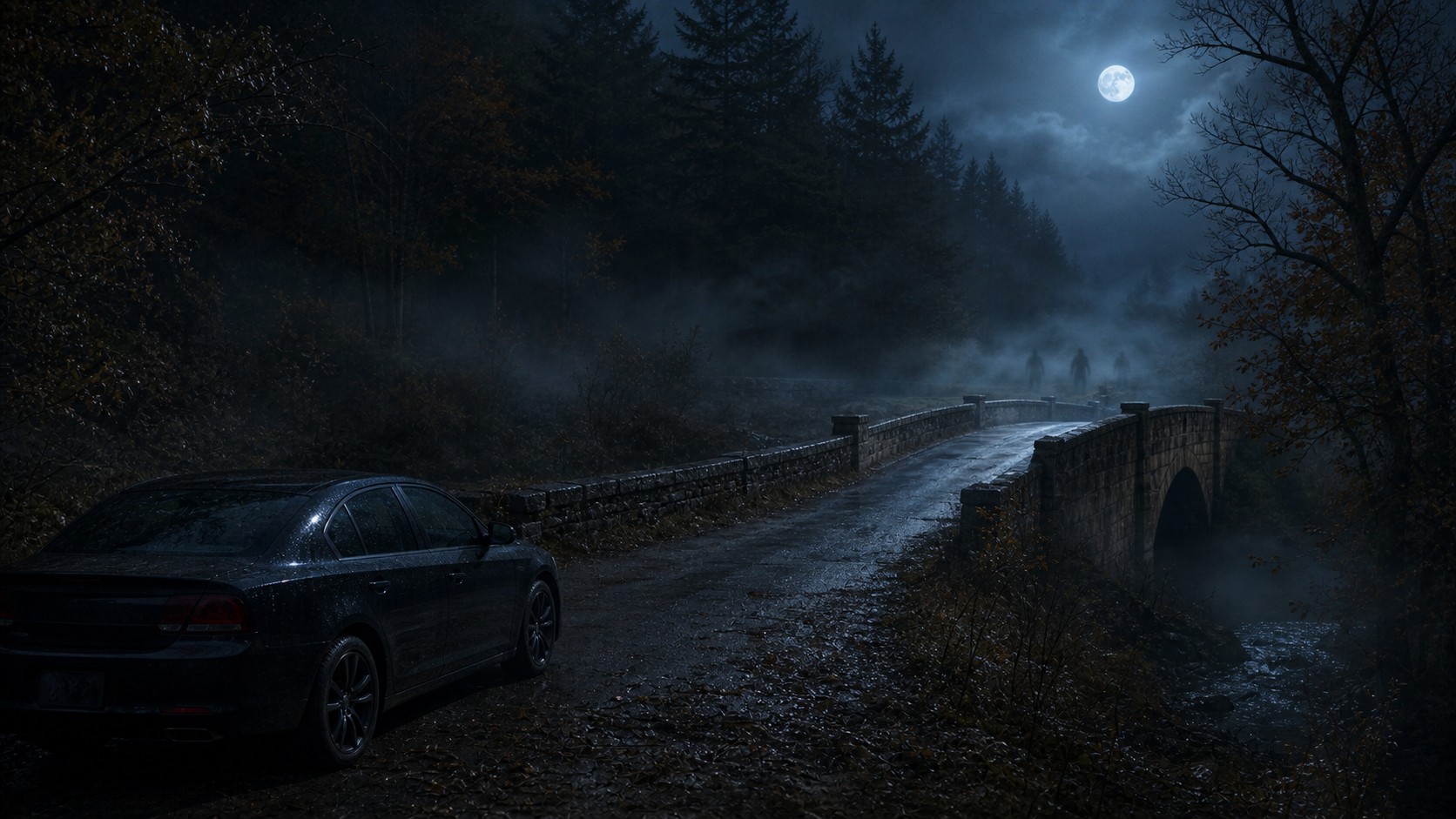
Folklore becomes terrifying when it belongs to a place listeners can imagine entering. A mythic battlefield may impress people, but a haunted bridge, a dangerous well, or a cursed house presses closer to the body. The place gives the story a route, a smell, a sound, and a time of day. It makes fear practical rather than decorative.
Historical folklore often kept certain locations emotionally marked. A crossing where people drowned, a forest where travelers vanished, or a house tied to betrayal could become a story site. The tale gave that place a second identity. People might still use the road or draw water from the well, but they did so with an inherited unease. The terror remained because the setting remained available.
This is also why local detail matters. A story that says something happened near a particular bend in the river feels different from a story set nowhere. The location behaves like evidence, even when no proof exists. It invites listeners to picture themselves standing exactly where the warning begins.
Terrifying folklore also depends on restraint. The story often shows only enough to make the listener's imagination finish the scene. A footprint, a repeated knock, a face at the window, or a song from the reeds can be more disturbing than a fully explained creature. The less complete the evidence is, the more room the listener has to bring personal fear into the tale.
The Fear of Doing the Wrong Thing
Many terrifying folklore stories are built around a small action that cannot be undone. Someone answers a voice, accepts food, opens a door, looks back, breaks a promise, mocks a warning, or crosses a boundary after being told not to. The moment is simple, which makes it easy to remember. The consequence is severe, which makes it hard to forget.
This structure turns terror into participation. The listener asks what they would do in the same situation. Would they help the stranger on the road? Would they follow the child crying near the water? Would they enter the room everyone avoids? Folklore keeps fear alive by forcing the audience to rehearse caution.
The wrong thing is often ordinary because folklore wants the warning to be portable. Most people will never fight a legendary beast, but everyone has answered a door, taken a shortcut, ignored advice, or wondered whether to help someone in distress. The story attaches terror to common decisions so that caution can travel with the listener.
Death Omens and Waiting Dread
Some of history's most terrifying folklore stories do not begin with attack. They begin with a sign. A bird calls at the wrong hour. A candle fails. A sound repeats outside the house. A dream arrives before news. A figure is seen where no traveler should be. The terror lies in waiting for the meaning to reveal itself.
Death-omen stories are powerful because they make time feel haunted. The listener does not fear only the event; they fear the interval between warning and confirmation. That interval can be filled with denial, bargaining, prayer, and a growing sense that the future has already been announced. Few narrative devices are more unsettling than a sign that seems to know what the living do not.
These stories also helped communities speak about helplessness. When illness, accident, childbirth, war, or winter could take people quickly, an omen offered the feeling that death had a pattern. The pattern was frightening, but it was still a pattern. Folklore sometimes terrifies by making the unknown seem organized.
Omen stories also gave communities a way to revisit loss before it arrived. A sign before death may sound cruel, but it gave people a language for the feeling that something was already wrong. Families often sense danger through small changes in behavior, weather, dreams, or mood. Folklore transforms that anxious sensitivity into a recognized pattern.
The terrifying part is that the omen rarely explains how to prevent the outcome. It may offer knowledge without power. That imbalance makes the story linger, because the listener imagines seeing the sign and having no certain way to answer it.
Homes That Stop Feeling Safe
A terrifying folklore story becomes intimate when it enters the home. A creature outside the village can be feared at a distance, but a presence in the bedroom, attic, hearth, cradle, or mirror breaks the first promise of domestic life: that the inside is safer than the outside. Once a house becomes part of the legend, every ordinary sound can seem like testimony.
Household folklore often reflects private anxieties that formal histories overlook. Sleep paralysis, grief, sickness, family conflict, infant mortality, and loneliness can all become stories about visitors, weights, watchers, or voices in the walls. The tale gives private fear a shape that can be shared without naming every wound directly.
This is why some of the most terrifying stories remain quiet. A creak, a cold room, a shadow in the corner, or a repeated knock may be enough. The story does not need spectacle because the violation of safety is already complete.
Domestic folklore can also expose the emotional history of a household. A room becomes frightening not only because something appears there, but because the family already carries grief, secrecy, or guilt into the space. The supernatural presence concentrates what the living have failed to settle. In that sense, the house is not invaded by fear; it reveals fear that was already inside.
Water, Hunger, and the Lure
Water folklore frightens because it joins beauty with danger. A lake can look calm while hiding depth, cold, weeds, current, and silence. A river can sound musical while pulling hard beneath the surface. Many terrifying tales turn that contradiction into a being that sings, beckons, bargains, or waits below.
Hunger stories work differently but just as deeply. They remember seasons when need changed behavior and made moral life difficult. In terrifying folklore, hunger may become a devouring figure, a forbidden meal, or a bargain that saves the body while damaging the soul. The fear is not only being eaten. It is becoming someone who would do anything to survive.
The lure matters in both kinds of stories. People are drawn by thirst, beauty, music, food, rescue, or longing. The victim is often understandable, not foolish. That makes the terror sharper because the mistake begins with a need anyone might recognize.
The lure also complicates blame. If a story punishes someone for following music, accepting food, or approaching a beautiful figure, the listener may feel both dread and sympathy. The victim's desire is recognizable. Folklore terrifies most deeply when the doomed action is something human rather than absurd.
This is why many terrifying stories keep returning to hunger, loneliness, curiosity, and grief. Those needs do not disappear with education or modern technology. They remain openings through which danger can be imagined.
Stories That Punish Cruelty
Terrifying folklore often punishes cruelty toward the vulnerable. A guest is mistreated, a beggar is mocked, a child is abandoned, an animal is tortured, a grave is robbed, or a grieving person is dishonored. The result may be a curse, haunting, transformation, or creature that returns until the offense is acknowledged.
These stories can feel extreme because the punishment frequently exceeds the visible act. Yet that excess is part of the message. Folklore insists that social bonds are not fragile decorations. Hospitality, care for children, respect for the dead, and mercy toward strangers hold communities together. When those bonds break, the whole world of the story becomes unsafe.
The supernatural consequence also solves a moral problem. Human justice may fail, witnesses may stay silent, and the powerful may escape blame. Folklore imagines a deeper memory that does not forget. That idea is terrifying to wrongdoers and strangely comforting to those who fear hidden harm.
Why These Stories Still Terrify
The most terrifying folklore stories in history still work because they do not depend on perfect belief. A modern listener can doubt the literal spirit and still feel uneasy near the water, on the road, or in a house with a story attached to it. Folklore enters through atmosphere as much as conviction.
They also endure because they respect fear's complexity. The frightening thing may be a monster, but it may also be guilt, hunger, grief, desire, neglect, or the knowledge that a small choice can change everything. The story gives those pressures a memorable scene. That scene follows listeners because it feels possible in emotional terms, even when the supernatural details are doubted.
That is the lasting power of terrifying folklore. It turns history into warning, warning into atmosphere, and atmosphere into memory. Long after the first teller is gone, the story waits for a road, a storm, a sound, or a shadow to make it feel newly alive.
Modern retellings sometimes make old folklore louder, but the old terror often lies in quiet pressure. The path is empty. The water is still. The house has gone silent. The listener knows something has shifted, but not enough to name it. That uncertainty is durable.
The most frightening stories also resist complete moral comfort. A warning may protect one person while revealing that another was never protected at all. The tale may teach caution, but it also preserves the sorrow of those who learned too late. That combination of lesson and wound is why the story remains powerful.